Review
. 2008 Dec;17 Suppl 4(Suppl 4):459-66.
doi: 10.1007/s00586-008-0751-5. Epub 2008 Nov 13.

Gene therapy approach for disc degeneration and associated spinal disorders

Affiliations
Review

Gene therapy approach for disc degeneration and associated spinal disorders

Kotaro Nishida et al. Eur Spine J. 2008 Dec.

Abstract

Disc degeneration is deeply associated with many spinal disorders and thus has a significant clinical impact on society. The currently available surgical treatment often necessitates removing a pathological disc and spinal fusion. However, it is also well known that these surgical treatments have many potential problems including invasion and cost. Therefore, biological approaches for regenerating these pathological discs have received much attention. Gene therapy is one of these biological approaches. Gene therapy involves the transfer of genes to cells so the recipient cells express these genes and thereby synthesize the RNA and protein they encode in a continuous fashion. One of the significant advantages of gene therapy is that we can expect a lasting duration of biological effect which is potentially beneficial for most disc degeneration associated disorders, as they are, by nature, chronic conditions. Originally, gene therapy was mediated by viral vectors, but recent technological progress has enabled us to opt for non-virus-mediated gene therapy for the disc. Furthermore, the development of the RNA interference technique has enabled us to down-regulate a specific gene expression in the disc opening the door for a new generation of intradiscal gene therapy.


Figures
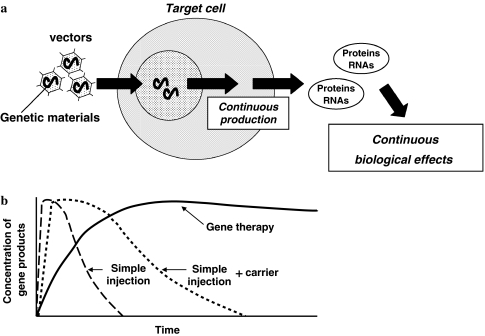
Fig. 1
Fig. 1
Schematic representation of gene therapy. a Gene therapy proposes a transfer of “the gene of interest” into the target cells using a so-called vector. Once the transferred gene works successfully in the target cells, these genetically modified cells can produce the desired gene products (RNAs or proteins) in a continuous fashion. b One of the significant advantages of the gene therapy approach is that we can expect a longer-lasting effect compared with single injection of RNAs or proteins to the target organ. This characteristic of gene therapy would make it suitable for treating chronic diseases such as disc degenerated diseases
Fig. 2
Fig. 2
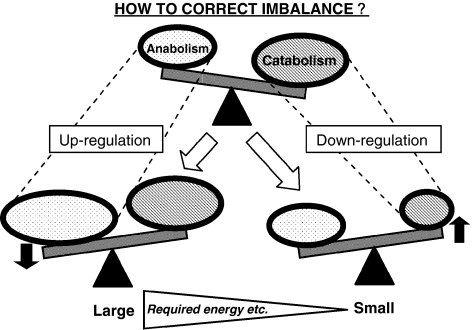
Two different approaches for disc regeneration. Theoretically, there are two approaches for correcting the imbalance between matrix anabolism and catabolism for disc regeneration. Previous approaches focused on stimulating matrix synthesis using growth (anabolic) factors. Another approach could be to down regulate the matrix catabolism. It is notable that stimulating matrix synthesis demands a lot of energy and resources, thus taking into account what we know of the disc environment, such as limited nutrition and cell activity, down-regulating the matrix catabolism might be more advantageous for the disc
Fig. 3
Fig. 3
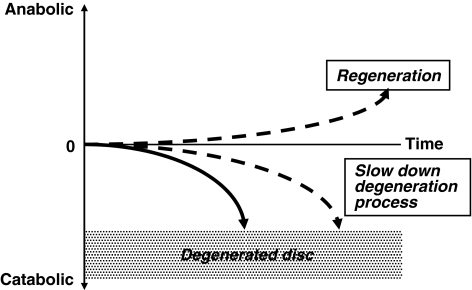
Expected effects of genetic modification of the disc cells. If we can correct the imbalance between matrix anabolism and catabolism in disc degeneration either by stimulating matrix synthesis or down-regulating catabolism, we can potentially change the direction of the disc degeneration leading to a delay in the process (focusing on more prophylactic treatment) or even regeneration of the degenerated disc
Fig. 4
Fig. 4
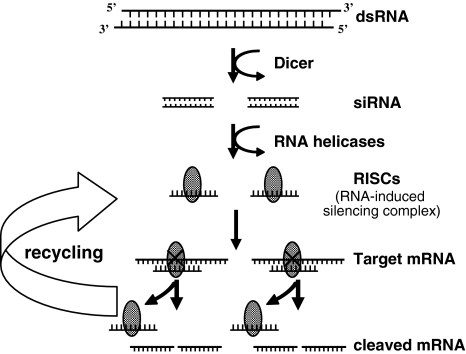
The schema of RNAi pathways. Small Interfering RNAs (siRNAs) are short, double-stranded RNA molecules that can target mRNAs with complimentary sequence. These siRNAs are incorporated into a multicomponent nuclease complex, known as RNA-induced silencing complex (RISC), which cleave target messenger RNAs for degradation [17]

References

    1. Aota Y, Kumano K, Hirabayashi S. Postfusion instability at the adjacent segments after rigid pedicle screw fixation for degenerative lumbar spinal disorders. J Spinal Disord. 1995;8:464–473. doi: 10.1097/00002517-199512000-00008. - DOI - PubMed
    1. Asazuma T, Yamugishi M, Sato M, Ichimura S, Fujikawa K, Crock HV. Posterior spinal fusion for lumbar degenerative diseases using the Crock–Yamagishi (C–Y) spinal fixation system. J Spinal Disord Tech. 2004;17:174–177. doi: 10.1097/00024720-200406000-00002. - DOI - PubMed
    1. Booth KC, Bridwell KH, Eisenberg BA, Baldus CR, Lenke LG. Minimum 5-year results of degenerative spondylolisthesis treated with decompression and instrumented posterior fusion. Spine. 1999;24:1721–1727. doi: 10.1097/00007632-199908150-00014. - DOI - PubMed
    1. Buckwalter JA. Aging and degeneration of the human intervertebral disc. Spine. 1995;20:1307–1314. - PubMed
    1. Chung SA, Wei AQ, Connor DE, Webb GC, Molloy T, Pajic M, Diwan AD. Nucleus pulposus cellular longevity by telomerase gene therapy. Spine. 2007;32:1188–1196. doi: 10.1097/BRS.0b013e31805471a3. - DOI - PubMed

MeSH terms