


Risk factors associated with anthrax outbreak in animals in North Dakota, 2005: a retrospective case-control study
- PMID: 19006977
- PMCID: PMC2289988
- DOI: 10.1177/003335490812300315
Risk factors associated with anthrax outbreak in animals in North Dakota, 2005: a retrospective case-control study
Abstract
Objective: We identified the risk factors associated with the anthrax outbreak Of 2005 in animals in North Dakota.
Methods: Medical records of the 2005 anthrax outbreak were obtained from the Veterinary Diagnostic Laboratory at North Dakota State University. Additional data were obtained from the North Dakota state veterinarian's office, and supplemental questionnaires were administered to producers. The data obtained included ecological and environmental factors, animal health factors, and management factors.
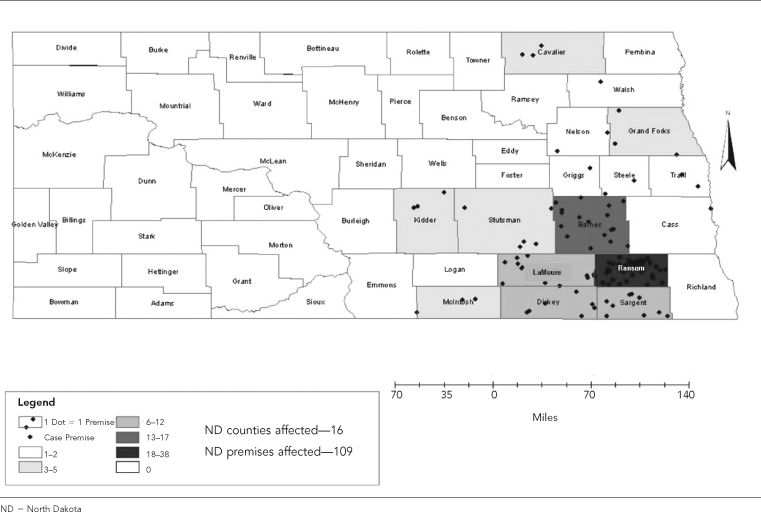
Results: Anthrax occurred from July 1 to October 12, 2005. The cases were located in eastern North Dakota around the Red River Basin. Ransom, LaMoure, and Barnes counties reported most cases (71%). Species affected included cattle, bison, horses, sheep, elk, deer, pigs, and llamas. The predominant symptom was sudden death (38%) followed by bleeding from orifices (17%). Chi-square analysis indicated significant differences between case and control premises on the following variables: death reported on neighboring pasture, vaccination period, dry conditions, wet conditions, antibiotic use, multiple vaccination, and type of predator (coyote). Factors that significantly (p<0.05) predicted anthrax occurrences on the final logistic regression model were vaccination, use of antibiotics during an outbreak, and period of vaccine administration (before or during the outbreak).
Conclusions: The characteristics of the anthrax outbreak regarding time and place of occurrence, animals affected, clinical signs reported, and mortality rate were consistent with previous reports of natural anthrax outbreaks in animals. A number of factors that significantly predicted anthrax occurrence in animals in the 2005 outbreak in North Dakota were identified. This information is important in planning appropriate control and prevention measures for anthrax, including recommending the right vaccination and treatment regimens in managing future anthrax outbreaks.
Figures
References
-
- Murray PR, Pfaller MA, Rosenthal KS. Medical microbiology. 5th ed. Philadelphia: Mosby; 2005.
-
- Ryu C, Lee K, Seong WK, Oh HB. Sensitive and rapid quantitative detection of anthrax spores isolated from soil samples by real-time PCR. Microbiol Immunol. 2003;47:693–9. - PubMed
-
- Ryan KJ, Ray CG, editors. Sherris medical microbiology. 4th ed. New York: McGraw Hill; 2004.
-
- World Health Organization. Guidelines for the surveillance and control of anthrax in humans and animals. 1998. [cited 2007 Feb 14]. Available from: URL: http://www.who.int/csr/resources/publications/anthrax/WHO_EMC_ZDI_98_6/en.
Publication types
MeSH terms
Substances
LinkOut - more resources
Full Text Sources
Medical
