


Female hormone receptors are differentially expressed in mouse fibrocartilages
- PMID: 19010067
- PMCID: PMC2744768
- DOI: 10.1016/j.joca.2008.09.015
Female hormone receptors are differentially expressed in mouse fibrocartilages
Abstract
Objective: Despite the female predilection for joint diseases, and the known effects of female hormones in regulating chondrocyte function, the various female hormone receptor subtypes in joints are not well characterized, and comparisons in receptor profiles between joints and genders are lacking. This investigation characterized and compared the relative levels of estrogen receptors (ER)-alpha and -beta, relaxin receptors LGR7 and LGR8, and progesterone receptor (PR) in the temporomandibular joint (TMJ) disc, knee meniscus (KM) and pubic symphysis fibrocartilages.
Methods: Fibrocartilaginous cells from 12-week-old mice were maintained in serum-containing alpha-modified Eagle's medium (MEM) until confluence. Total RNA and cell lysates were assayed by RT-PCR, qRT-PCR, immunocytochemistry and Western blots, and joint sections subjected to immunohistochemistry.
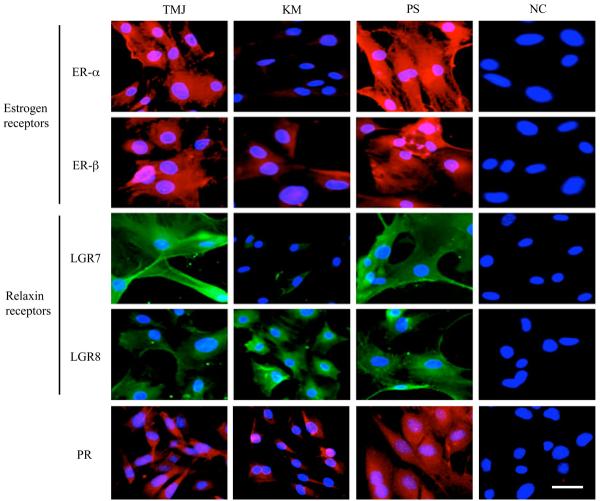
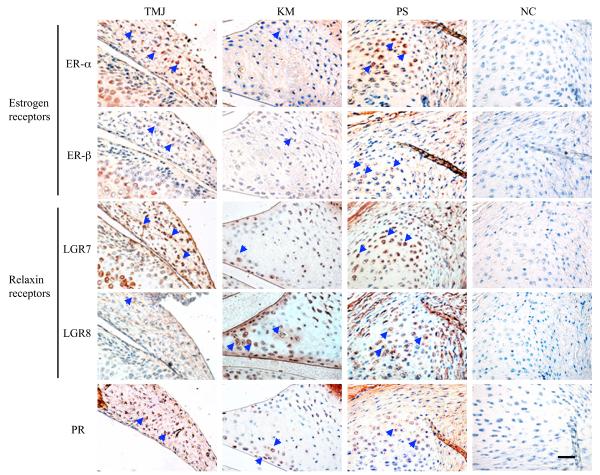
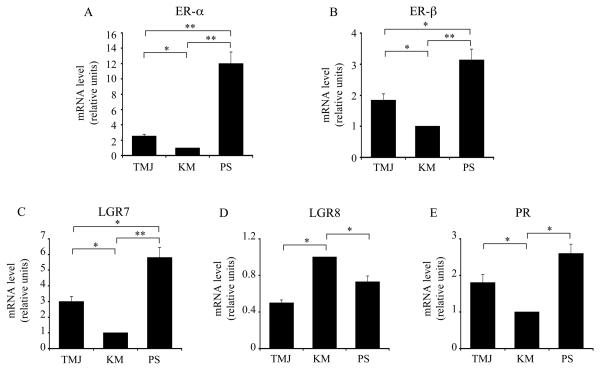
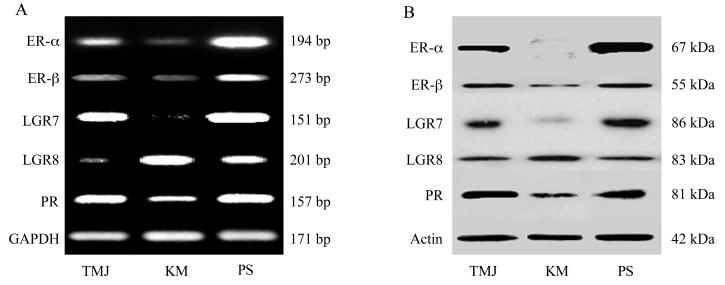
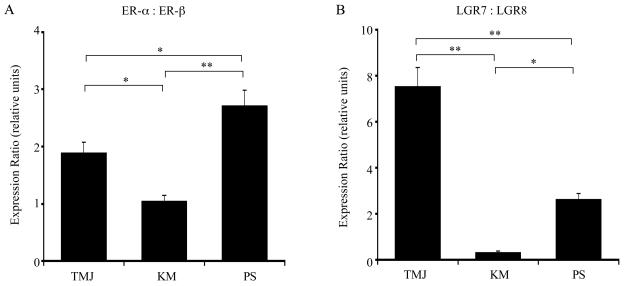
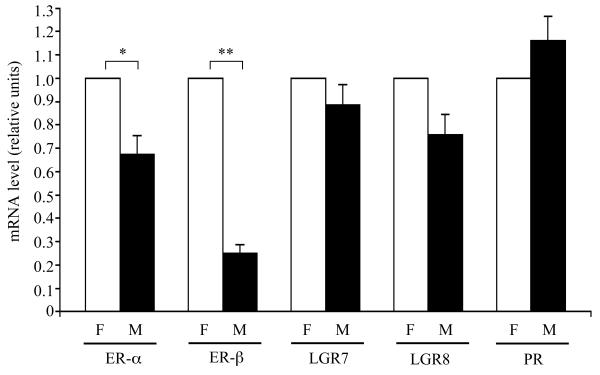
Results: All hormone receptors assayed were present in the three joints, but showed substantial differences in expression levels between joints. TMJ cells had higher ER-alpha (>2.8-fold), ER-beta (>2.2-fold), LGR7 (>3-fold) and PR (>1.8-fold), and lower LGR8 (0.5-fold) gene expression levels than KM cells. The ratio of ER-alpha:ER-beta and LGR7:LGR8 was 1.8- and 7.5-fold higher, respectively, in TMJ than in KM cells. The profile of hormone receptors in the TMJ disc was similar to those in the pubic symphysis. Immunochemistry confirmed the differential expression patterns of these receptors in the three tissues. The TMJ cells demonstrated sexual dimorphism in the levels of both ER isoforms, but not of LGR7, LGR8 or PR.
Conclusions: The findings suggest that these fibrocartilages are putative target tissues for actions of female hormones. The differential expression profiles of the hormone receptors in the three joint fibrocartilages and the sexual dimorphism in ERs in TMJ disc cells are likely to result in varied downstream effects in response to hormones within these fibrocartilaginous tissues.
Figures
References
-
- Felson DT, Zhang Y, Hannan MT, Naimark A, Weissman BN, Aliabadi P, et al. The incidence and natural history of knee osteoarthritis in the elderly. The Framingham Osteoarthritis Study. Arthritis Rheum. 1995;38:1500–5. - PubMed
-
- Warren MP, Fried JL. Temporomandibular disorders and hormones in women. Cells Tissues Organs. 2001;169:187–92. - PubMed
-
- Johnson AB, Sohrabji F. Estrogen's effects on central and circulating immune cells vary with reproductive age. Neurobiol Aging. 2005;26:1365–74. - PubMed
-
- Flake NM, Hermanstyne TO, Gold MS. Testosterone and estrogen have opposing actions on inflammation-induced plasma extravasation in the rat temporomandibular joint. Am J Physiol Regul Integr Comp Physiol. 2006;291:R343–8. - PubMed
Publication types
MeSH terms
Substances
Grants and funding
LinkOut - more resources
Full Text Sources
Research Materials
