. 2008 Nov 15;68(22):9184-93.
doi: 10.1158/0008-5472.CAN-08-2133.

Serotonin metabolism is dysregulated in cholangiocarcinoma, which has implications for tumor growth

Affiliations

Serotonin metabolism is dysregulated in cholangiocarcinoma, which has implications for tumor growth

Gianfranco Alpini et al. Cancer Res. .

Abstract

Cholangiocarcinoma is a devastating cancer of biliary origin with limited treatment options. Symptoms are usually evident after blockage of the bile duct by the tumor, and at this late stage, they are relatively resistant to chemotherapy and radiation therapy. Therefore, it is imperative that alternative treatment options are explored. We present novel data indicating that the metabolism of serotonin is dysregulated in cholangiocarcinoma cell lines, compared with normal cholangiocytes, and tissue and bile from cholangiocarcinoma patients. Specifically, there was an increased expression of tryptophan hydroxylase 1 and a suppression of monoamine oxidase A expression (enzymes responsible for the synthesis and degradation of serotonin, respectively) in cholangiocarcinoma. This resulted in an increased secretion of serotonin from cholangiocarcinoma and increased serotonin in the bile from cholangiocarcinoma patients. Increased local serotonin release may have implications on cholangiocarcinoma cell growth. Serotonin administration increased cholangiocarcinoma cell growth in vitro, whereas inhibition of serotonin synthesis decreases tumor cell growth both in vitro and in vivo. The data presented here represent the first evidence that serotonin metabolism is dysregulated in cholangiocarcinoma and that modulation of serotonin synthesis may represent an alternative target for the development of therapeutic strategies.


Figures
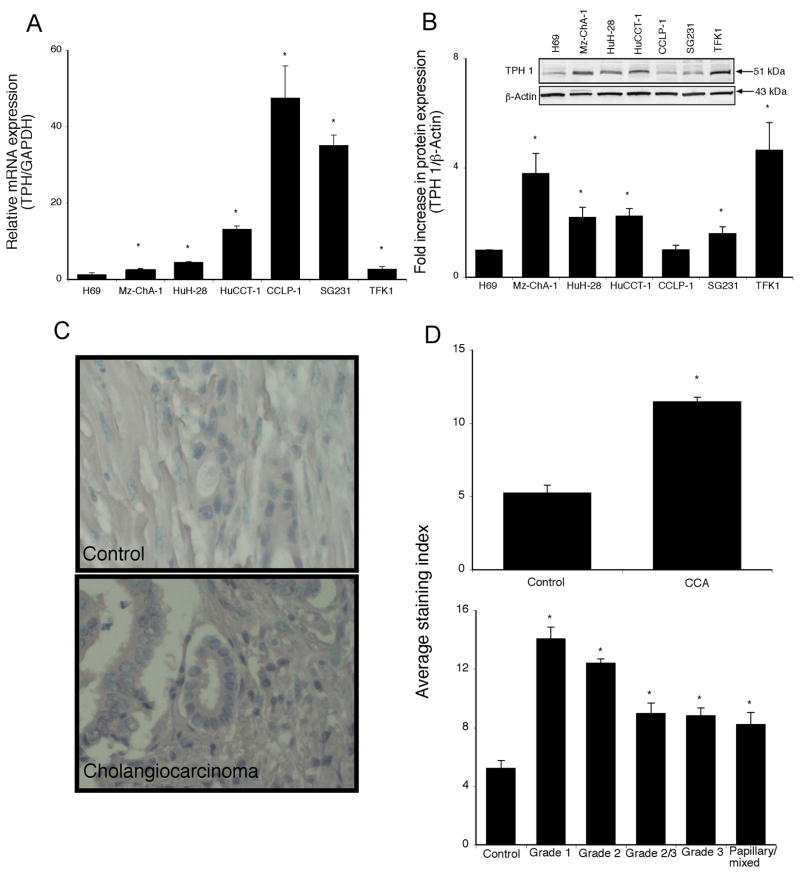
Figure 1
Figure 1
Tryptophan hydroxylase 1 expression is increased in cholangiocarcinoma. TPH1 levels were assessed in six cholangiocarcinoma cell lines as well as a non-malignant cholangiocyte cell line H69, by real time PCR (A) and immunoblotting (B). In each case, data are expressed as average ± SEM (n=3). Asterix denotes significance (p<0.05) compared with TPH1 expression in H69 cells. TPH1 levels were also assessed in biopsy samples from 48 cholangiocarcinoma patients and healthy controls by immunohistochemistry. Representative photomicrographs of the TPH1 immunoreactivity are shown (C; magnification X40). Staining intensity was assessed as described in the methods and expressed as an average ± SEM of all cholangiocarcinoma patients compared to control samples (D), as well as a function of tumor grade (degree of differentiation (D). Asterix denotes significance (p<0.05) compared with TPH1 immunoreactivity in control biopsy samples.
Figure 2
Figure 2
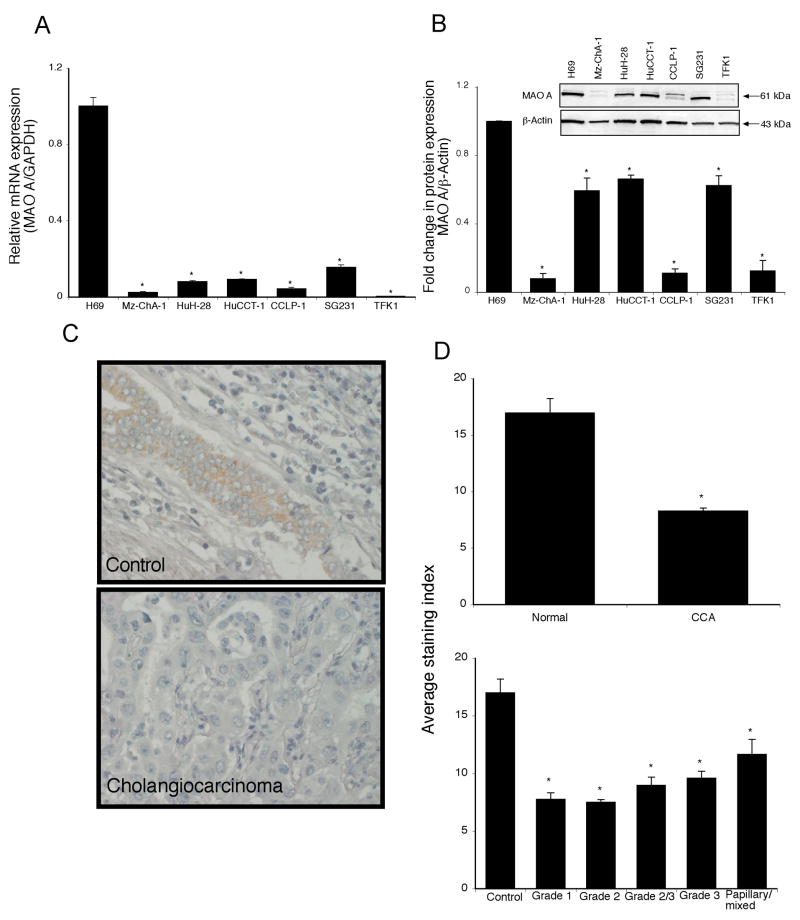
Monoamine oxidase A expression is decreased in cholangiocarcinoma. MAO A levels were assessed in six cholangiocarcinoma cell lines as well as a non-malignant cholangiocyte cell line H69, by real time PCR (A) and immunoblotting (B). In each case, data are expressed as average ± SEM (n=3). Asterix denotes significance (p<0.05) compared with MAO A expression in H69 cells. MAO A levels were also assessed in biopsy samples from 48 cholangiocarcinoma patients and healthy controls by immunohistochemistry. Representative photomicrographs of the MAO A immunoreactivity is shown (C; magnification X40). Staining intensity was assessed as described in the methods and expressed as an average ± SEM of all cholangiocarcinoma patients compared to control samples (D), as well as a function of tumor grade (degree of differentiation (D). Asterix denotes significance (p<0.05) compared with MAO A immunoreactivity in control biopsy samples.
Figure 3
Figure 3
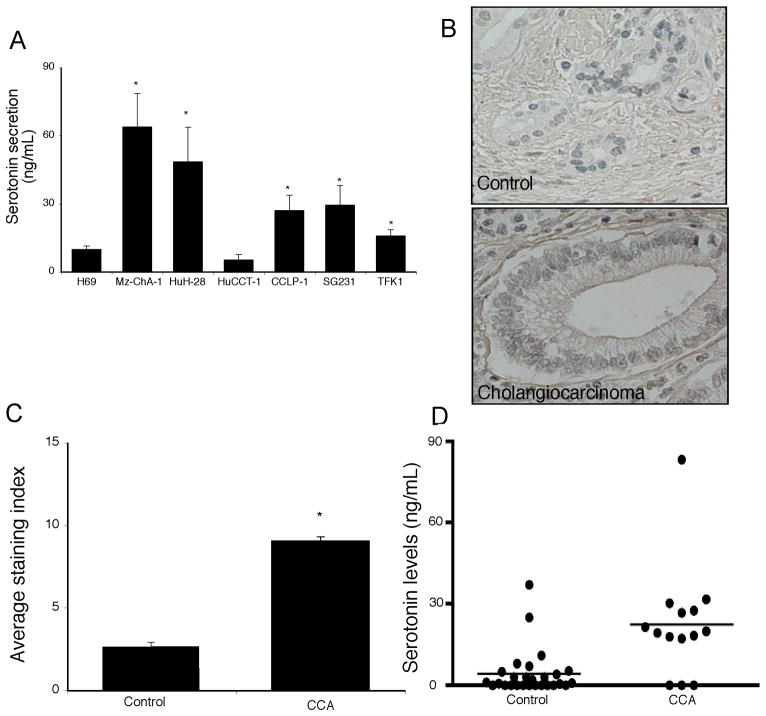
Serotonin secretion in cholangiocarcinoma. Serotonin levels in the supernatant of cell suspensions of cholangiocarcinoma cell lines and the non-malignant cholangiocyte cell line H69 were determined by EIA after 6 hr (A). Data are expressed as average serotonin concentration (ng/mL) ± SEM (n=3). Asterix denotes significance (p<0.05) compared with serotonin levels secreted from H69 cells. Serotonin immunoreactivity was assessed in cholangiocarcinoma biopsy samples by immunohistochemistry. Representative photomicrographs of the serotonin immunoreactivity are shown (B; magnification X40). Staining intensity was assessed as described in the methods and expressed as an average ± SEM of all cholangiocarcinoma patients compared to control samples (C). Asterix denotes significance (p<0.05) compared with serotonin immunoreactivity in control biopsy samples. Serotonin levels in bile samples from cholangiocarcinoma patients and patients with intrahepatic cholelithiasis by EIA (D). Data are expressed as average serotonin concentration (ng/mL) ± SEM.
Figure 4
Figure 4
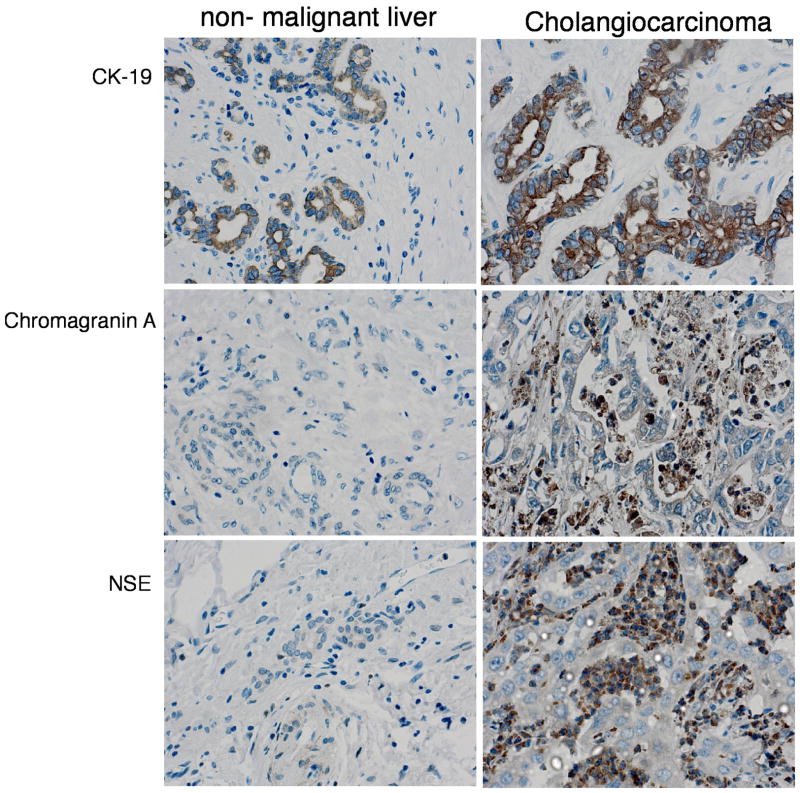
Cholangiocarcinoma display features of a neuroendocrine tumor. Immunohistochemical analysis of biopsy samples from non-malignant liver and cholangiocarcinoma tumors were performed using antibodies against CK-19, (cholangiocyte marker), chromagranin A- and NSE- (neuroendocrine markers). Representative photomicrographs of the immunoreactivity are shown. (magnification X40).
Figure 5
Figure 5
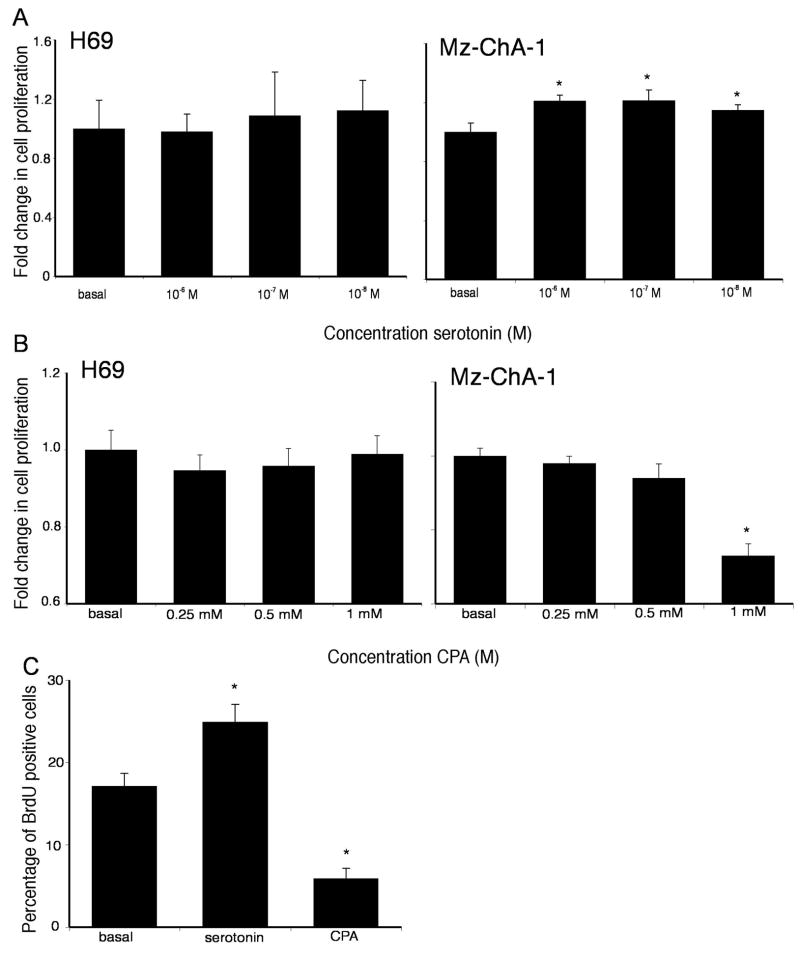
(A) Serotonin increases cholangiocarcinoma cell proliferation in vitro. Mz-ChA-1 cells and the non-malignant cholangiocyte cell line, H69 were treated with various concentrations of serotonin (10−8 M to 10−6 M) for 48 hr. Cell proliferation was assessed using an MTS cell proliferation assay. Data are expressed as fold change in proliferation (average ± SEM, n=7) and the asterix denotes p<0.05 compared to basal treatment within each cell line. (B) Inhibition of serotonin synthesis decreases cholangiocarcinoma cell proliferation in vitro. Mz-ChA-1 cells and the non-malignant cholangiocyte cell line, H69 were treated with various concentrations of CPA (0.25 mM to 1 mM) for 48 hr. Cell proliferation was assessed using an MTS cell proliferation assay. Data are expressed as fold change in proliferation (average ± SEM, n=7) and the asterix denotes p<0.05 compared to basal treatment within each cell line. (C) BrdU labelling of cholangiocarcinoma cells indicates changes in cell cycle progression after serotonin and CPA. Mz-ChA-1 cells were treated with serotonin (10−6M) and CPA (0.25 mM) for 48 hr and BrdU uptake was determined. The number of BrdU-positive cells was expressed as a percentage of total cells. Data was expressed as the average ± SEM from 5 random fields from 3 independent experiments. * denotes significance (p<0.05) when compared to basal treatment.
Figure 6
Figure 6
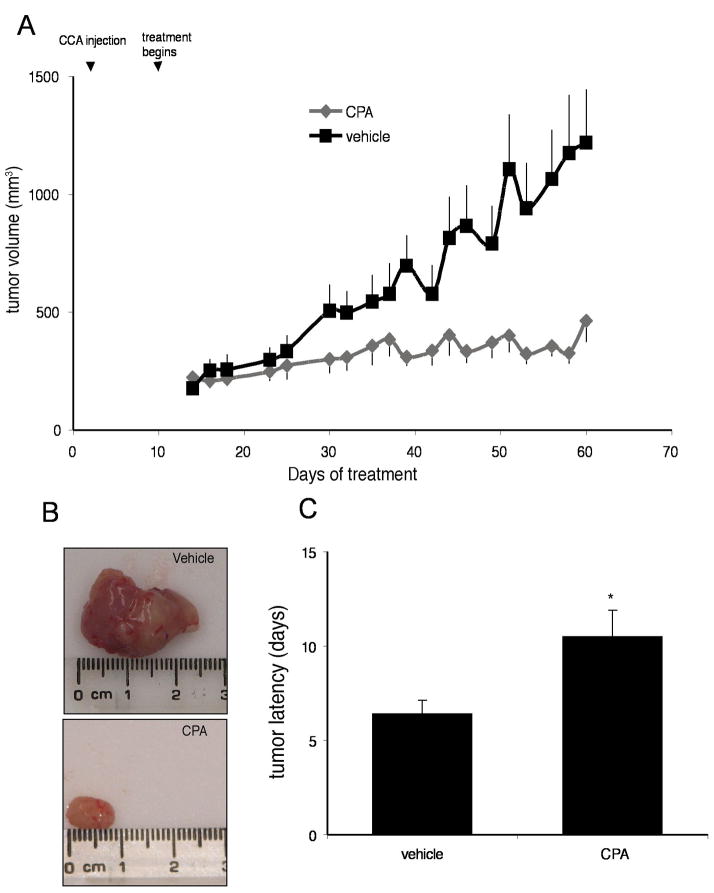
Inhibition of serotonin synthesis decreases tumor growth in an in vivo xenograft model of cholangiocarcinoma. Mz-ChA-1 cells were injected into the flank of athymic mice. After tumors were established, mice were treated with 150 mg/kg/day (ip) CPA, three days per week for 62 days and tumor volume assessed (A). Tumors were excised and photographed prior to histological analysis (B). Tumor latency was assessed as the time taken for the tumor to grow to 150% of the original size (C). Data are expressed as average latency (days ± SEM) and the asterix denotes significance (p<0.05) from vehicle-treated tumors.

References

    1. Alpini G, McGill JM, LaRusso NF. The pathobiology of biliary epithelia. Hepatology. 2002;35:1256–68. - PubMed
    1. Sirica AE. Cholangiocarcinoma: molecular targeting strategies for chemoprevention and therapy. Hepatology. 2005;41:5–15. - PubMed
    1. Diksic M, Young SN. Study of the brain serotonergic system with labeled alpha-methyl-L-tryptophan. J Neurochem. 2001;78:1185–200. - PubMed
    1. Ormsbee HS, 3rd, Fondacaro JD. Action of serotonin on the gastrointestinal tract. Proc Soc Exp Biol Med. 1985;178:333–8. - PubMed
    1. Kroeze WK, Kristiansen K, Roth BL. Molecular biology of serotonin receptors structure and function at the molecular level. Curr Top Med Chem. 2002;2:507–28. - PubMed

Publication types