


The Legionella pneumophila replication vacuole: making a cosy niche inside host cells
- PMID: 19011659
- PMCID: PMC2631402
- DOI: 10.1038/nrmicro1967
The Legionella pneumophila replication vacuole: making a cosy niche inside host cells
Abstract
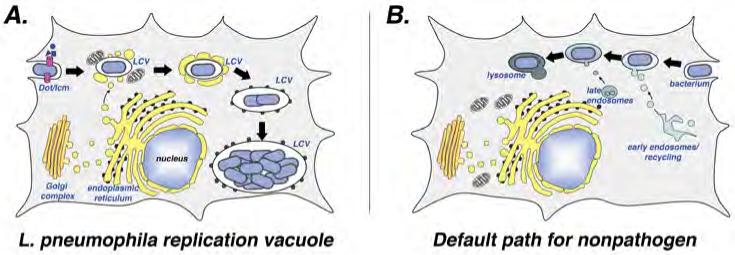
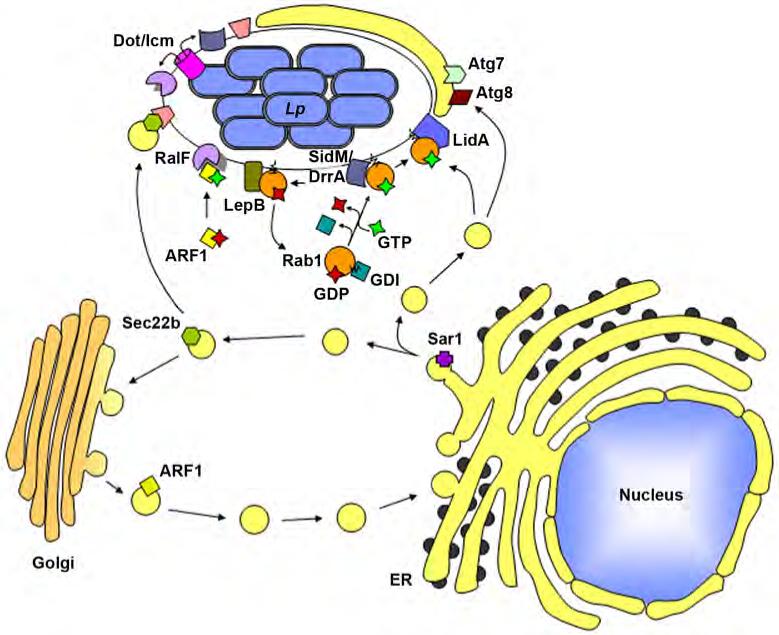
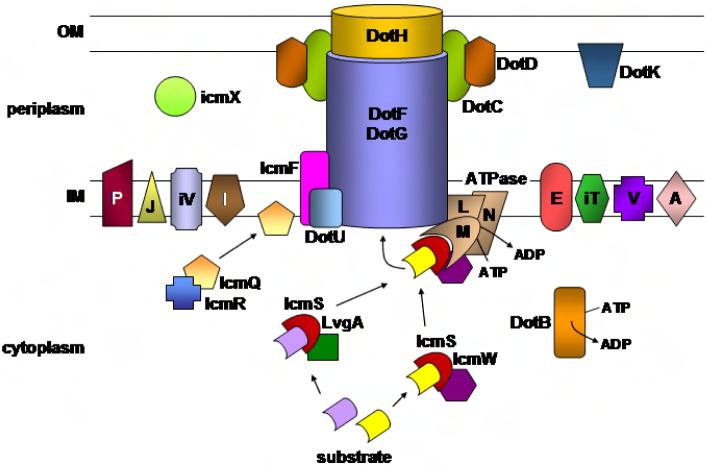
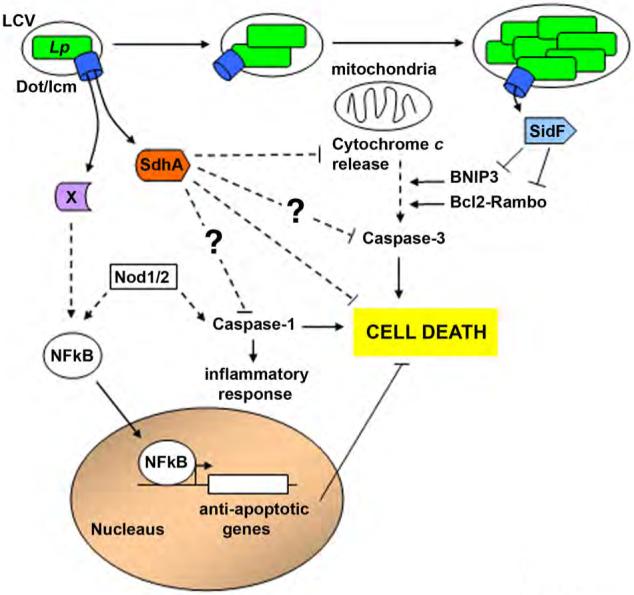
The pathogenesis of Legionella pneumophila is derived from its growth within lung macrophages after aerosols are inhaled from contaminated water sources. Interest in this bacterium stems from its ability to manipulate host cell vesicular-trafficking pathways and establish a membrane-bound replication vacuole, making it a model for intravacuolar pathogens. Establishment of the replication compartment requires a specialized translocation system that transports a large cadre of protein substrates across the vacuolar membrane. These substrates regulate vesicle traffic and survival pathways in the host cell. This Review focuses on the strategies that L. pneumophila uses to establish intracellular growth and evaluates why this microorganism has accumulated an unprecedented number of translocated substrates that are targeted at host cells.
Figures
References
-
- Muder RR, Yu VL, Woo AH. Mode of transmission of Legionella pneumophila. A critical review. Arch. Intern. Med. 1986;146:1607–12. - PubMed
Publication types
MeSH terms
Grants and funding
LinkOut - more resources
Full Text Sources
Molecular Biology Databases
