


A link between a hemostatic disorder and preterm PROM: a role for tissue factor and tissue factor pathway inhibitor
- PMID: 19012190
- PMCID: PMC2887664
- DOI: 10.1080/14767050802361807
A link between a hemostatic disorder and preterm PROM: a role for tissue factor and tissue factor pathway inhibitor
Abstract
Objective: Vaginal bleeding is a risk factor for preterm PROM (PPROM). A disorder of decidual hemostasis has been implicated in the genesis of PROM. Indeed, excessive thrombin generation has been demonstrated in PPROM both before and at the time of diagnosis. Decidua is a potent source of tissue factor (TF), the most powerful natural pro-coagulant. A decidual hemostatic disorder may link vaginal bleeding, PPROM and placental abruption. This study was conducted to determine the behaviour of maternal TF and its natural inhibitor, the tissue factor pathway inhibitor (TFPI) in PPROM.
Methods: This cross-sectional study included women with PPROM (n = 123) and women with normal pregnancies (n = 86). Plasma concentrations of TF and TFPI were measured by a sensitive immunoassay. Non-parametric statistics were used for analysis.
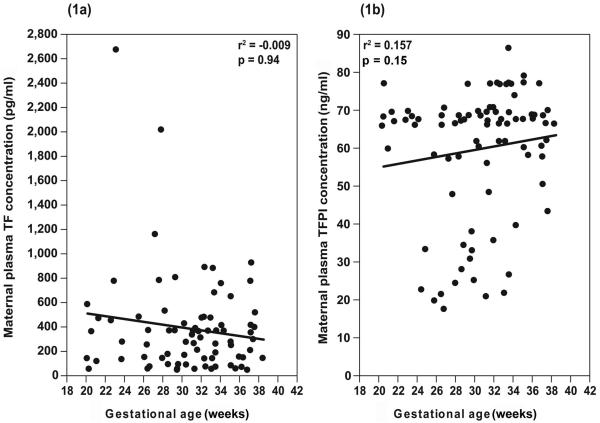
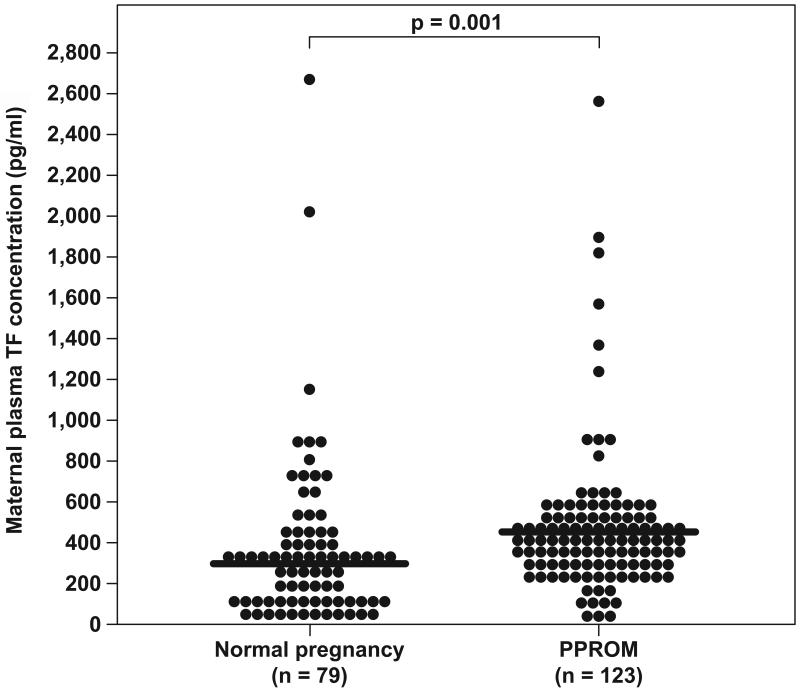
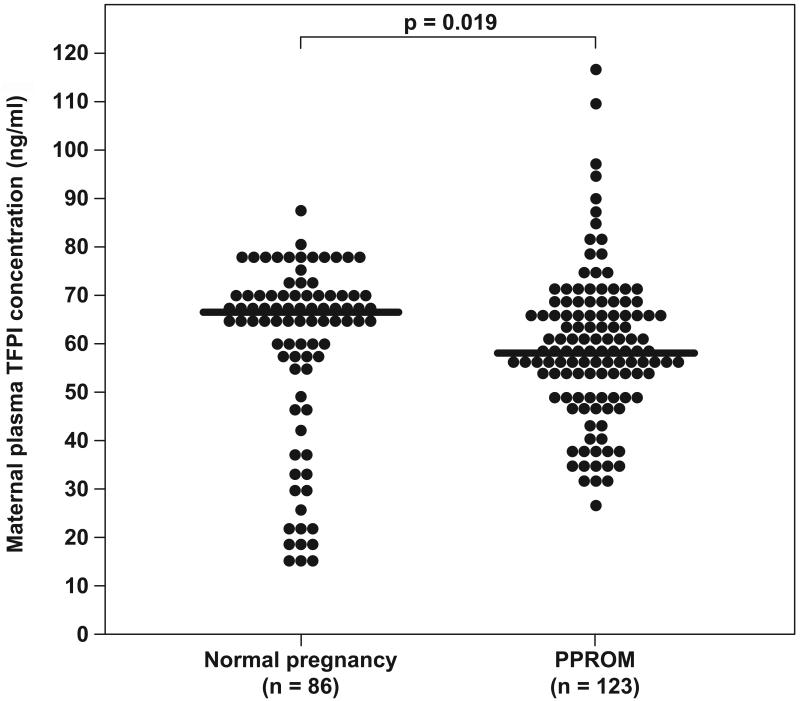
Results: (1) The median maternal plasma TF concentration was significantly higher in patients with PPROM than in women with normal pregnancies (median: 369.5 pg/mL; range: 3.27-2551 pg/mL vs. median: 291.5 pg/mL; range: 6.3-2662.2 pg/mL respectively, p = 0.001); (2) the median maternal TFPI plasma concentration was significantly lower in patients with PPROM than in women with normal pregnancies (median: 58.7 ng/mL; range: 26.3-116 ng/mL vs. median: 66.1 ng/mL; range: 14.3-86.5 ng/mL respectively, p = 0.019); (3) there was no correlation between the plasma concentration of TF and TFPI and the gestational age at sample collection; and (4) among patients with PPROM there was no association between the presence of intra-amniotic infection or inflammation and median plasma concentrations of TF and TFPI.
Conclusions: (1) Patients with PPROM have a higher median plasma concentration of TF and a lower median plasma concentration of TFPI than women with normal pregnancies. (2) These findings suggest that PPROM is associated with specific changes in the hemostatic/coagulation system.
Figures
References
-
- Kim YM, Chaiworapongsa T, Gomez R, Bujold E, Yoon BH, Rotmensch S, Thaler HT, Romero R. Failure of physiologic transformation of the spiral arteries in the placental bed in preterm premature rupture of membranes. Am J Obstet Gynecol. 2002;187:1137–1142. - PubMed
-
- Arias F, Victoria A, Cho K, Kraus F. Placental histology and clinical characteristics of patients with preterm premature rupture of membranes. Obstet.Gynecol. 1997;89:265–271. - PubMed
-
- Chaiworapongsa T, Espinoza J, Yoshimatsu J, Kim YM, Bujold E, Edwin S, Yoon BH, Romero R. Activation of coagulation system in preterm labor and preterm premature rupture of membranes. J.Matern.Fetal Neonatal Med. 2002;11:368–373. - PubMed
-
- Rosen T, Kuczynski E, O’Neill LM, Funai EF, Lockwood CJ. Plasma levels of thrombin-antithrombin complexes predict preterm premature rupture of the fetal membranes. J.Matern.Fetal Med. 2001;10:297–300. - PubMed
Publication types
MeSH terms
Substances
Grants and funding
LinkOut - more resources
Full Text Sources
Miscellaneous
