


Surprising alteration of antibacterial activity of 5"-modified neomycin against resistant bacteria
- PMID: 19012394
- PMCID: PMC2664170
- DOI: 10.1021/jm800997s
Surprising alteration of antibacterial activity of 5"-modified neomycin against resistant bacteria
Abstract
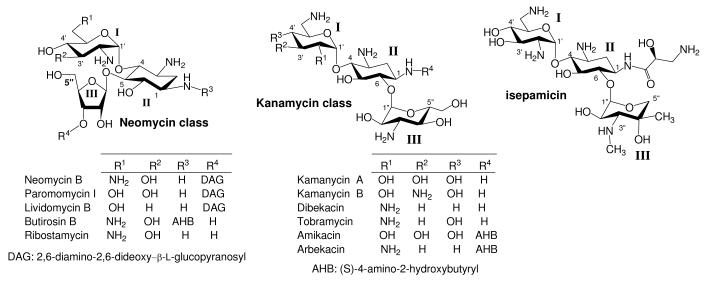
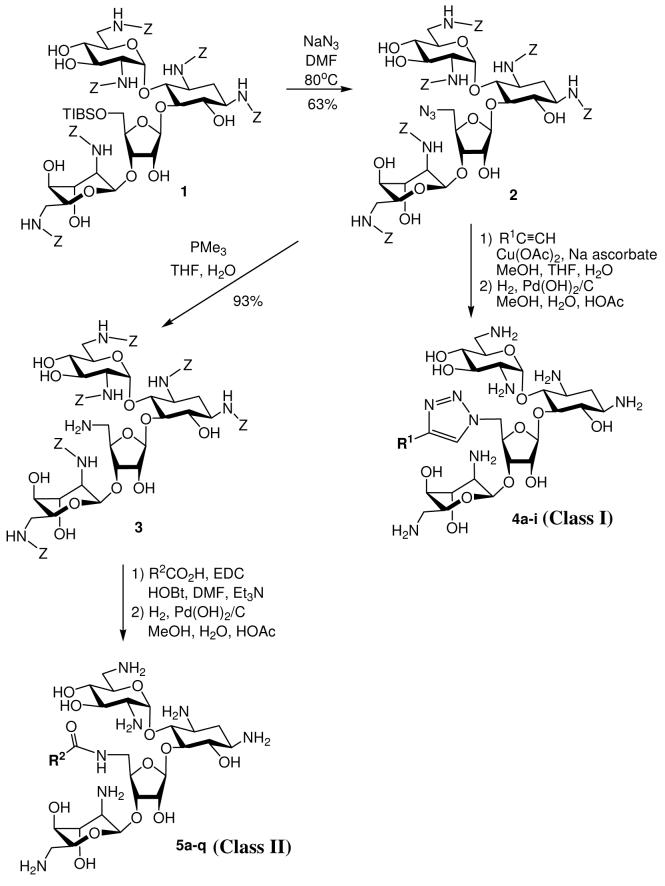
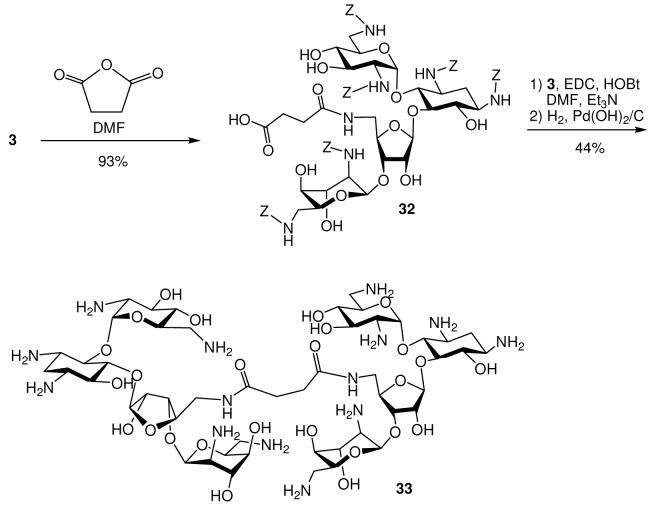
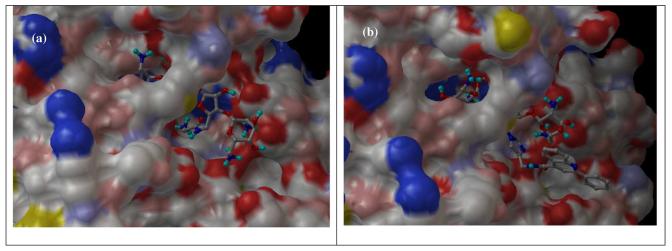
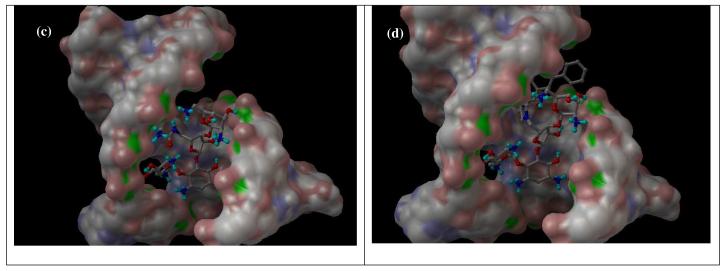
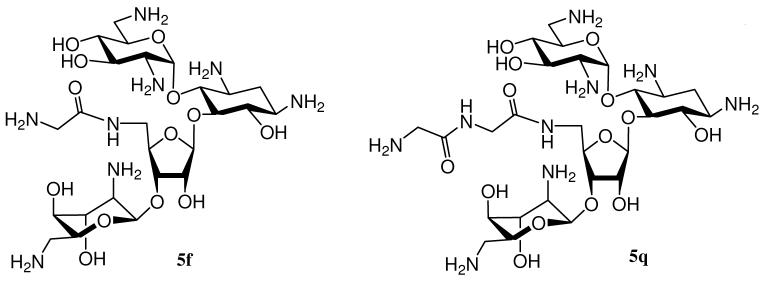
A facile synthetic protocol for the production of neomycin B derivatives with various modifications at the 5'' position has been developed. The structural activity relationship (SAR) against aminoglycoside resistant bacteria equipped with various aminoglycoside-modifying enzymes (AMEs) was investigated. Enzymatic and molecular modeling studies reveal that the superb substrate promiscuity of AMEs allows the resistant bacteria to cope with diverse structural modifications despite the observation that several derivatives show enhanced antibacterial activity compared to the parent neomycin. Surprisingly, when testing synthetic neomycin derivatives against other human pathogens, two leads exhibit prominent activity against both methicillin-resistant Staphylococcus aureus (MRSA) and vancomycin-resistant enterococci (VRE) that are known to exert a high level of resistance against clinically used aminoglycosides. These findings can be extremely useful in developing new aminoglycoside antibiotics against resistant bacteria. Our result also suggests that new biological and antimicrobial activities can be obtained by chemical modifications of old drugs.
Figures
References
-
- Umezawa S, Tsuchiya T. In: Aminoglycoside Antibiotics. Umezawa H, Hooper IR, editors. Springer-Verlag; New York: 1982. pp. 37–110.
-
- Haddad J, Kotra LP, Mobashery S. In: Glycochemistry Principles, Synthesis, and Applications. Wang PG, Bertozzi CR, editors. Marcel Dekker, Inc.; New York/Basel: 2001. pp. 353–424.
-
- Wang J, Chang C-WT. In: Aminoglycoside Antibiotics. Arya DP, editor. John Wiley & Sons, Inc.; 2007. pp. 141–180.
-
- Wang J, Li J, Chen H-N, Chang H, Tanifum CT, Liu H-H, Czyryca PG, Chang C-WT. Glycodiversification for optimization of the kanamycin class aminoglycosides. J. Med. Chem. 2005;48:6271–6285. - PubMed
Publication types
MeSH terms
Substances
Grants and funding
LinkOut - more resources
Full Text Sources
Other Literature Sources
Medical
Miscellaneous
