. 2009 Jun;27(3-4):299-306.
doi: 10.1016/j.reprotox.2008.10.003. Epub 2008 Nov 1.

Differential effects of peripubertal exposure to perfluorooctanoic acid on mammary gland development in C57Bl/6 and Balb/c mouse strains

Affiliations

Differential effects of peripubertal exposure to perfluorooctanoic acid on mammary gland development in C57Bl/6 and Balb/c mouse strains

Chengfeng Yang et al. Reprod Toxicol. 2009 Jun.

Abstract

Perfluorooctanoic acid (PFOA), a common and persistent industrial byproduct detected in human sera, has raised health concerns. PFOA is detrimental to lactational function and postnatal mammary gland development in CD-1 mice after gestational exposure. We have examined the peripubertal period (21 through 50 days of age) as an important window of mammary gland susceptibility to environmental exposures that may affect breast cancer risk later in life. The effects of PFOA (0.1-10mg/kg BW) were examined in Balb/c and C57BL/6 mice. PFOA treatment caused hepatocellular hypertrophy and delayed vaginal opening in both mouse strains. While Balb/c mice exhibited only inhibition of mammary gland and uterine development (5, 10mg/kg), C57BL/6 mice exhibited stimulatory effects in both organs at low dose (5mg/kg) and inhibition at higher dose (10mg/kg). This underscores the need for caution when drawing conclusions about the effects of PFOA and possibly other environmental pollutants on the basis of studies in a single mouse strain.


Conflict of interest statement

Conflict of interest: the authors declare that there are no conflicts of interest.

Figures
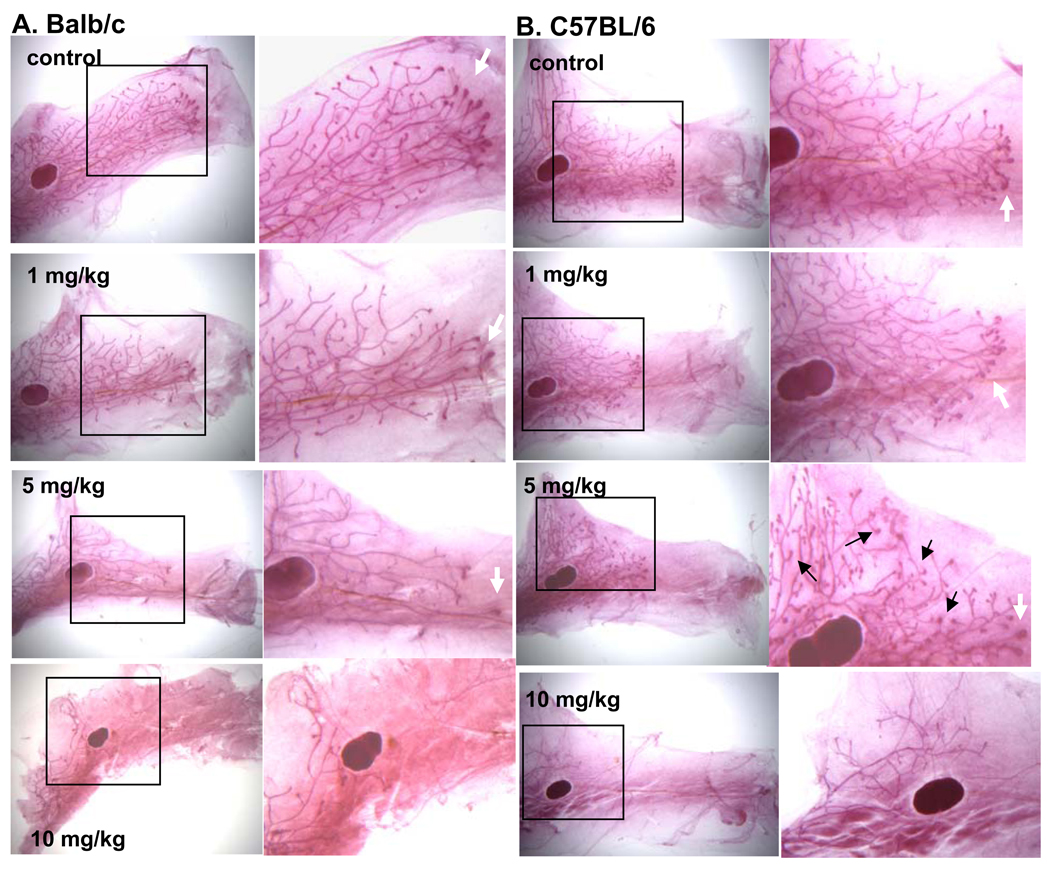
Fig. 1
Fig. 1. Effect of PFOA treatment on mammary gland development
Mice were treated with vehicle control or indicated doses of PFOA as described in Materials and Methods. Twenty-four h after the last vehicle or PFOA treatment, mice were killed and mammary gland whole mounts were prepared as described in Materials and Methods. Representative mammary gland whole mount photomicrographs from control- or PFOA-treated (A) Balb/c or (B) C57BL/6 mice. Black arrows indicate stimulated TDs and white arrows indicate TEBs. (Mag. X 2.5 ;Mag of insets X 4.5).
Fig. 2
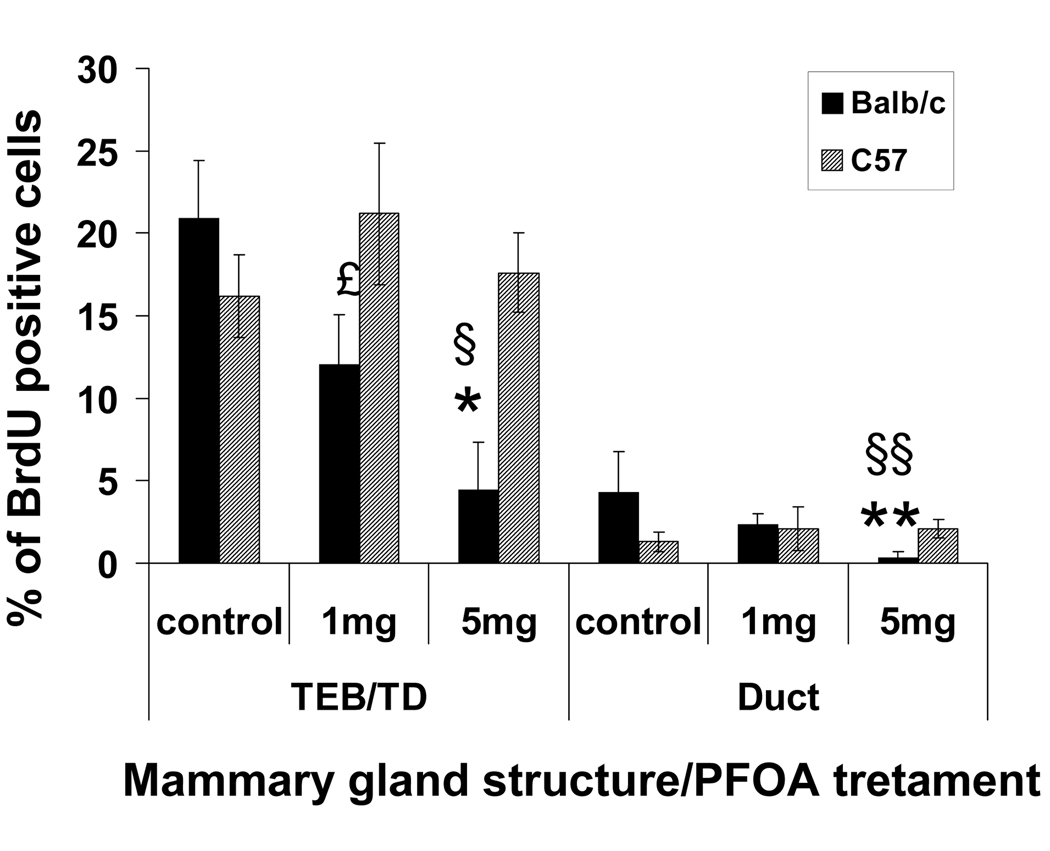
Fig. 2. Effect of PFOA treatment on mouse mammary gland epithelial cell proliferation
Mouse mammary epithelial cell proliferation was determined by BrdU incorporation assay. Two h before killing, mice were injected with BrdU (70 mg/kg of body weight). BrdU incorporation was detected in histological sections by immunoflourescence staining as described in Materials and Methods. Cell proliferation was quantitated in TEBs, stimulated TDs and ducts by counting the number of BrdU positive luminal epithelial cell nuclei from captured images using MetaMorph software as described in Materials and Methods. Five mice per treatment group were analyzed, and a minimum of 1000 total cells and three independent sections per mouse were analyzed. The values for TEBs and stimulated TDs were combined. Data are presented as Mean ± S.E.M. (n=5). * p<0.05 compared with vehicle-treated Balb/c TEB/TD; ** p<0.05 compared with vehicle-treated Balb/c duct; £ p<0.05 PFOA (1mg/kg)-treated C57BL/6 TEB/TD compared with PFOA (1 mg/kg)-treated Balb/c TEB/TD; § p<0.05 PFOA (5mg/kg)-treated C57BL/6 TEB/TD compared with PFOA (5 mg/kg)-treated Balb/c TEB/TD; §§ p< 0.05 PFOA (5mg/kg)-treated C57BL/6 duct compared with PFOA (5 mg/kg)-treated Balb/c duct.
Fig. 3
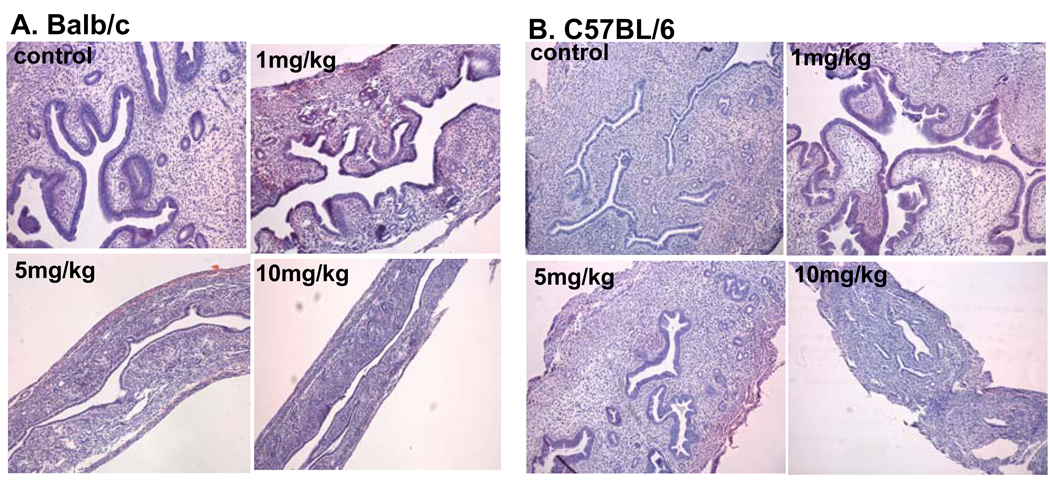
Fig. 3. Effect of PFOA treatment on the uterus
Mice were treated with vehicle control or indicated doses of PFOA as described in Materials and Methods. At the time of termination, uteri were harvested and fixed in 10% neutral formalin. H & E staining of uterus was performed as described in Materials and Methods. Representative photomicrographs of uterine sections from vehicle control- or PFOA-treated (A) Balb/c or (B) C57BL/6 mice. (Mag. X 40).
Fig. 4
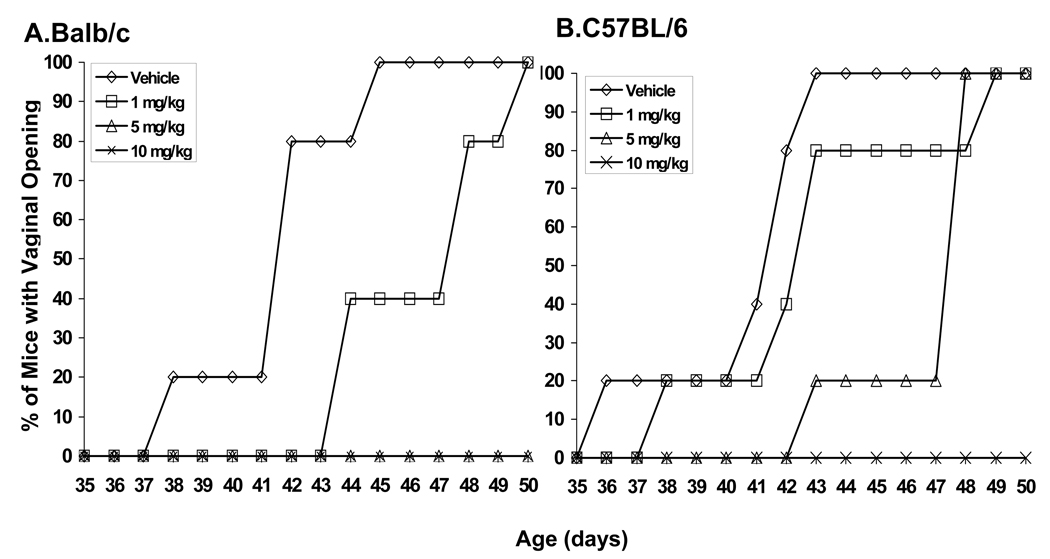
Fig. 4. Effect of PFOA treatment on the timing of vaginal opening
Mice were treated with vehicle control or indicated doses of PFOA as described in Materials and Methods. Appearance of vaginal opening was monitored and recorded daily. Time-course of the timing of vaginal opening in vehicle- or PFOA-treated (A) Balb/ c or (B) C57BL/6 mice. Data are presented as the percent (%) of mice with vaginal opening at indicated day of age.
Fig. 5
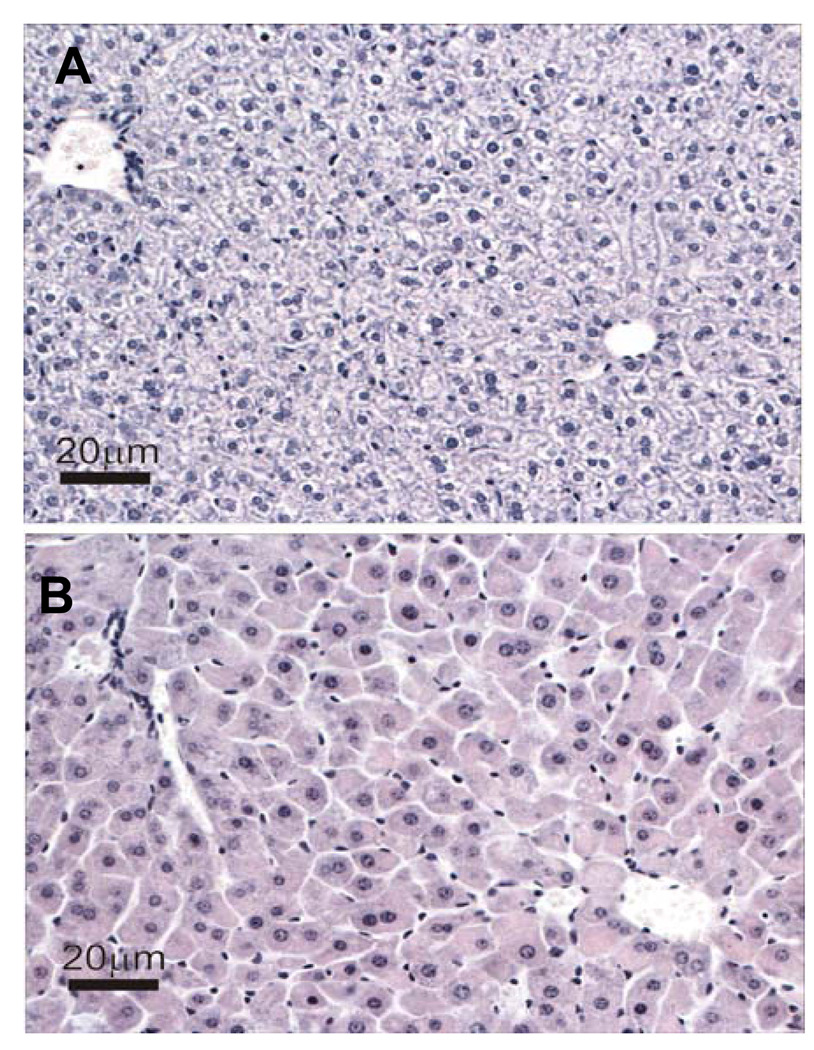
Fig. 5. Effect of PFOA treatment on liver
Mice were treated with vehicle control or indicated doses of PFOA as described in Materials and Methods. At the time of termination, livers were harvested and fixed in 10% neutral formalin. H & E staining of livers was performed as described in Materials and Methods. Representative photomicographs of liver sections from (A) vehicle- or (B) PFOA-treated (5 mg/kg) C57BL/6 mice. (Scale bar = 20 µm).

References

    1. Hekster FM, Laane RW, de Voogt P. Environmental and toxicity effects of perfluoroalkylated substances. Rev Environ Contam Toxicol. 2003;179:99–121. - PubMed
    1. Betts KS. Perfluoroalkyl acids: what is the evidence telling us? Environ Health Perspect. 2007;115:A250–A256. - PMC - PubMed
    1. Fromme H, Tittlemier SA, Völkel W, Wilhelm M, Twardella D. Perfluorinated compounds - Exposure assessment for the general population in western countries. Int J Hyg Environ Health. 2008 Jun 17; [Epub ahead of print] - PubMed
    1. Emmett EA, Shofer FS, Zhang H, Freeman D, Desai C, Shaw LM. Community exposure to perfluorooctanoate: relationships between serum concentrations and exposure sources. J Occup Environ Med. 2006;48:759–770. - PMC - PubMed
    1. Calafat AM, Wong LY, Kuklenyik Z, Reidy JA, Needham LL. Polyfluoroalkyl chemicals in the U.S. population: data from the National Health and Nutrition Examination Survey (NHANES) 2003–2004 and comparisons with NHANES 1999–2000. Environ Health Perspect. 2007;115:1596–1602. - PMC - PubMed

Publication types

LinkOut - more resources