Rhesus monkeys (Macaca mulatta) lack expertise in face processing
- PMID: 19014263
- PMCID: PMC2859434
- DOI: 10.1037/0735-7036.122.4.390
Rhesus monkeys (Macaca mulatta) lack expertise in face processing
Abstract
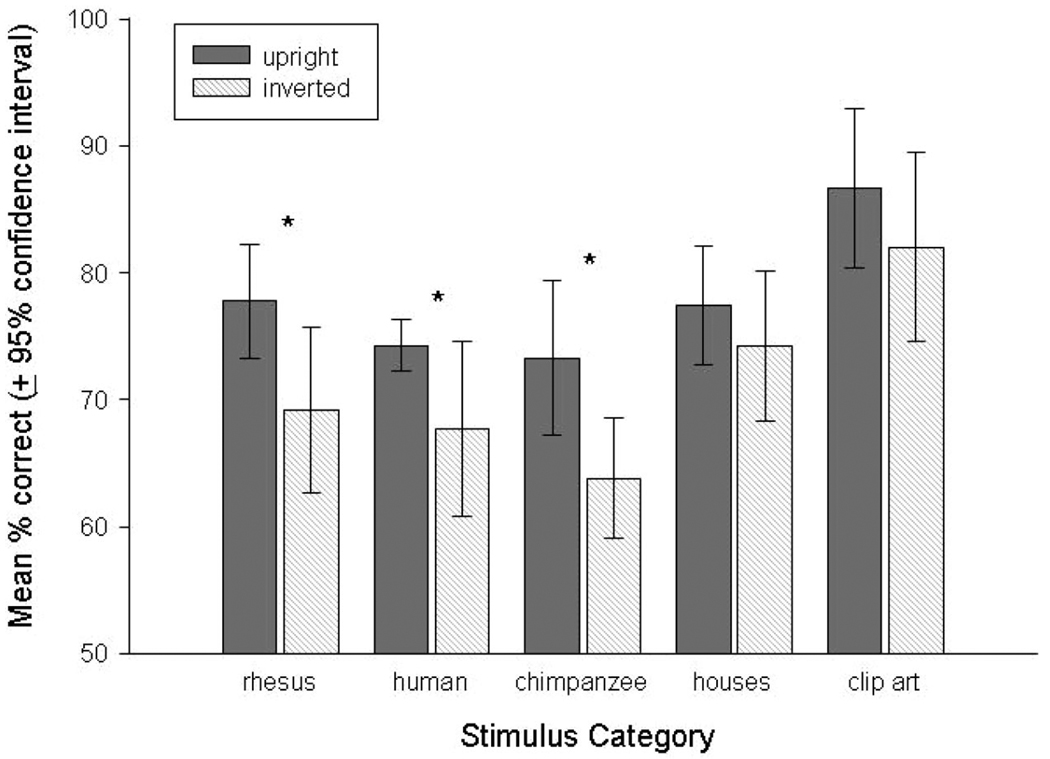
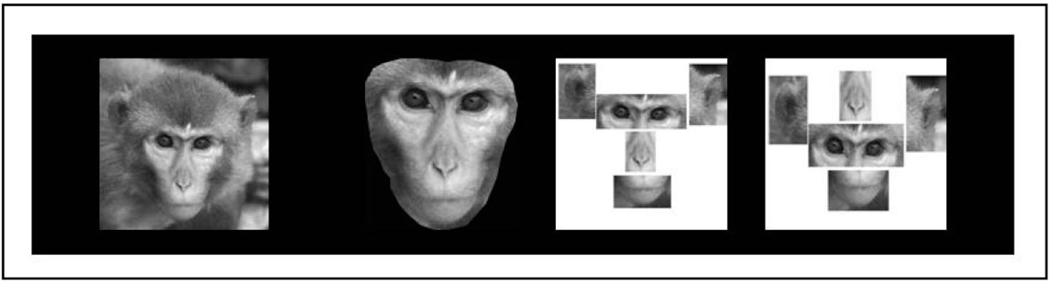
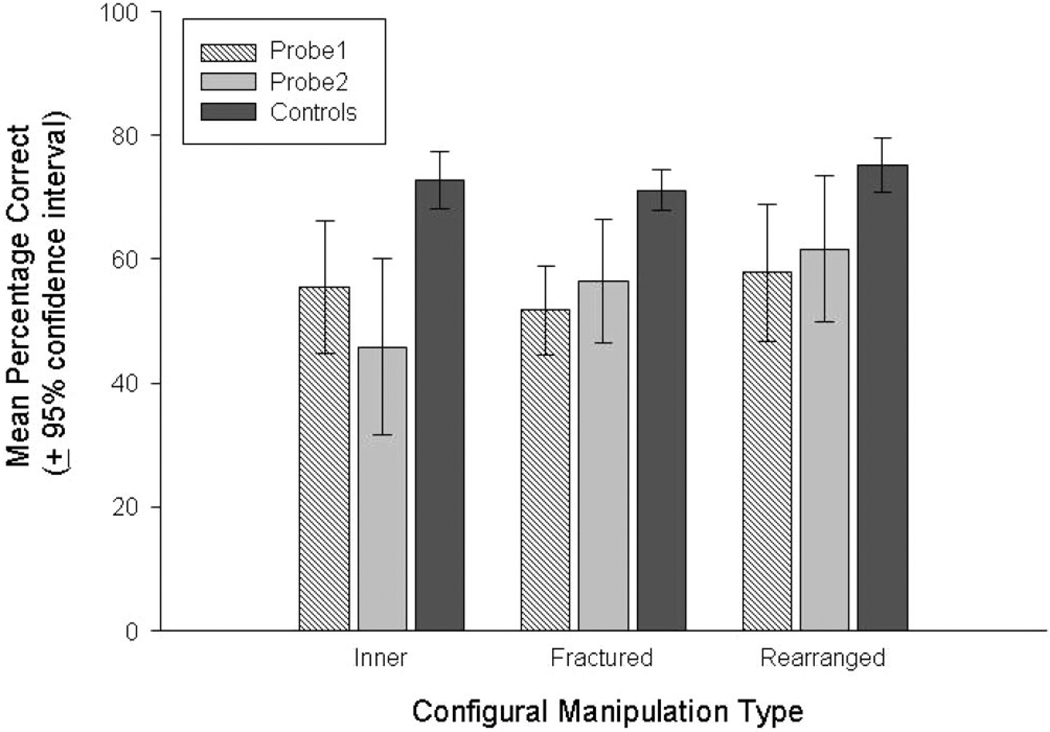
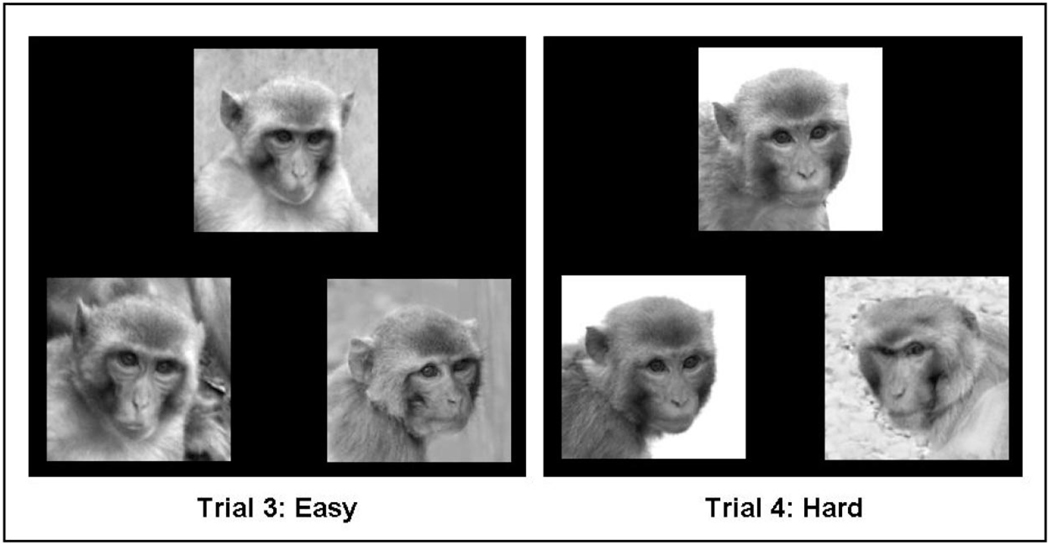
Faces are salient stimuli for primates that rely predominantly on visual cues for recognizing conspecifics and maintaining social relationships. While previous studies have shown similar face discrimination processes in chimpanzees and humans, data from monkeys are unclear. Therefore, three studies examined face processing in rhesus monkeys using the face inversion effect, a fractured face task, and an individual recognition task. Unlike chimpanzees and humans, the monkeys showed a general face inversion effect reflected by significantly better performance on upright compared to inverted faces (conspecifics, human and chimpanzees faces) regardless of the subjects' expertise with those categories. Fracturing faces alters first- and second-order configural manipulations whereas previous studies in chimpanzees showed selective deficits for second-order configural manipulations. Finally, when required to individuate conspecific's faces, i.e., matching two different photographs of the same conspecific, monkeys showed poor discrimination and repeated training. These results support evolutionary differences between rhesus monkeys and Hominoids in the importance of configural cues and their ability to individuate conspecifics' faces, suggesting a lack of face expertise in rhesus monkeys.
(PsycINFO Database Record (c) 2008 APA, all rights reserved).
Figures
References
-
- Bard KA, Platzman KA, Lester BM, Suomi SJ. Orientation to social and nonsocial stimuli in neonatal chimpanzees and humans. Infant Behavior and Development. 1992;15:43–56.
-
- Barrett L, Henzi P, Dunbar RIM. Primate cognition: From “what now?” to “what if?” Trends in Cognitive Science. 2003;7:494–497. - PubMed
-
- Brown SD, Dooling RJ. Perception of conspecific faces by budgerigars (Melopsittacus undulatus): II. Synthetic models. Journal of Comparative Psychology. 1993;107:48–60. - PubMed
-
- Bruce C. Face recognition by monkeys: Absence of an inversion effect. Neuropsychologia. 1982;20:515–521. - PubMed
-
- Bushnell IWR. The origins of face perception. In: Simion FBGF, Butterworth G, editors. The development of sensory, motor and cognitive capacities in early infancy: From perception to cognition. E. Sussex, UK: Psychology Press; 1998. pp. 69–86.