


doi: 10.1002/9780471729259.mc03a05s11.
Laboratory maintenance of Rickettsia rickettsii
Affiliations
- PMID: 19016440
- PMCID: PMC2725428
- DOI: 10.1002/9780471729259.mc03a05s11
Item in Clipboard
Laboratory maintenance of Rickettsia rickettsii
Curr Protoc Microbiol.
2008 Nov.
Abstract
This unit includes protocols for the laboratory maintenance of the obligate intracellular bacterium Rickettsia rickettsii, including propagation in mammalian cell cultures, as well as isolation, counting, and storage procedures. Regulations for working with R. rickettsii in biosafety level 3 containment are also discussed.
Figures
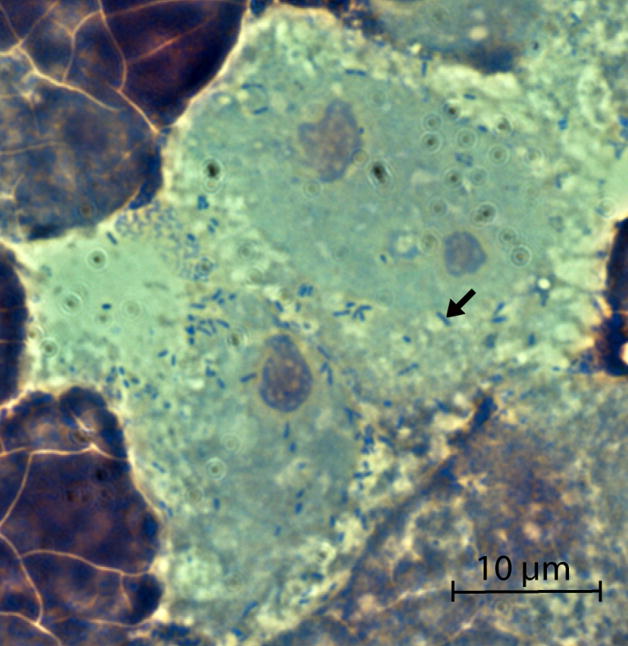
Giménez staining of rickettsiae-infected Vero 76 cells. The black arrow points to an individual bacterium.
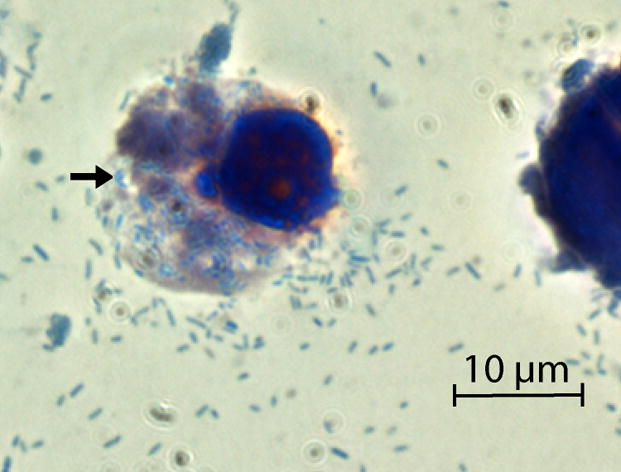
Diff-Quik staining of rickettsiae-infected Vero 76 cells. The black arrow points to an individual bacterium.
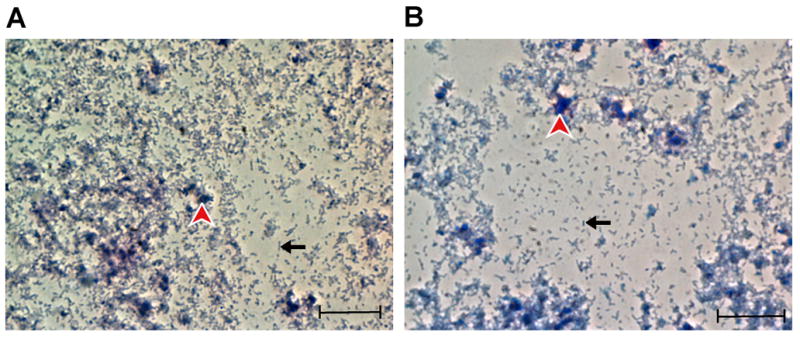
Rickettsiae, partially purified from Vero 76 cells. The black arrow points to an individual bacterium, and the red arrowhead points to cellular debris. (A) Giménez staining. (B) Diff-Quik staining. Scale bar = 10 μm
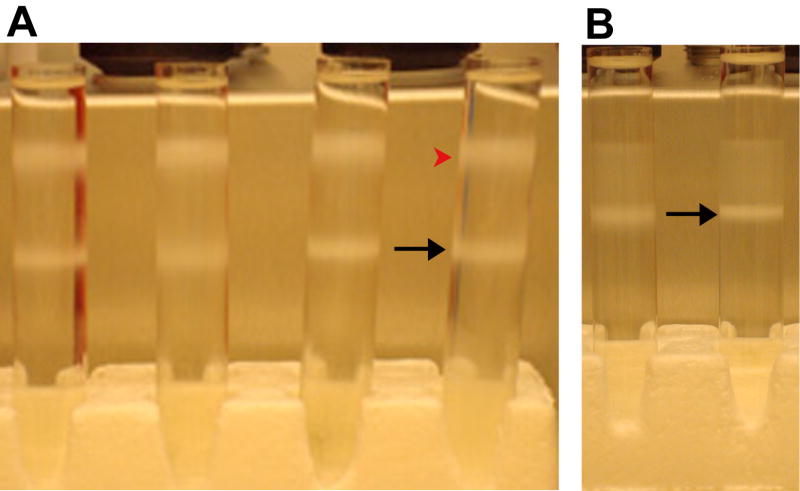
Ultracentrifuge tubes with rickettsiae purified from Vero 76 cells by Renografin density gradient ultracentrifugation. The rickettsiae were purified from six 150cm2 flasks of heavily infected cells. (A) Tubes after the first run through the Renografin gradient. The black arrow points to the band of viable rickettsiae at the 32%–36% Renografin interface. The red arrowhead points to the debris at the SPG-32% Renografin interface. (b) Tubes after the second run through the Renografin gradient. The black arrow points to the band of viable rickettsiae at the 32%–36% Renografin interface.
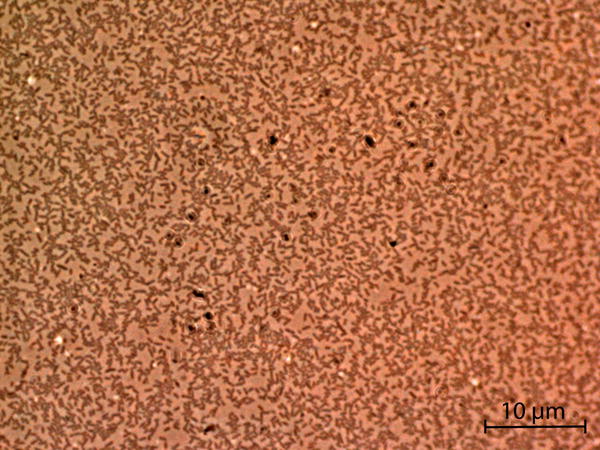
Giménez staining of rickettsiae purified from Vero 76 cell by two rounds of Renografin density gradient ultracentrifugation.
References
Literature Cited
-
- Dumler JS, Walker DH. Rocky Mountain spotted fever changing ecology and persisting virulence. New Engl J Med. 2005;353:551–3. - PubMed
-
- Giemsa G. Eine vereinfachung und vervollkommnung meiner methylenazur-methylenblau-eosin-farbemethode zur erzielung der Romanowsky-Nocht’schen chromatinfarbung. Zentabl Bakteriol Parasitenkd Infectkrankh. 1904;37:308.
-
- Giménez DF. Staining rickettsiae in yolk-sac cultures. Stain Technol. 1964;39:135–140. - PubMed
Key References
-
- Weiss E, Coolbaugh JC, Williams JC. Separation of viable Rickettsia typhi from yolk sac and L cell host components by Renografin density gradient centrifugation. Appl Microbiol. 1975;30:456–463. This is the seminal article describing the use of a Renografin density gradient for the isolation of pure, viable rickettsiae. - PMC - PubMed
-
- Kimman TG, Smit E, Klein MR. Evidence-based biosafety: a review of the principles and effectiveness of micrbiological containment measures. Clin Microbiol Rev. 2008;21:403–425. The review article discusses the principles and methods of biosafety regulations as determined by the NIH, the CDC, the WHO and the European Union. - PMC - PubMed
MeSH terms
Grants and funding
LinkOut - more resources
Full Text Sources
