


Evidence for association between polymorphisms in the cannabinoid receptor 1 (CNR1) gene and cannabis dependence
- PMID: 19016476
- PMCID: PMC2703788
- DOI: 10.1002/ajmg.b.30881
Evidence for association between polymorphisms in the cannabinoid receptor 1 (CNR1) gene and cannabis dependence
Abstract
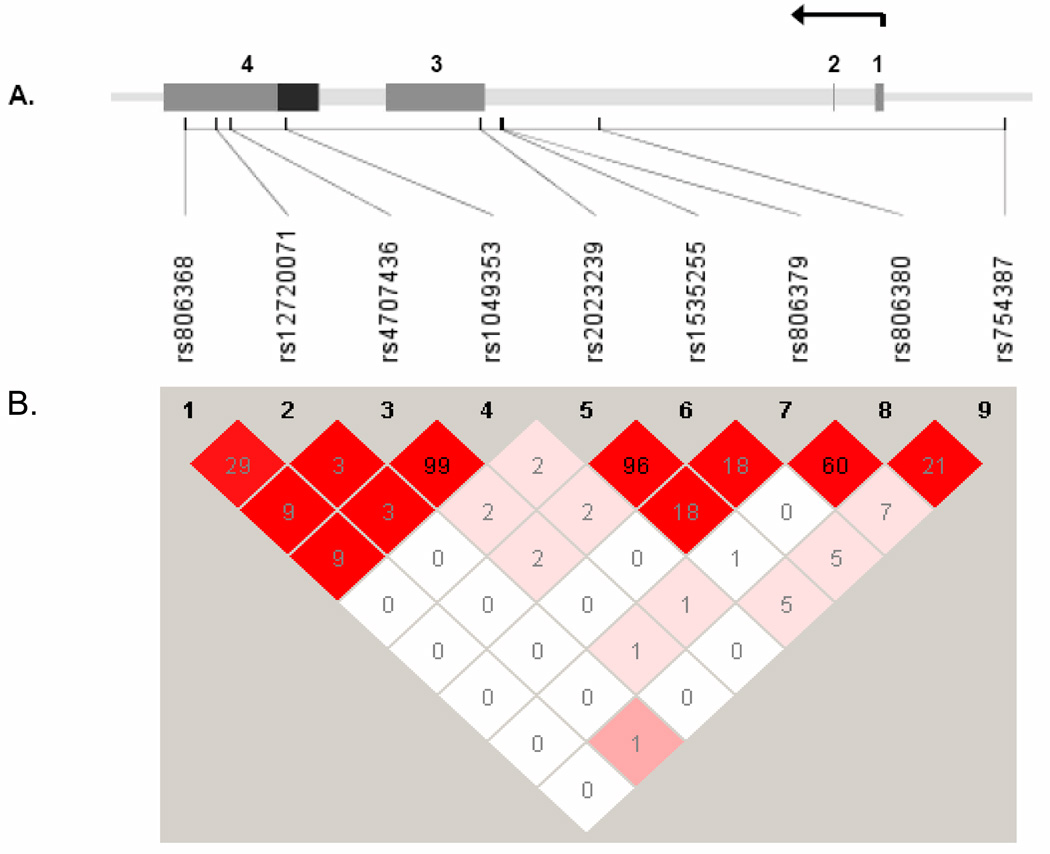
Genomic studies of cannabis use disorders have been limited. The cannabinoid receptor 1 gene (CNR1) on chromosome 6q14-15 is an excellent candidate gene for cannabis dependence due to the important role of the G-protein coupled receptor encoded by this gene in the rewarding effects of Delta9-tetrahydrocannabinol. Previous studies have found equivocal evidence for an association between SNPs in CNR1 and a general vulnerability to substance use disorders. We investigate the association between 9 SNPs spanning CNR1 and cannabis dependence in 1,923 individuals. Two SNPs that were previously associated with cannabis dependence in other studies were also significant with this phenotype in our analyses [rs806368 (P = 0.05) and rs806380 (P = 0.009)]. Haplotype analyses revealed the association to be largely driven by the SNP rs806380. These results suggest a role for the cannabinoid receptor 1 gene in cannabis dependence.
2008 Wiley-Liss, Inc.
Figures
References
-
- Agrawal A, Lynskey M. The Genetic Epidemiology of Cannabis Use, Abuse and Dependence: A Review. Addiction. 2006;101:801–812. - PubMed
-
- Agrawal A, Hinrichs A, Dunn G, Bertelsen S, Dick D, Saccone SF, Saccone NL, Grucza R, Wang JC, Cloninger CR, Edenberg H, Foroud T, Hesselbrock V, Kramer J, Bucholz K, Kuperman S, Nurnberger J, Porjesz B, Schuckit M, Goate A, Bierut L. Linkage scan for quantitative traits identifies new regions of interest for substance dependence in the Collaborative Study on the Genetics of Alcoholism (COGA) Sample. Drug Alcohol Depend. 2008a;93:12–20. - PMC - PubMed
-
- Agrawal A, Lynskey MT, Madden PA, Bucholz KK, Heath AC. A latent class analysis of illicit drug abuse/dependence: results from the National Epidemiological Survey on Alcohol and Related Conditions. Addiction. 2007;102:94–104. - PubMed
-
- Agrawal A, Pergadia ML, Saccone SF, Lynskey MT, Wang JC, Martin NG, Henders A, Campbell M, Garcia R, Broms U, Todd RD, Goate A, Rice J, Kaprio J, Heath AC, Montgomery GW, Madden PA. An Autosomal Linkage Scan for Cannabis Use Disorders in the Nicotine Addiction Genetics Project. Arch Gen Psychiatry. 2008b in press. - PubMed
-
- American Psychiatric Association. Diagnostic and Statistical Manual of Mental Disorders. Washington, DC: American Psychiatric Association; 1994.
Publication types
MeSH terms
Substances
Grants and funding
LinkOut - more resources
Full Text Sources
Other Literature Sources
Medical
