


Relationship of insulin resistance and related metabolic variables to coronary artery disease: a mathematical analysis
- PMID: 19017770
- PMCID: PMC2628708
- DOI: 10.2337/dc08-0854
Relationship of insulin resistance and related metabolic variables to coronary artery disease: a mathematical analysis
Abstract
Objective: People with diabetes have an increased risk of coronary artery disease (CAD). An unanswered question is what portion of CAD can be attributed to insulin resistance, related metabolic variables, and other known CAD risk factors.
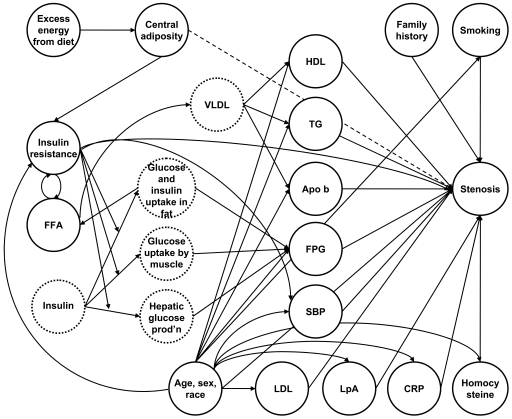
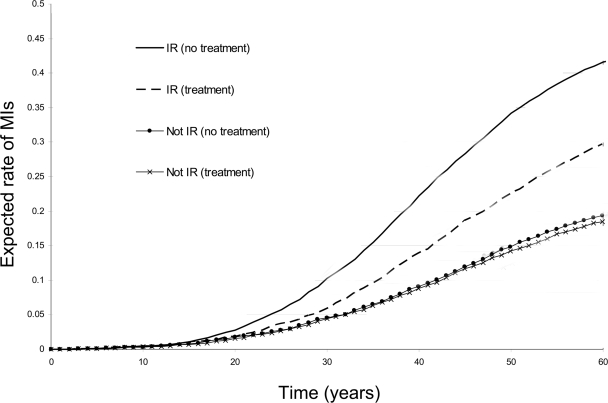
Research design and methods: The Archimedes model was used to estimate the proportion of myocardial infarctions that would be prevented by maintaining insulin resistance and other risk factors at healthy levels. Person-specific data from the National Health and Nutrition Examination Survey 1998-2004 were used to create a simulated population representative of young adults in the U.S. This population was then entered into a series of simulated clinical trials designed to explore the effects of each risk factor. Each trial had a control arm (all risk factors were allowed to progress without interventions) and a treatment arm (a risk factor was held to its value in young healthy adults). The trials continued for 60 years. The effects of these hypothetical "cures" of each risk factor provide estimates of their impact on CAD.
Results: In young adults, preventing insulin resistance would prevent approximately 42% of myocardial infarctions. The next most important determinant of CAD is systolic hypertension, prevention of which would reduce myocardial infarctions by approximately 36%. Following systolic blood pressure, the most important determinants are HDL cholesterol (31%), BMI (21%), LDL cholesterol (16%), triglycerides (10%), fasting plasma glucose and smoking (both approximately 9%), and family history (4%).
Conclusions: Insulin resistance is likely the most important single cause of CAD. A better understanding of its pathogenesis and how it might be prevented or cured could have a profound effect on CAD.
Figures
References
-
- Reaven GM: Banting lecture 1988: role of insulin resistance in human disease. Diabetes 37:1595–1607, 1988 - PubMed
-
- Zavaroni I, Bonara E, Pagliara M, Dall'Aglio E, Luchetti L, Buonnano G, Bonati PA, Bergonzani M, Gnudi L, Paseri M: Risk factors for coronary artery disease in healthy persons with hyperinsulinemia and normal glucose tolerance. N Engl J Med 320:702–706, 1989 - PubMed
-
- Boden G: Role of fatty acids in the pathogenesis of insulin resistance and NIDDM. Diabetes 46:3–10, 1997 - PubMed
Publication types
MeSH terms
LinkOut - more resources
Full Text Sources
Medical
Miscellaneous
