


The Social Connectedness of Older Adults: A National Profile*
- PMID: 19018292
- PMCID: PMC2583428
- DOI: 10.1177/000312240807300201
The Social Connectedness of Older Adults: A National Profile*
Abstract
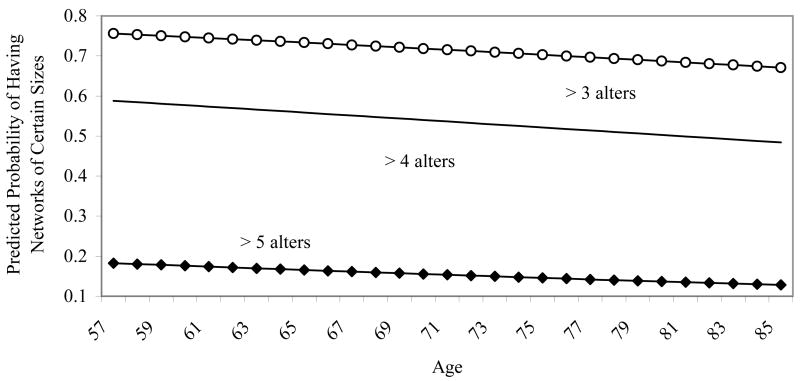
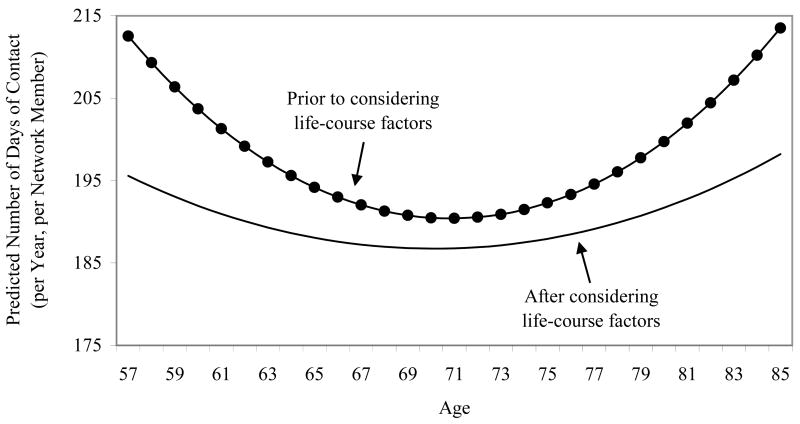
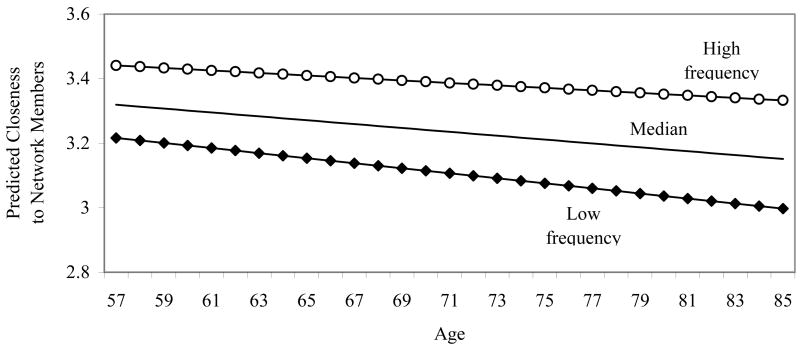
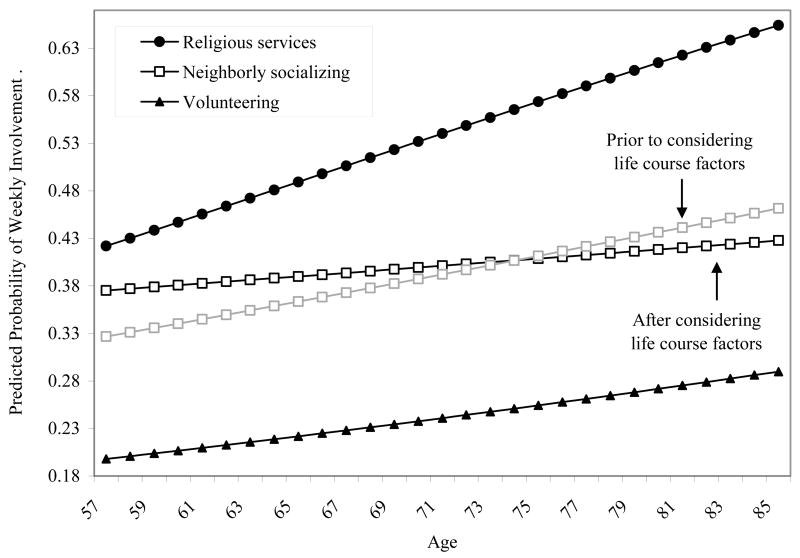
For decades, scholars have wrestled with the notion that old age is characterized by social isolation. However, there has been no systematic, nationally representative evaluation of this possibility in terms of social network connectedness. In this paper, the authors develop a profile of older adults' social integration with respect to nine dimensions of connectedness to interpersonal networks and voluntary associations. The authors use new data from the National Social Life, Health, and Aging Project (NSHAP), a population-based study of non-institutionalized older Americans aged 57-85 conducted in 2005-2006. Findings suggest that among older adults, age is negatively related to network size, closeness to network members, and number of non-primary-group ties. On the other hand, age is positively related to frequency of socializing with neighbors, religious participation, and volunteering. In addition, it has a U-shaped relationship with volume of contact with network members. These findings are inconsistent with the notion that old age has a universal negative influence on social connectedness. Instead, life course factors have divergent consequences for different forms of social connectedness. Some later life transitions, like retirement and bereavement, may prompt greater connectedness. The authors close by urging increased dialogue between social gerontological and social network research.
Figures
References
-
- Adams Rebecca G, Blieszner Rosemary. Ageing Well with Friends and Family. The American Behavioral Scientist. 1995;39:209–24.
-
- Agresti Alan. Categorical Data Analysis. 2. New York: Wiley; 2002.
-
- Ainlay Stephen C, Singleton Royce, Jr, Swigert Victoria L. Aging and Religious Participation: Reconsidering the Effects of Health. Journal for the Scientific Study of Religion. 1992;31:175–88.
-
- Ajrouch Kristine J, Blandon Alysia Y, Antonucci Toni C. Social Networks Among Men and Women: The Effects of Age and Socioeconomic Status. Journals of Gerontology Series B: Psychological Sciences and Social Sciences. 2005;60:S311–S317. - PubMed
Grants and funding
LinkOut - more resources
Full Text Sources