


Radiofrequency ablation: simultaneous application of multiple electrodes via switching creates larger, more confluent ablations than sequential application in a large animal model
- PMID: 19019701
- PMCID: PMC2667960
- DOI: 10.1016/j.jvir.2008.09.021
Radiofrequency ablation: simultaneous application of multiple electrodes via switching creates larger, more confluent ablations than sequential application in a large animal model
Abstract
Purpose: To compare radiofrequency (RF) ablations created by using a sequential technique to those created simultaneously by using a switching algorithm in ex vivo and in vivo liver models.
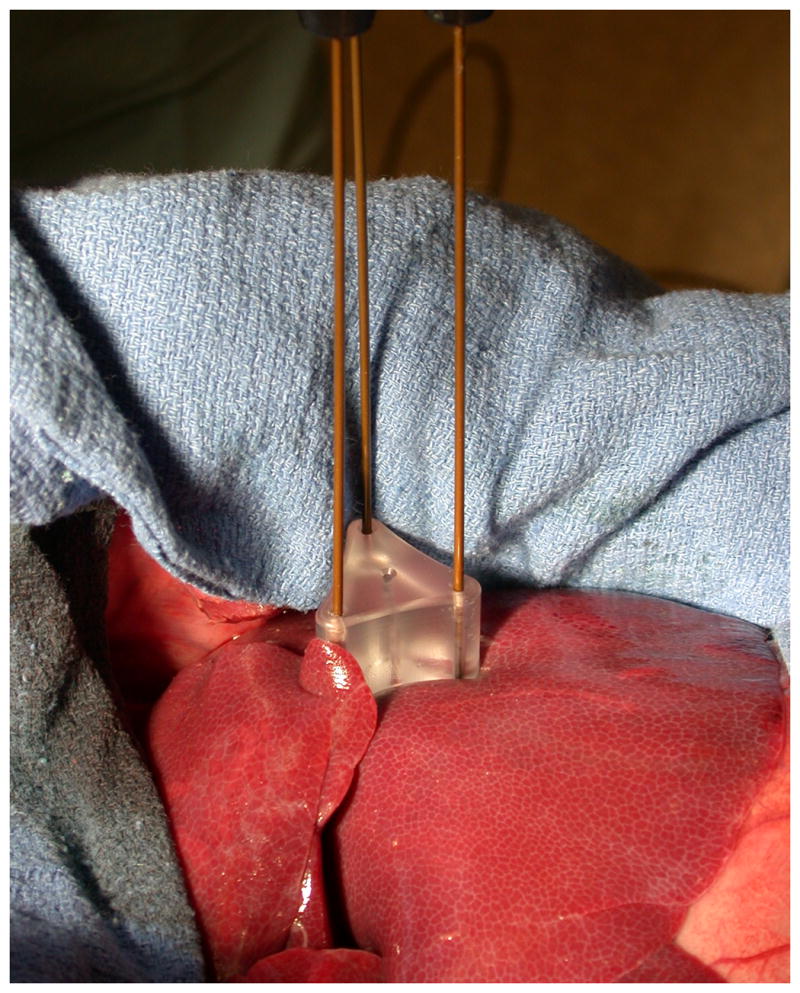
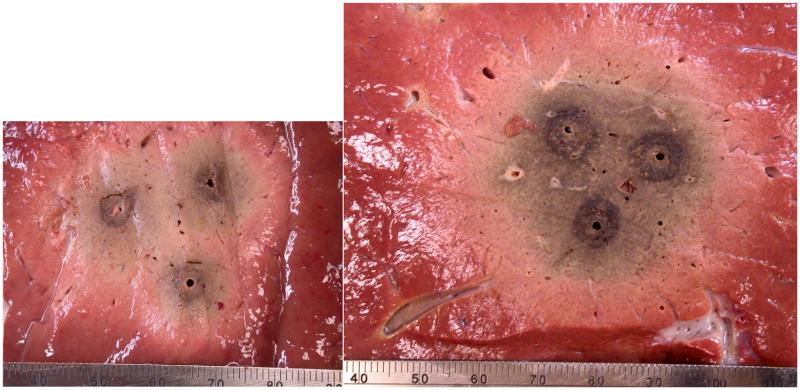
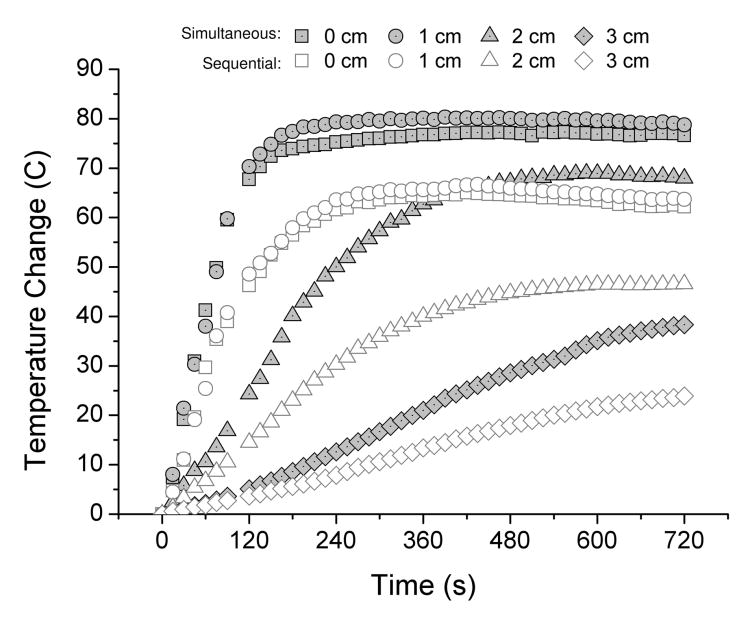
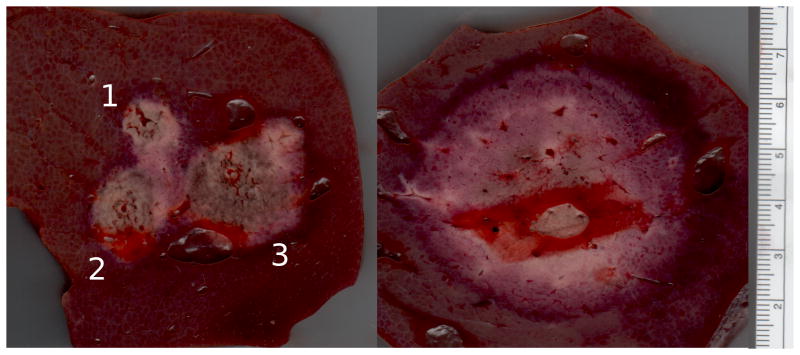
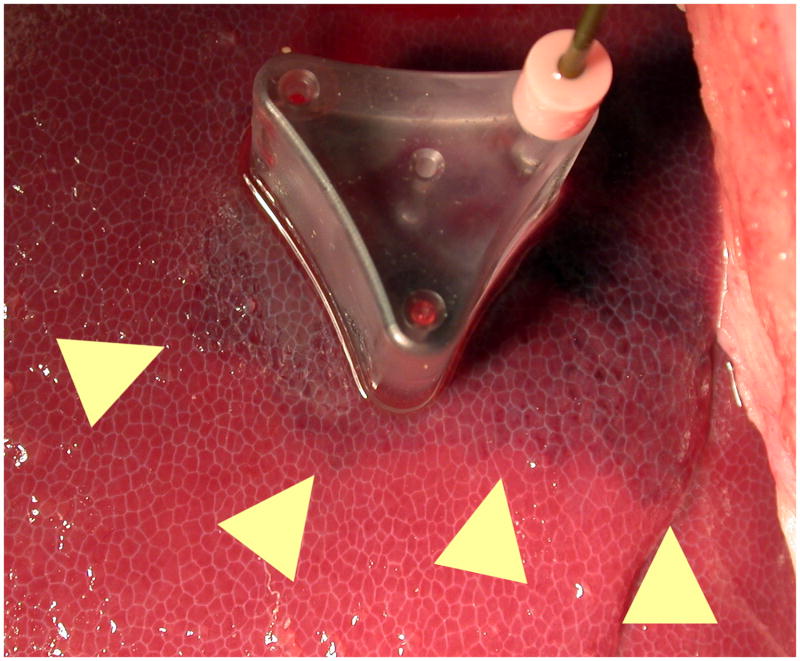
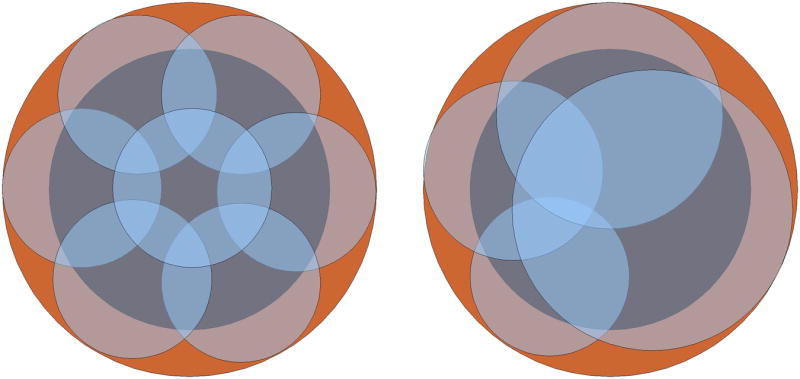
Materials and methods: RF ablation was performed by using either sequential or switched application of three cooled electrodes in a 2-cm triangular array in ex vivo bovine liver (28 total ablations) and in vivo swine liver (12 total ablations) models. For sequential ablations, electrodes were powered for 12 minutes each with a 5-minute rest interval between activations to simulate electrode repositioning. Switched ablations were created by using a multiple-electrode switching system for 12 minutes. Temperatures were measured during ex vivo experiments at four points in the ablation zone. Ablation zones were measured for minimum and maximum diameter, cross-sectional area, and isoperimetric ratio. Mann-Whitney and Wilcoxon matched pairs tests were used to identify differences between groups.
Results: The switched application created larger and more circular zones of ablation than did the sequential application, with mean (+/-standard deviation) ex vivo cross-sectional areas of 25.4 cm(2) +/- 5 .3 and 18.8 cm(2) +/- 6.6 (P = .001), respectively, and mean in vivo areas of 17.1 cm(2) +/- 5.1 and 13.2 cm(2) +/- 4.2 (P < .05). Higher temperatures and more rapid heating occurred with the switched application; switched treatments were 74% faster than sequential treatments (12 vs 46 minutes). In the sequential group, subsequent ablations grew progressively larger due to local ischemia.
Conclusions: Switched application of three electrodes creates larger, more confluent ablations in less time than sequential application. Thermal synergy and ablation-induced ischemia both substantially influence multiple-electrode ablations.
Figures
References
-
- Cantwell CP, O'Byrne J, Eustace S. Radiofrequency ablation of osteoid osteoma with cooled probes and impedance-control energy delivery. AJR Am J Roentgenol. 2006;186:S244–248. - PubMed
-
- Gervais DA, McGovern FJ, Arellano RS, et al. Radiofrequency ablation of renal cell carcinoma: part 1, indications, results, and role in patient management over a 6-year period and ablation of 100 tumors. AJR Am J Roentgenol. 2005;185:64–71. - PubMed
-
- Lencioni R, Cioni D, Crocetti L, et al. Early-stage hepatocellular carcinoma in patients with cirrhosis: long-term results of percutaneous image-guided radiofrequency ablation. Radiology. 2005;234:961–967. - PubMed
-
- Rose SC, Thistlethwaite PA, Sewell PE, et al. Lung cancer and radiofrequency ablation. J Vasc Interv Radiol. 2006;17:927–951. - PubMed
-
- Dodd GD, 3, Frank MS, Aribandi M, et al. Radiofrequency thermal ablation: computer analysis of the size of the thermal injury created by overlapping ablations. AJR Am J Roentgenol. 2001;177:777–782. - PubMed
Publication types
MeSH terms
Grants and funding
LinkOut - more resources
Full Text Sources
