


Metabolism of the viable mammalian embryo: quietness revisited
- PMID: 19019836
- PMCID: PMC2639445
- DOI: 10.1093/molehr/gan065
Metabolism of the viable mammalian embryo: quietness revisited
Abstract
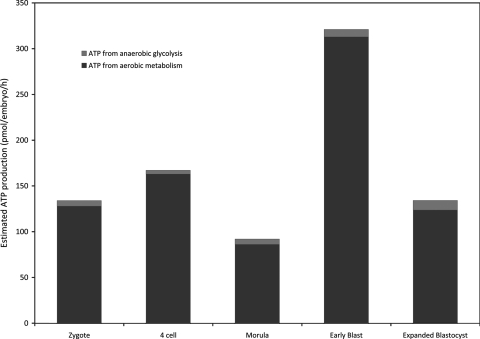
This review examines the 'Quiet Embryo Hypothesis' which proposes that viable preimplantation embryos operate at metabolite or nutrient turnover rates distributed within lower ranges than those of their less viable counterparts. The 'quieter' metabolism consistent with this hypothesis is considered in terms of (i) 'functional' quietness; the contrasting levels of intrinsic metabolic activity in different cell types as a consequence of their specialized functions, (ii) inter-individual embryo/cell differences in metabolism and (iii) loss of quietness in response to environmental stress. Data are reviewed which indicate that gametes and early embryos function in vivo at a lower temperature than core body temperature, which could encourage the expression of a quiet metabolism. We call for research to determine the optimum temperature for mammalian gamete/embryo culture. The review concludes by examining the key role of reactive oxygen species, which can induce molecular damage, trigger a cellular stress response and lead to a loss of quietness.
Figures
References
-
- Bahat A, Tur-Kaspa I, Gakamsky A, Giojalas LC, Breitbart H, Eisenbach M. Thermotaxis of mammalian sperm cells: a potential navigation mechanism in the female genital tract. Nat Med. 2003;9:149–150. - PubMed
-
- Bahat A, Eisenbach M, Tur-Kaspa I. Periovulatory increase in temperature difference within the rabbit oviduct. Hum Reprod. 2005;20:2118–2121. - PubMed
-
- Baumann CG, Morris DG, Sreenan JM, Leese HJ. The quiet embryo hypothesis: molecular characteristics favoring viability. Mol Reprod Dev. 2007;74:1345–1353. - PubMed
-
- Brison DR. Apoptosis in mammalian preimplantation embryos: regulation by survival factors. Hum Fertil (Camb) 2000;3:36–47. - PubMed
-
- Brison DR, Schultz RM. Apoptosis during mouse blastocyst formation: evidence for a role for survival factors including transforming growth factor α1. Biol Reprod. 1997;56:1088–1096. - PubMed
Publication types
MeSH terms
Substances
Grants and funding
LinkOut - more resources
Full Text Sources
Other Literature Sources
Miscellaneous
