Cross-reactive immunity to clade 2 strains of influenza virus A subtype H5N1 induced in adults and elderly patients by Fluval, a prototype pandemic influenza virus vaccine derived by reverse genetics, formulated with a phosphate adjuvant, and directed to clade 1 strains
- PMID: 19020111
- PMCID: PMC2668277
- DOI: 10.1128/CVI.00327-08
Cross-reactive immunity to clade 2 strains of influenza virus A subtype H5N1 induced in adults and elderly patients by Fluval, a prototype pandemic influenza virus vaccine derived by reverse genetics, formulated with a phosphate adjuvant, and directed to clade 1 strains
Abstract
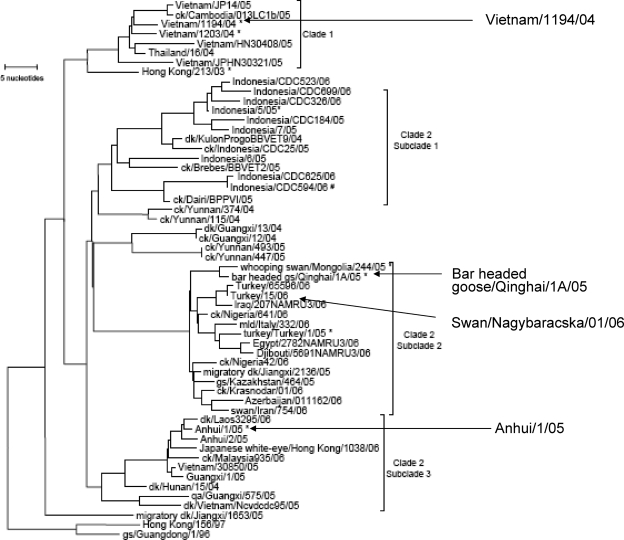
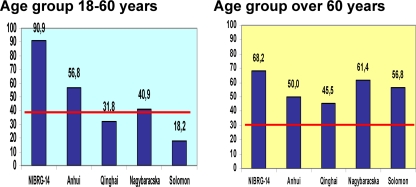
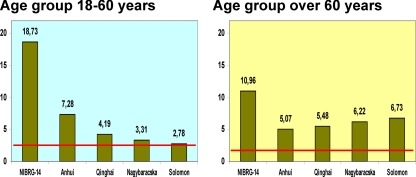
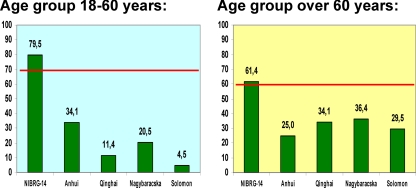
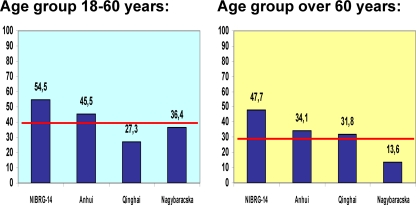
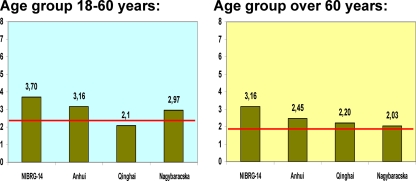
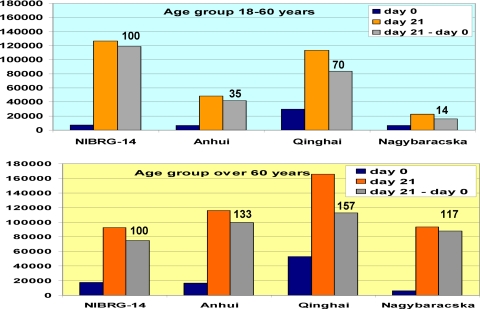
High fatality rates and multiple cases of transmission of avian H5N1 influenza viruses to humans illustrate the urgent need for an efficacious, cross-protective vaccine against H5N1 strains. Extensive genetic characterization of H5N1 strains has elucidated the natural evolutionary relationship of these strains, linking groups known as clades to a common ancestor. Although the clades and subclades probably differ sufficiently in their antigenic structure to warrant the preparation of different vaccines, there is some evidence that cross-reactive immunity can be afforded. We aimed to assess the immunogenicity of a clade 1 H5N1 (NIBRG-14) whole-virus vaccine with an aluminum phosphate adjuvant and to determine whether it can induce cross-reactive immunity against antigenically drifted clade 2 H5N1 strains, both those derived by reverse genetics and wild-type isolates. A total of 88 (44 adult and 44 elderly) subjects, who received one dose (6 microg) of the vaccine, were studied. As judged by U.S. and European licensing criteria based on hemagglutination inhibition, the subjects developed cross-reactive immunity against all studied H5N1 strains belonging to a clade different from that of the strain utilized to produce the vaccine. Our findings highlight the importance of stockpiling, since cross-immune reactions induced by prepandemic vaccines will likely reduce morbidity and mortality in case of a pandemic.
Figures
References
-
- Carrat, F., and A. Flahault. 2007. Influenza vaccine: the challenge of antigenic drift. Vaccine 256852-6862. - PubMed
-
- Committee for Proprietary Medicinal Products. 5 April 2004. Guideline on dossier structure and content for pandemic influenza vaccine marketing authorisation application. CPMP/VEG/4717/03. European Agency for the Evaluation of Medicinal Products, London, United Kingdom.
-
- Committee for Proprietary Medicinal Products. 12 March 1997. Note for guidance on harmonisation of requirements for influenza vaccines. CPMP/BWP/214/96. European Agency for the Evaluation of Medicinal Products, London, United Kingdom. http://www.emea.europa.eu/pdfs/human/bwp/021496en.pdf.
-
- European Centre for Disease Prevention and Control. March 2007. Technical report. Expert advisory groups on human H5N1 vaccines. Scientific questions. European Centre for Disease Prevention and Control, Stockholm, Sweden. http://ecdc.europa.eu/documents/pdf/Sci%20Questions%20final.pdf.
-
- European Directorate for the Quality of Medicines & HealthCare. July 2007. European pharmacopeia, 5th ed., supplement 5.8, p. 3406-3407. CD-ROM. European Directorate for the Quality of Medicines & HealthCare, Strasbourg, France.
MeSH terms
Substances
LinkOut - more resources
Full Text Sources
Other Literature Sources
Medical
Research Materials