


Osteoarthritis and obesity: experimental models
- PMID: 19022697
- PMCID: PMC2768592
- DOI: 10.1016/j.jbspin.2008.07.011
Osteoarthritis and obesity: experimental models
Abstract
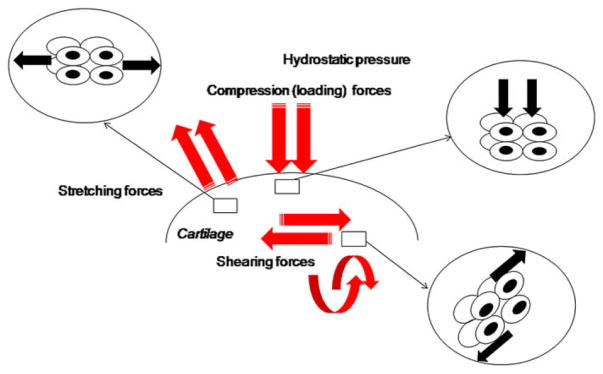
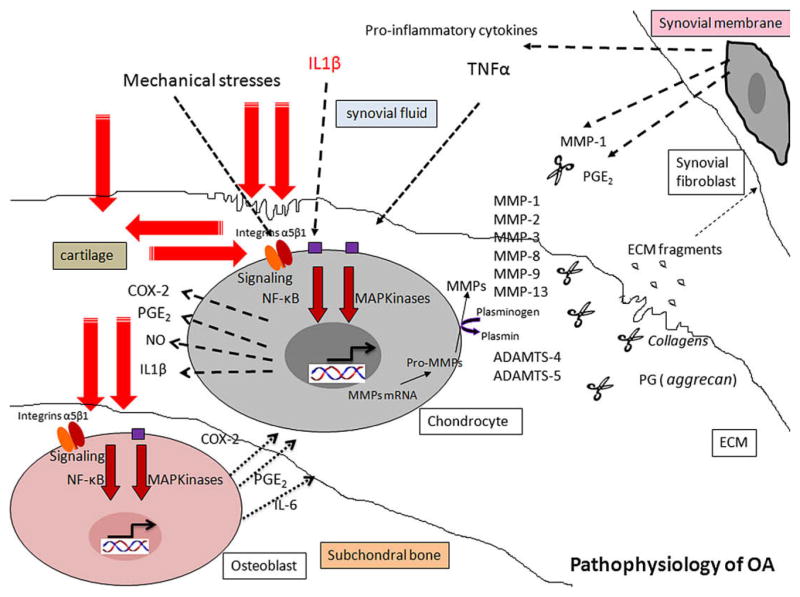
Osteoarthritis (OA) is a multifactorial disease. Different risk factors have been identified such as aging and obesity and different models have been used to study the impact of obesity and overweight in this pathology. The field the more studied is in vitro cartilage submitted to mechanical stresses. Four different stresses can be applied on this tissue: shear stress, loading, tensile stress (stretching) and hydrostatic pressure. The signal transduction to the chondrocyte and to the nucleus of the cell is a large field of investigation named mechano-transduction. The response of cartilage depends on quality of subchondral bone as well. So, more and more teams are studying the impact of mechanical stresses on bone, mainly by stretching osteoblasts or by submitting them to a fluid shear stress. Recently, a new model of bone compression has been set up, with osteoblasts in their own extracellular matrix. Finally the third field studied is the role of adipokines, mediators playing a key role in obesity, on the aetiology of OA. Adipokines like leptin, resistin, adiponectin and visfatin, seems to play a pro-inflammatory role in arthritis. Studying the role of obesity in OA could be more complex than expected. The link between OA and obesity may not simply be due to high mechanical stresses applied on the tissues, but soluble mediators may play an important role in the onset of OA in obese patients.
Conflict of interest statement
None
Figures
References
-
- Bergman BC, Martin DT, Wilkinson JG. Knee extensor torque and perceived discomfort during symmetrical biphasic electromyostimulation. J Strength Cond Res. 2001;15:1–5. - PubMed
-
- Roos EM, Dahlberg L. Positive effects of moderate exercise on glycosami-noglycan content in knee cartilage: a four-month, randomized, controlled trial in patients at risk of osteoarthritis. Arthritis Rheum. 2005;52:3507–14. - PubMed
Publication types
MeSH terms
Substances
Grants and funding
LinkOut - more resources
Full Text Sources
Medical
