


Improving activities of daily living in danish centenarians--but only in women: a comparative study of two birth cohorts born in 1895 and 1905
- PMID: 19038833
- PMCID: PMC2751852
- DOI: 10.1093/gerona/63.11.1186
Improving activities of daily living in danish centenarians--but only in women: a comparative study of two birth cohorts born in 1895 and 1905
Abstract
Background: The number of centenarians has increased rapidly since the 1950s. In Denmark, 42% more of the 1905 birth cohort made it to 100 years of age compared to the 1895 cohort. We tested whether this increased survival proportion has resulted in an increased disability level in the more recent cohort of centenarians.
Methods: The Longitudinal Study of Danish Centenarians (LSDC) included all persons who reached the age of 100 years in the period from April 1, 1995 through May 31, 1996 (a total of 276 persons). In total, 207 persons participated in the survey (75%). The Danish 1905 Cohort Survey included all individuals born in Denmark in 1905. At baseline in 1998, a total of 2262 persons participated in the intake survey (63%). In total, 225 of 364 persons (62%) who reached their 100th birthday in the cohort participated in the most recent 2005 wave. Basic Activities of Daily Living (BADLs) and Physical Activities of Daily Living (PADLs) were assessed in both cohorts.
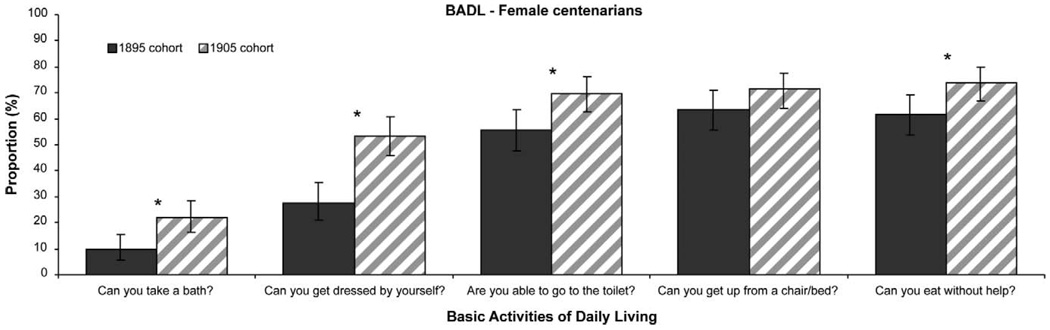
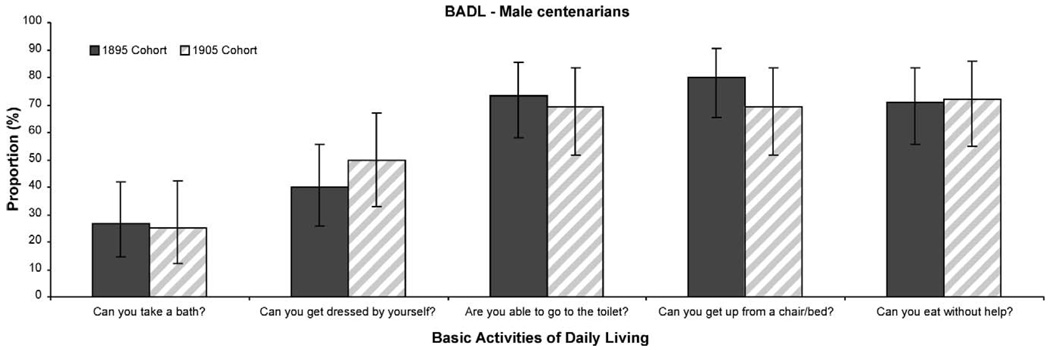
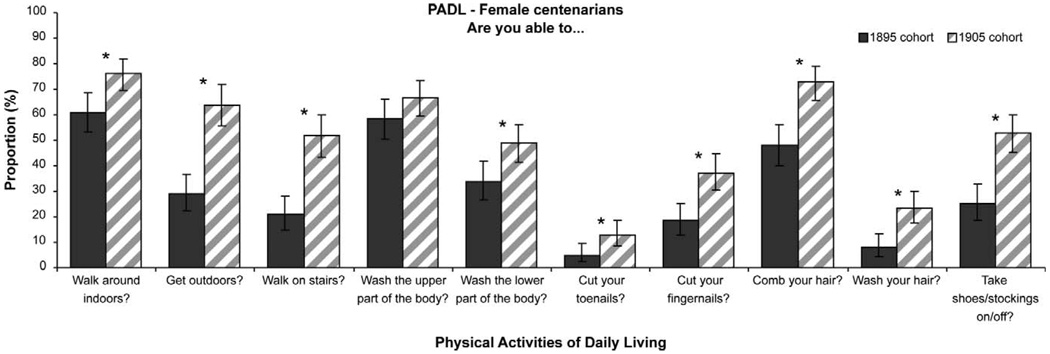
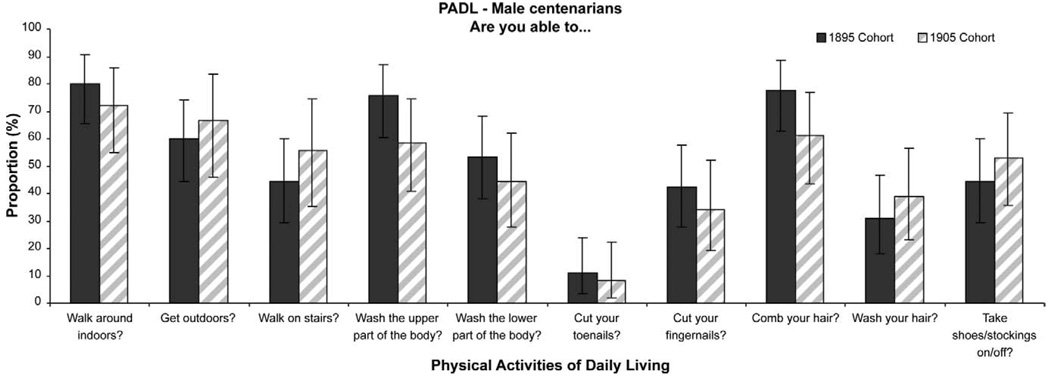
Results: The 1905 cohort displayed better self-reported ADLs than the 1895 cohort did. Stratified by gender, this apparent cohort advantage was due to women in the 1905 cohort performing significantly better than their female counterparts in the 1895 cohort.
Conclusion: The increasing number of female centenarians does not entail increasing proportions of disabled individuals. In contrast, there is a lack of improvement in ADLs among male centenarians even though the number of male centenarians is stagnating.
Figures
References
-
- Oeppen J, Vaupel JW. Broken limits to life expectancy. Science. 2002;296:1029–1031. - PubMed
-
- Vaupel JW, Carey JR, Christensen K, et al. Biodemographic trajectories of longevity. Science. 1998;280:855–860. - PubMed
-
- Andersen-Ranberg K, Schroll M, Jeune B. Healthy centenarians do not exist, but autonomous centenarians do: a population-based study of morbidity among Danish centenarians. J Am Geriatr Soc. 2001;49:900–908. - PubMed
-
- Crimmins EM. Trends in the health of the elderly. Annu Rev Public Health. 2004;25:79–98. - PubMed
Publication types
MeSH terms
Grants and funding
LinkOut - more resources
Full Text Sources
Miscellaneous
