Review
. 2008 Dec;5(12):1357-76.
doi: 10.1517/17425240802583421.

Applications of hot-melt extrusion for drug delivery

Affiliations
Review

Applications of hot-melt extrusion for drug delivery

Michael A Repka et al. Expert Opin Drug Deliv. 2008 Dec.

Abstract

In today's pharmaceutical arena, it is estimated that more than 40% of new chemical entities produced during drug discovery efforts exhibit poor solubility characteristics. However, over the last decade hot-melt extrusion (HME) has emerged as a powerful processing technology for drug delivery and has opened the door to a host of molecules previously considered unviable as drugs. HME is considered to be an efficient technique in developing solid molecular dispersions and has been demonstrated to provide sustained, modified and targeted drug delivery resulting in improved bioavailability. This article reviews the range of HME applications for pharmaceutical dosage forms, such as tablets, capsules, films and implants for drug delivery through oral, transdermal, transmucosal, transungual, as well as other routes of administration. Interest in HME as a pharmaceutical process continues to grow and the potential of automation and reduction of capital investment and labor costs have made this technique worthy of consideration as a drug delivery solution.


Figures
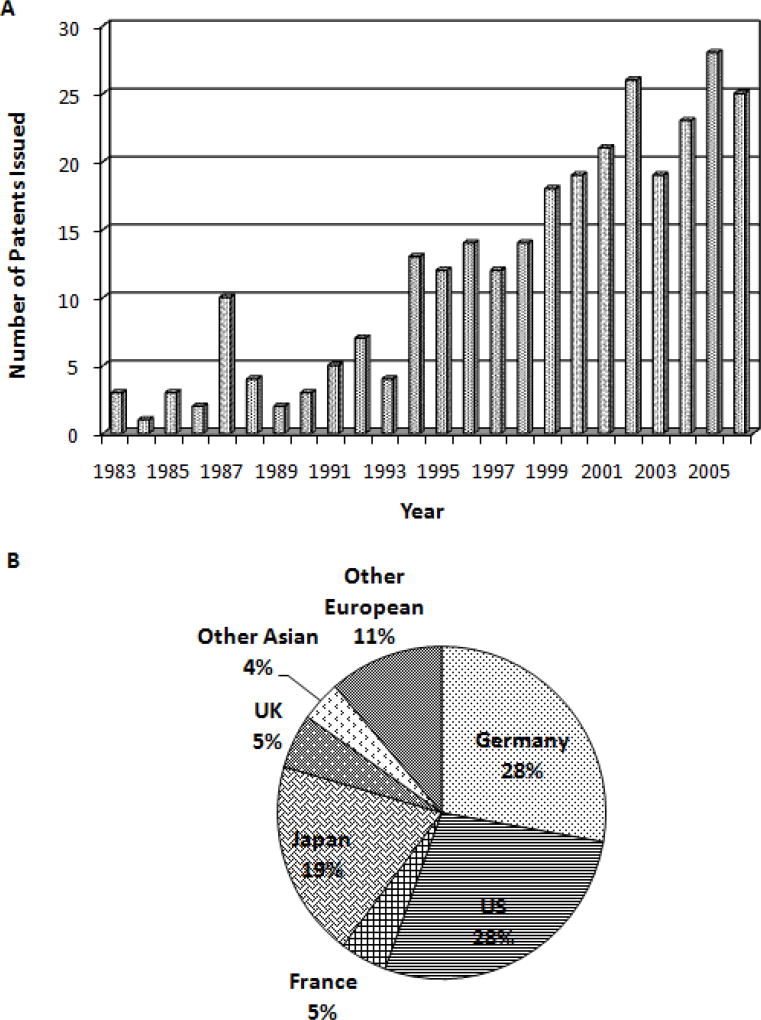
Figure 1
Figure 1
The number of hot-melt extrusion patents issued for pharmaceutical applications from 1983 to 2006 (A), and percentage of hot-melt extrusion patents issued by country since 1983 for pharmaceutical applications (B).
Figure 2
Figure 2
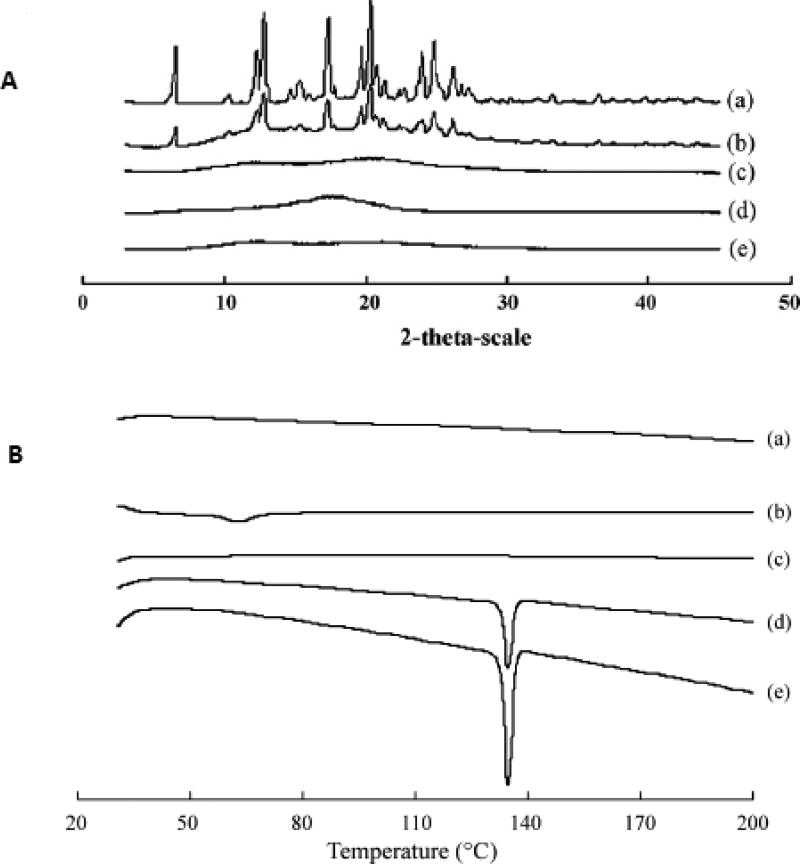
Physical characterization of nimodipine solid dispersion (SD) (50% nimodipine, 40% Eudragit® E100, 10% Plasdone® S630). PXRD patterns (A): (a) pure NMD; (b) physical mixture; (c) SD; (d) Eudragit® E100; (e) Plasdone® S630, and DSC thermograms (B): (a) Plasdone® S630; (b) Eudragit® E100; (c) SD; (d) physical mixture; (e) pure NMD. "Reprinted with kind permission from Elsevier, Ref. (76)"
Figure 3
Figure 3
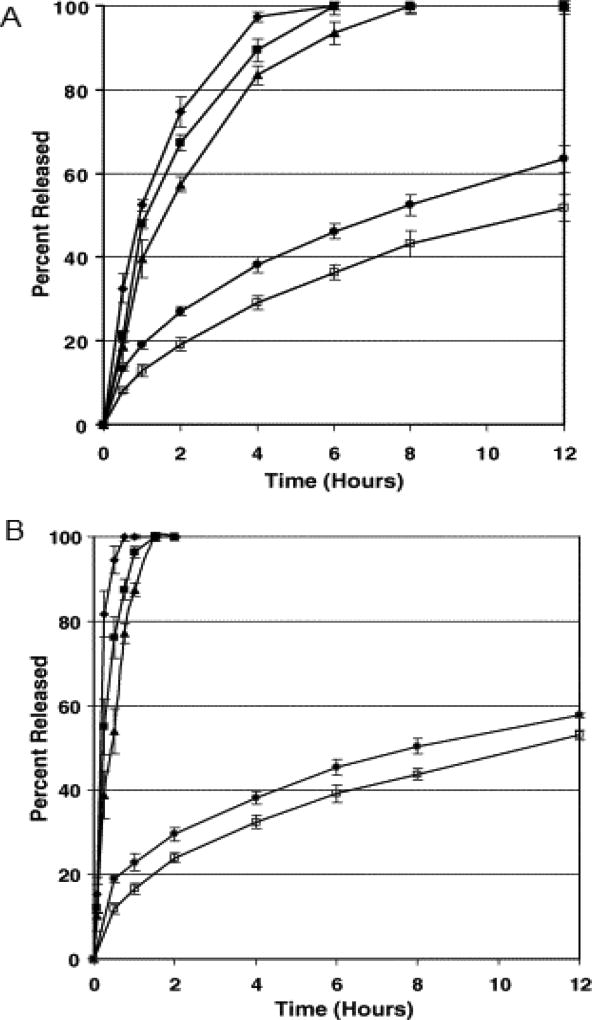
Influence of ethyl cellulose particle size, compaction force and extrusion temperature on guaifenesin release from matrix tablets prepared by direct compression and hot-melt extrusion containing 30% guaifenesin and 70% ethyl cellulose using USP Method II at 37 °C and 50 rpm in 900 ml of purified water. Each point represents the mean ±standard deviation, n=6. (A) Matrix tablets prepared using “fine” ethyl cellulose (325–80 mesh) and (B) matrix tablets prepared using “coarse” ethyl cellulose (80–30 mesh). (◆) Direct compression, 10 kN; (▪) direct compression, 30 kN; (▲) direct compression, 50 kN; (•) hot-melt extrusion, 80, 85, 85, 90 °C; (□) hot-melt extrusion, 90, 105, 105, 110 °C.
Figure 4
Figure 4
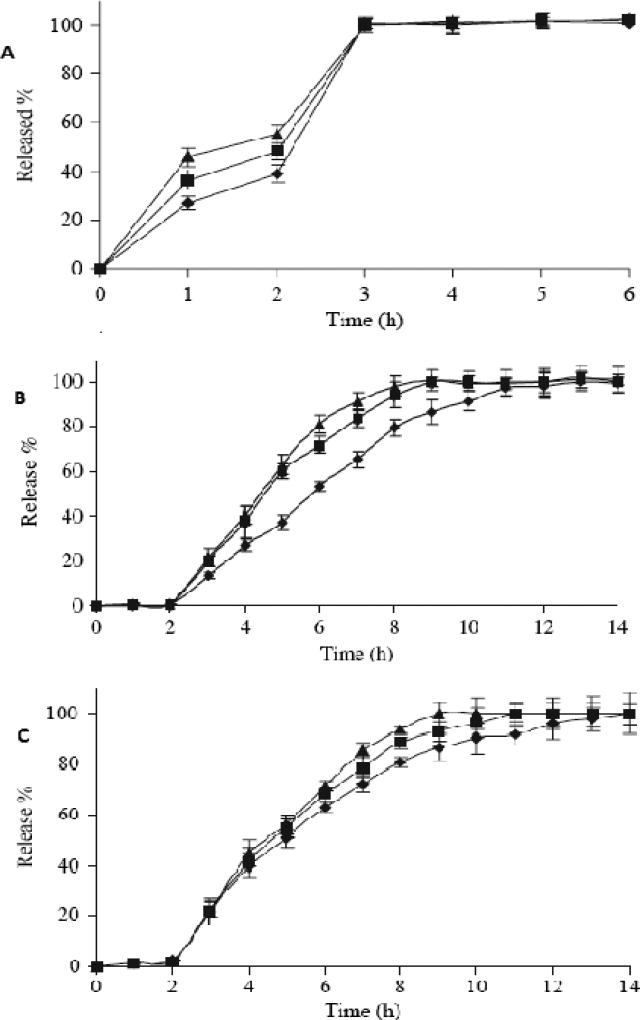
Dissolution profiles of ketoprofen-Eudragit® L100 physical mixture tablets (A), ketoprofen-Eudragit® L100 tablets from extrudates (B), and ketoprofen-Eudragit® L100 tablets using pulverized extrudates (C) in 0.1 M HCl for the first 2 hours, then in pH 6.8 Phosphate buffer for subsequent hours (M ± SD, n = 6). Formulation 1(▲: drug/polymer ratio 1:1); Formulation 2 ( formula image drug/polymer ratio 1:1.5); Formulation 3(◆: drug/polymer ratio 1:2).
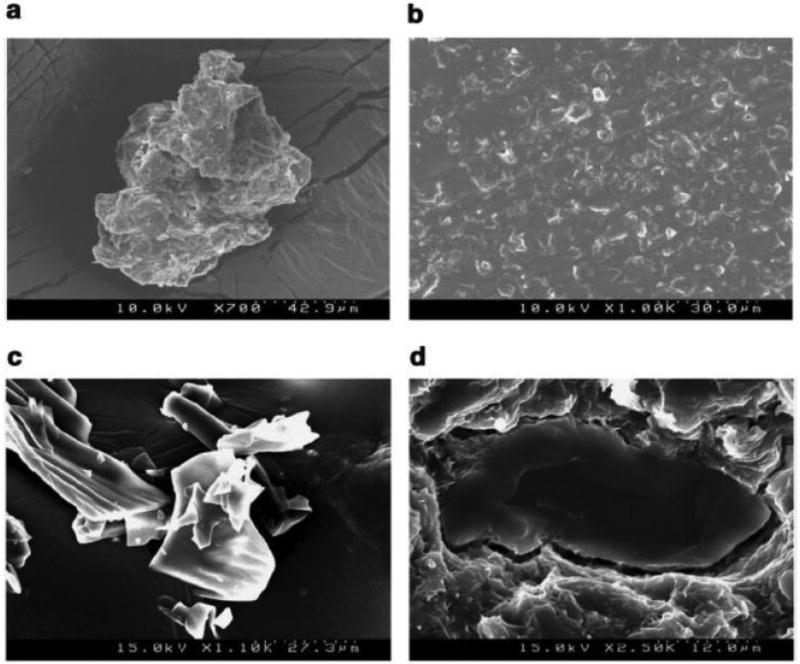
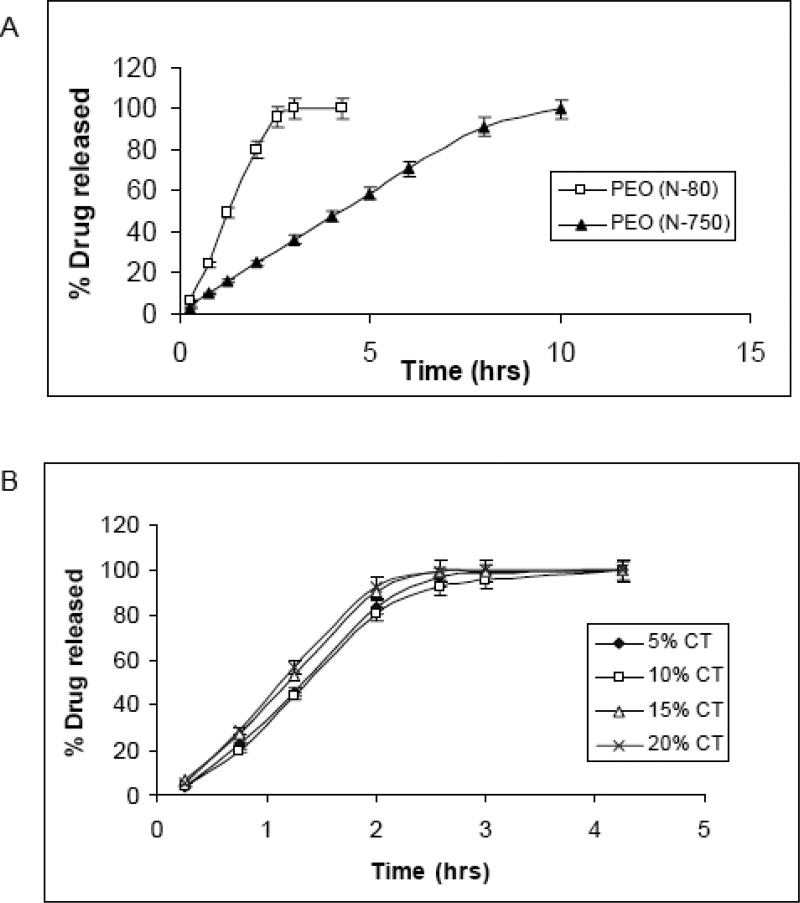
Figure 5
Figure 5
SEM images of (a) ITZ-HPMC micronized particles (b) a typical cross section of the ITZ-HPMC micronized particle extrudates (c) ITZ-PVP micronized particles (d) close-up view of a typical ITZ-PVP micronized particle within the polymer matrix of the extrudate.
Figure 6
Figure 6
Release profile of clotrimazole from hot-melt extruded PEO films as a function of polymer molecular weight in 1% SLS (50rpm, n=3) (A); effect of drug loading on the release of CT from hot-melt extruded PEO N-80 films (B)
Figure 7
Figure 7
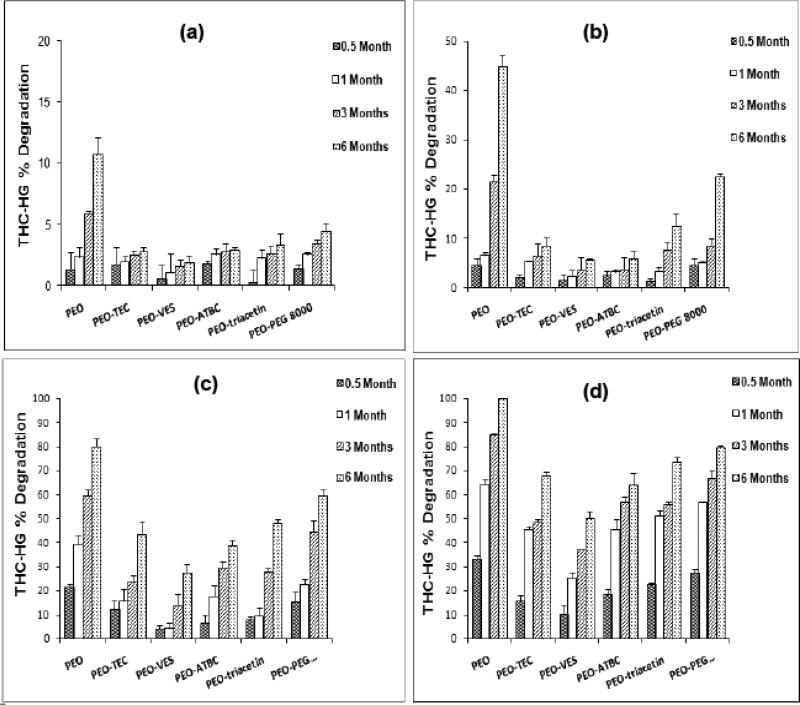
Effect of plasticizers on the chemical stability of THC-HG in PEO polymeric matrices (n = 3) stored at 4 different temperatures: (a) −18° C, (b) 4° C, (c) 25° C and (d) 40° C. The films were fabricated at 110 ° C for 7 min.
Figure 8
Figure 8
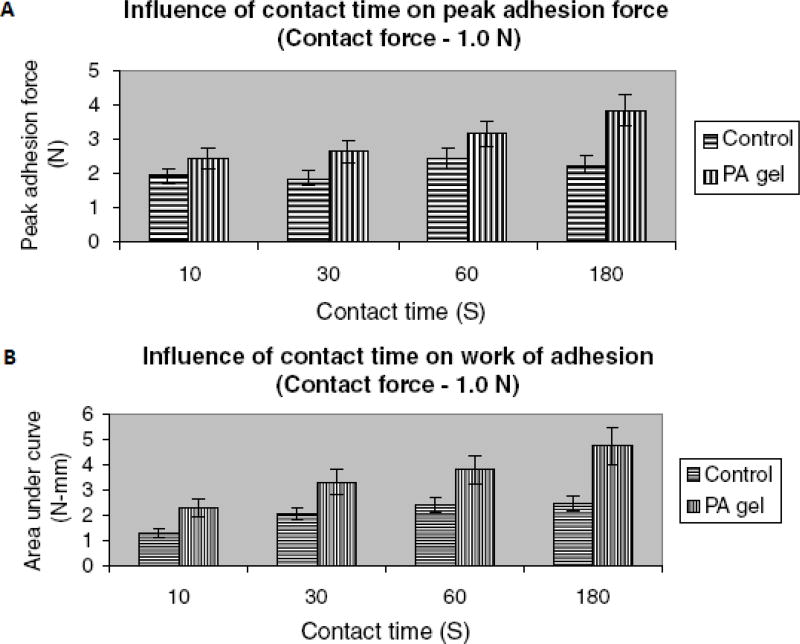
Effect of contact time on peak adhesion force (A), and work of adhesion (B) of HME film containing HPC and ketoconazole on human nail. Control: untreated human nails; PA gel: phosphoric acid treated human nails (etched).

References

    1. McGinity JW, Zhang F, Koleng JJ, Repka MA. Hot-Melt Extrusion as a Pharmaceutical Process. American Pharmaceutical Review. 2001;4:25–37.
    1. Breitenbach J. Melt extrusion: from process to drug delivery technology. Eur J Pharm Biopharm. 2002 Sep;54(2):107–17. Interesting review on applications of HME in the field of pharmaceutics. - PubMed
    1. Chokshi R, Hossein Z. Hot–Melt Extrusion Technique: A Review. Iran J Pharm Res. 2004;3:3–16.
    1. Crowley MM, Zhang F, Repka MA, Thumma S, Upadhye SB, Battu SK, et al. Pharmaceutical applications of hot-melt extrusion: Part I. Drug Dev Ind Pharm. 2007 Sep;33(9):909–26. Detailed review on instrumentation, developmental aspects and characterization techniques of HME dosage forms. - PubMed
    1. Repka MA, Battu SK, Upadhye SB, Thumma S, Crowley MM, Zhang F, et al. Pharmaceutical applications of hot-melt extrusion: Part II. Drug Dev Ind Pharm. 2007 Oct;33(10):1043–57. - PubMed

Publication types

MeSH terms

LinkOut - more resources