


Highly pathogenic avian influenza virus (H5N1) infection in red foxes fed infected bird carcasses
- PMID: 19046504
- PMCID: PMC2634621
- DOI: 10.3201/eid1412.080470
Highly pathogenic avian influenza virus (H5N1) infection in red foxes fed infected bird carcasses
Abstract
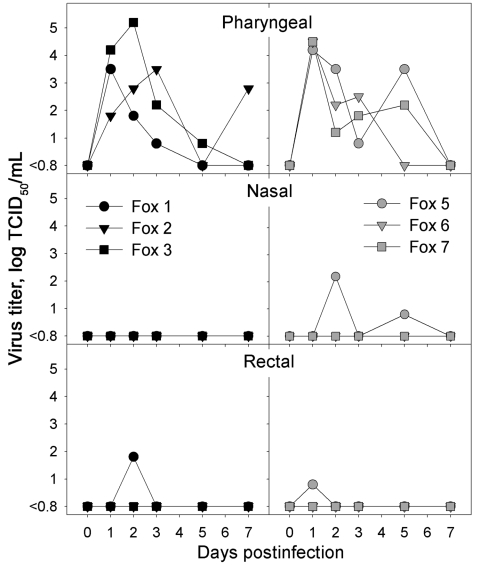
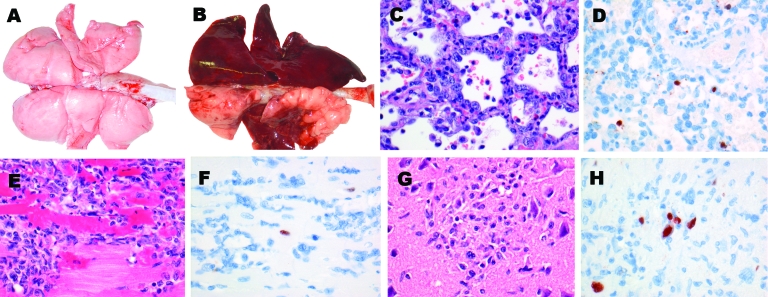
Eating infected wild birds may put wild carnivores at high risk for infection with highly pathogenic avian influenza (HPAI) virus (H5N1). To determine whether red foxes (Vulpes vulpes) are susceptible to infection with HPAI virus (H5N1), we infected 3 foxes intratracheally. They excreted virus pharyngeally for 3-7 days at peak titers of 103.5-105.2 median tissue culture infective dose (TCID50) per mL and had severe pneumonia, myocarditis, and encephalitis. To determine whether foxes can become infected by the presumed natural route, we fed infected bird carcasses to 3 other red foxes. These foxes excreted virus pharyngeally for 3-5 days at peak titers of 104.2-104.5 TCID50/mL, but only mild or no pneumonia developed. This study demonstrates that red foxes fed bird carcasses infected with HPAI virus (H5N1) can excrete virus while remaining free of severe disease, thereby potentially playing a role in virus dispersal.
Figures
References
Publication types
MeSH terms
LinkOut - more resources
Full Text Sources
Medical