The natural history of trachoma infection and disease in a Gambian cohort with frequent follow-up
- PMID: 19048024
- PMCID: PMC2584235
- DOI: 10.1371/journal.pntd.0000341
The natural history of trachoma infection and disease in a Gambian cohort with frequent follow-up
Abstract
Background: The natural history of ocular Chlamydia trachomatis infections in endemic communities has not been well characterised and is an important determinant of the effectiveness of different mass treatment strategies to prevent blindness due to trachoma.
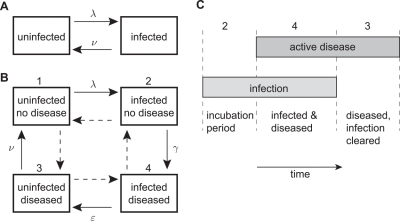
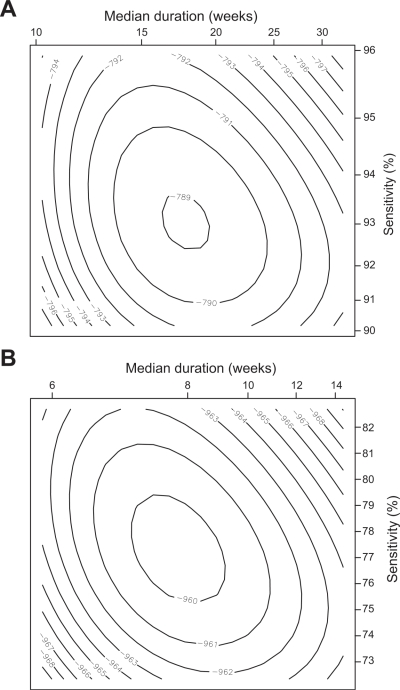
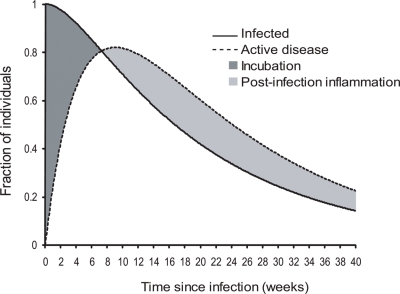
Methodology/principal findings: A multistate hidden Markov model was fitted to data on infection and active disease from 256 untreated villagers in The Gambia who were examined every 2 weeks over a 6-month period. Parameters defining the natural history of trachoma were estimated, and associations between these parameters, demographic and baseline immune measurements examined. The median incubation period following infection was estimated at 17 days (95% confidence interval: 11-28). Disease persisted for longer than infection (median 21 (15-32) weeks) versus 17 (12-24) weeks), with an estimated median duration of post-infection inflammation of 5 (3-8) weeks. The duration of active disease showed a significant decline with age even after accounting for lower rates of re-infection and disease at older ages (p = 0.004). Measurements of levels of baseline IgA to epitopes in the major outer membrane protein of Chlamydia trachomatis were not significantly correlated with protection or more rapid clearance of infection.
Conclusions: The average duration of infection with Chlamydia trachomatis especially at younger ages is long. This contributes to the persistence and gradual return of trachoma after community-wide treatment with antibiotics.
Conflict of interest statement
The authors have declared that no competing interests exist.
Figures
References
-
- Chidambaram JD, Alemayehu W, Melese M, Lakew T, Yi E, et al. Effect of a single mass antibiotic distribution on the prevalence of infectious trachoma. JAMA. 2006;295:1142–1146. - PubMed
-
- Burton MJ, Holland MJ, Makalo P, Aryee EAN, Alexander NDE, et al. Re-emergence of Chlamydia trachomatis infection after mass anitbiotic treatment of a trachoma endemic Gambian community: a longitudinal study. Lancet. 2005;365:1321–1328. - PubMed
-
- West SK, Munoz B, Mkocha H, Holland MJ, Aguirre A, et al. Infection with Chlamydia trachomatis after mass treatment of a trachoma hyperendemic community in Tanzania: a longitudinal study. Lancet. 2005;366:1296–1300. - PubMed
Publication types
MeSH terms
Substances
Grants and funding
LinkOut - more resources
Full Text Sources
Miscellaneous