Discrepancies in sample size calculations and data analyses reported in randomised trials: comparison of publications with protocols
- PMID: 19056791
- PMCID: PMC2600604
- DOI: 10.1136/bmj.a2299
Discrepancies in sample size calculations and data analyses reported in randomised trials: comparison of publications with protocols
Abstract
Objective: To evaluate how often sample size calculations and methods of statistical analysis are pre-specified or changed in randomised trials.
Design: Retrospective cohort study. Data source Protocols and journal publications of published randomised parallel group trials initially approved in 1994-5 by the scientific-ethics committees for Copenhagen and Frederiksberg, Denmark (n=70).
Main outcome measure: Proportion of protocols and publications that did not provide key information about sample size calculations and statistical methods; proportion of trials with discrepancies between information presented in the protocol and the publication.
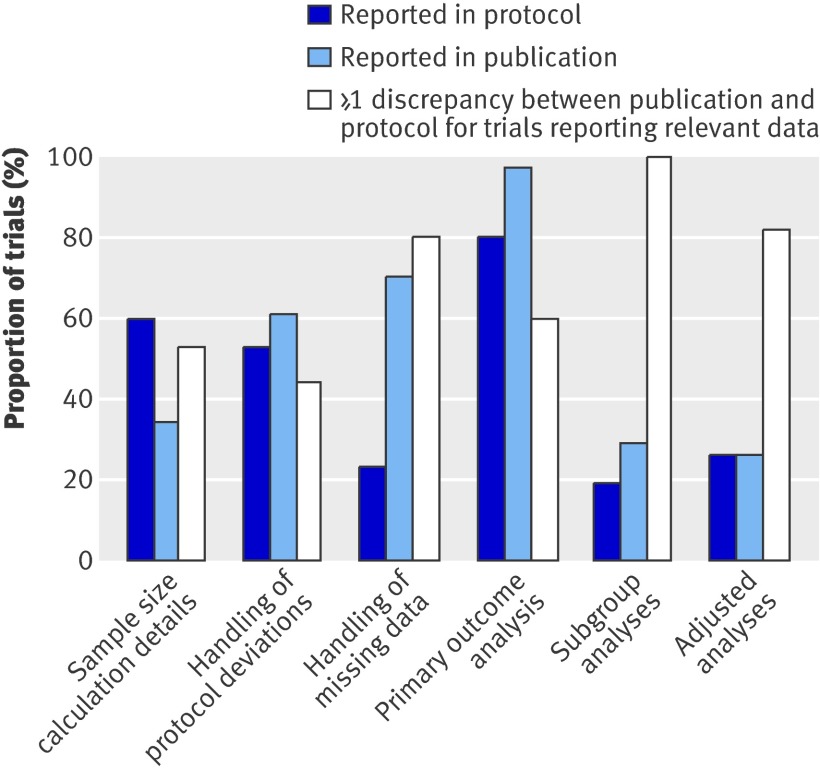
Results: Only 11/62 trials described existing sample size calculations fully and consistently in both the protocol and the publication. The method of handling protocol deviations was described in 37 protocols and 43 publications. The method of handling missing data was described in 16 protocols and 49 publications. 39/49 protocols and 42/43 publications reported the statistical test used to analyse primary outcome measures. Unacknowledged discrepancies between protocols and publications were found for sample size calculations (18/34 trials), methods of handling protocol deviations (19/43) and missing data (39/49), primary outcome analyses (25/42), subgroup analyses (25/25), and adjusted analyses (23/28). Interim analyses were described in 13 protocols but mentioned in only five corresponding publications.
Conclusion: When reported in publications, sample size calculations and statistical methods were often explicitly discrepant with the protocol or not pre-specified. Such amendments were rarely acknowledged in the trial publication. The reliability of trial reports cannot be assessed without having access to the full protocols.
Conflict of interest statement
Competing interests: A-WC chairs and AH, DGA, and PCG are members of the steering committee for the SPIRIT (standard protocol items for randomised trials) initiative, a project that aims to define key protocol content for randomised trials.
Figures
References
-
- Psaty BM, Kronmal RA. Reporting mortality findings in trials of rofecoxib for Alzheimer disease or cognitive impairment: a case study based on documents from rofecoxib litigation. JAMA 2008;299:1813-7. - PubMed
-
- Porta N, Bonet C, Cobo E. Discordance between reported intention-to-treat and per protocol analyses. J Clin Epidemiol 2007;60:663-9. - PubMed
-
- Curfman GD, Morrissey S, Drazen JM. Expression of concern reaffirmed. N Engl J Med 2006;354:1193. - PubMed
-
- Schiffner R, Schiffner-Rohe J, Gerstenhauer M, Hofstadter F, Landthaler M, Stolz W. Differences in efficacy between intention-to-treat and per-protocol analyses for patients with psoriasis vulgaris and atopic dermatitis: clinical and pharmacoeconomic implications. Br J Dermatol 2001;144:1154-60. - PubMed
Publication types
MeSH terms
LinkOut - more resources
Full Text Sources