


Dietary protein recommendations and the prevention of sarcopenia
- PMID: 19057193
- PMCID: PMC2760315
- DOI: 10.1097/MCO.0b013e32831cef8b
Dietary protein recommendations and the prevention of sarcopenia
Abstract
Purpose of review: To draw attention to recent work on the role of protein and the amount of protein needed with each meal to preserve skeletal muscle mass in ageing.
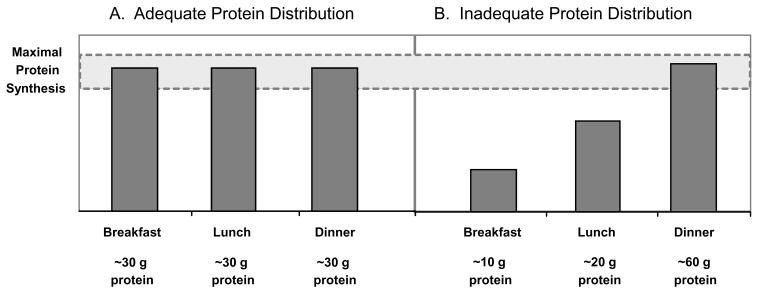
Recent findings: Ageing does not inevitably reduce the anabolic response to a high-quality protein meal. Ingestion of approximately 25-30 g of protein per meal maximally stimulates muscle protein synthesis in both young and older individuals. However, muscle protein synthesis is blunted in elderly when protein and carbohydrate are coingested or when the quantity of protein is less than approximately 20 g per meal. Supplementing regular mixed-nutrient meals with leucine may also enhance the muscle protein synthetic response in elders.
Summary: On the basis of recent work, we propose a novel and specific dietary approach to prevent or slow down muscle loss with ageing. Rather than recommending a large, global increase in the recommended dietary allowance (RDA) for protein for all elderly individuals, clinicians should stress the importance of ingesting a sufficient amount of protein with each meal. To maximize muscle protein synthesis while being cognizant of total energy intake, we propose a dietary plan that includes 25-30 g of high quality protein per meal.
Figures
References
-
- Baumgartner RN, Koehler KM, Gallagher D, Romero L, Heymsfield SB, Ross RR, Garry PJ, Lindeman RD. Epidemiology of sarcopenia among the elderly in New Mexico. Am J Epidemiol. 1998;147:755–763. - PubMed
-
- Cuthbertson D, Smith K, Babraj J, Leese G, Waddell T, Atherton P, Wackerhage H, Taylor PM, Rennie MJ. Anabolic signaling deficits underlie amino acid resistance of wasting, aging muscle. Faseb J. 2005;19:422–424. - PubMed
-
- Campbell WW. Synergistic use of higher-protein diets or nutritional supplements with resistance training to counter sarcopenia. Nutr Rev. 2007;65:416–422. This study highlights a potential age-related disparity in the synergystic effects of protein and exercise. - PubMed
Publication types
MeSH terms
Substances
Grants and funding
LinkOut - more resources
Full Text Sources
Other Literature Sources
Medical
Research Materials
