


Effects of oral methamphetamine on cocaine use: a randomized, double-blind, placebo-controlled trial
- PMID: 19058926
- PMCID: PMC2742691
- DOI: 10.1016/j.drugalcdep.2008.10.016
Effects of oral methamphetamine on cocaine use: a randomized, double-blind, placebo-controlled trial
Abstract
Background: No medication is currently approved for the treatment of cocaine dependence, but several preclinical and clinical reports suggest agonist-like medications, e.g., amphetamine analogues, may be a productive strategy for medication development.
Objective: This current proof-of-concept study sought to evaluate the safety, tolerability, and effectiveness of methamphetamine as a candidate treatment for cocaine dependence.
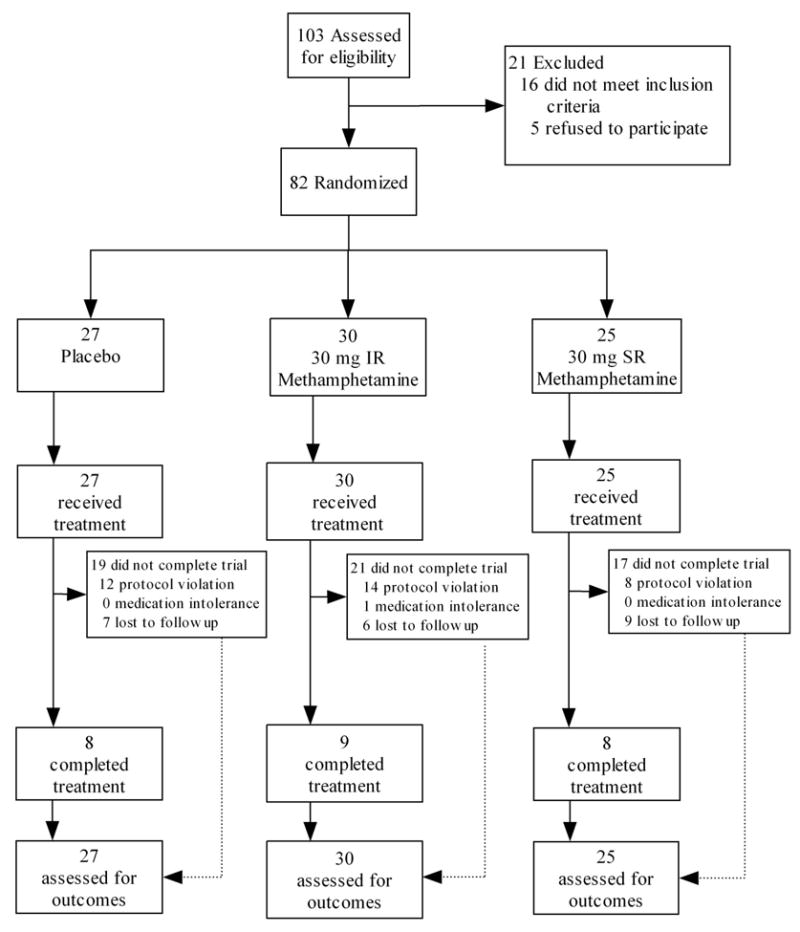
Methods: A randomized, double-blind, placebo-controlled study served to evaluate three treatment conditions in 82 cocaine-dependent individuals: (1) placebo (0mg, 6x/day; n=27), (2) immediate release (IR) methamphetamine (5mg, 6x/day; n=30), (3) sustained release (SR) methamphetamine (30 mg first pill, 1x/day; 0mg 5x/day; n=25). The study employed a sequential, two-phase design (i.e., 4 weeks of medication and counseling followed by 4 weeks of medication/counseling plus a contingency management procedure).
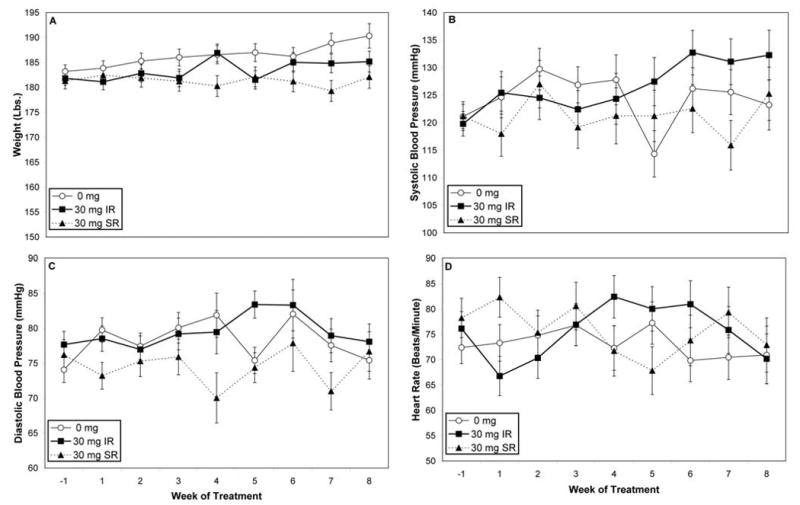
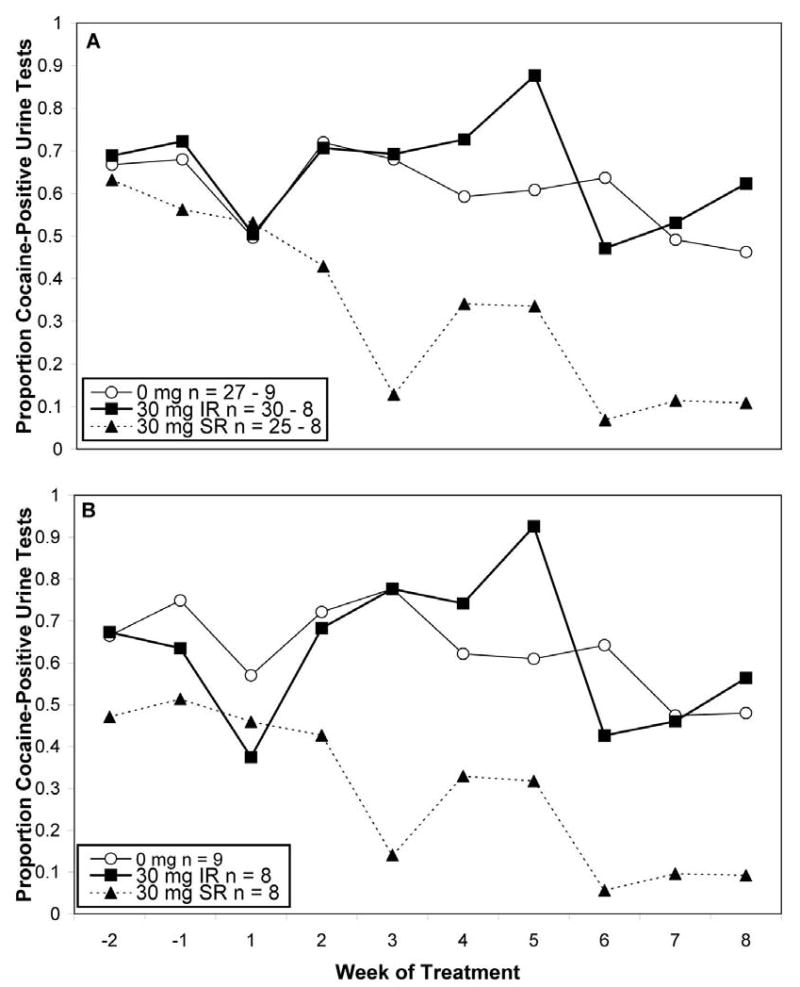
Results: Both preparation forms of methamphetamine were well-tolerated, with similar retention to placebo (0mg, 33%; 30 mg IR, 30%, 30 mg SR, 32%). Methamphetamine SR was associated with decreased sleep and increased weight loss. Medication adherence rates were high for the first dose of the day (95%), while adherence for subsequent capsules was lower. Those in the SR condition exhibited consistently lower rates of cocaine-positive urine samples (0mg, 60%; 30 mg IR, 66%; 30 mg SR, 29%), p<0.0001, and reported the greatest reduction in craving for cocaine, p<0.05.
Conclusions: SR methamphetamine significantly reduced cocaine use and craving. Additional research is warranted to develop and evaluate agonist-like medications that may effectively treat cocaine dependence.
Figures
References
-
- American Psychiatric Association. Diagnostic and statistical manual of mental disorders: DSM-IV. American Psychiatric Association; Washington, DC: 1994.
-
- Anglin MD, Burke C, Perrochet B, Stamper E, Dawud-Noursi S. History of the methamphetamine problem. J Psychoactive Drugs. 2000;32:137–141. - PubMed
-
- Beck A, Ward C, Mendelson M, Mack J, Erbaugh J. An inventory of measuring depression. Archives of General Psychiatry. 1961;49:599–608. - PubMed
Publication types
MeSH terms
Substances
Grants and funding
LinkOut - more resources
Full Text Sources
Medical
Research Materials
