


Quantitative real-time polymerase chain reaction (qRT-PCR) restriction fragment length polymorphism (RFLP) method for monitoring highly conserved transgene expression during gene therapy
- PMID: 19059164
- PMCID: PMC2621358
- DOI: 10.1016/j.trsl.2008.10.005
Quantitative real-time polymerase chain reaction (qRT-PCR) restriction fragment length polymorphism (RFLP) method for monitoring highly conserved transgene expression during gene therapy
Abstract
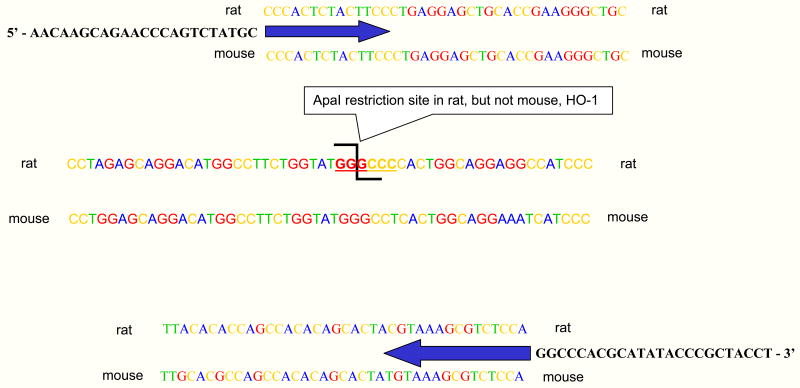
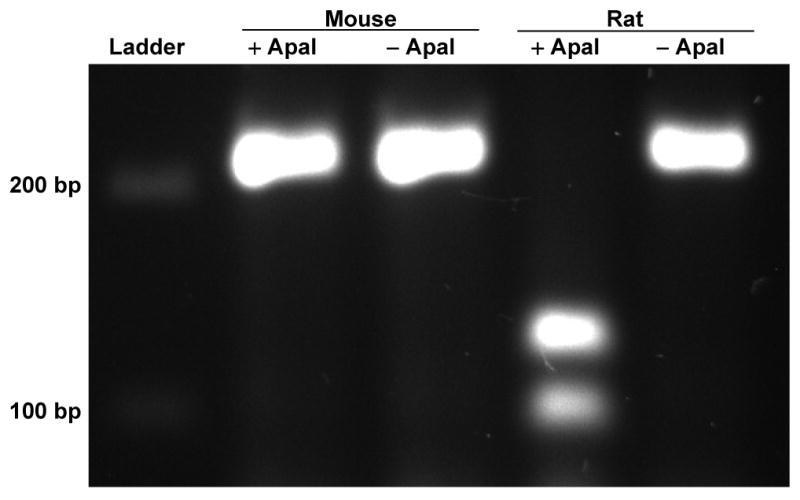
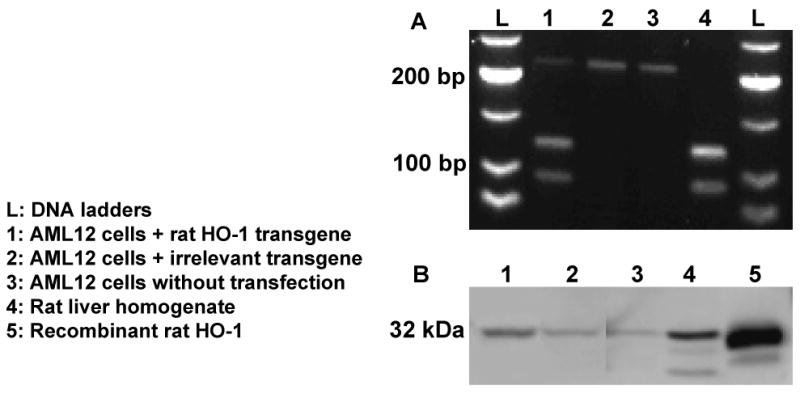
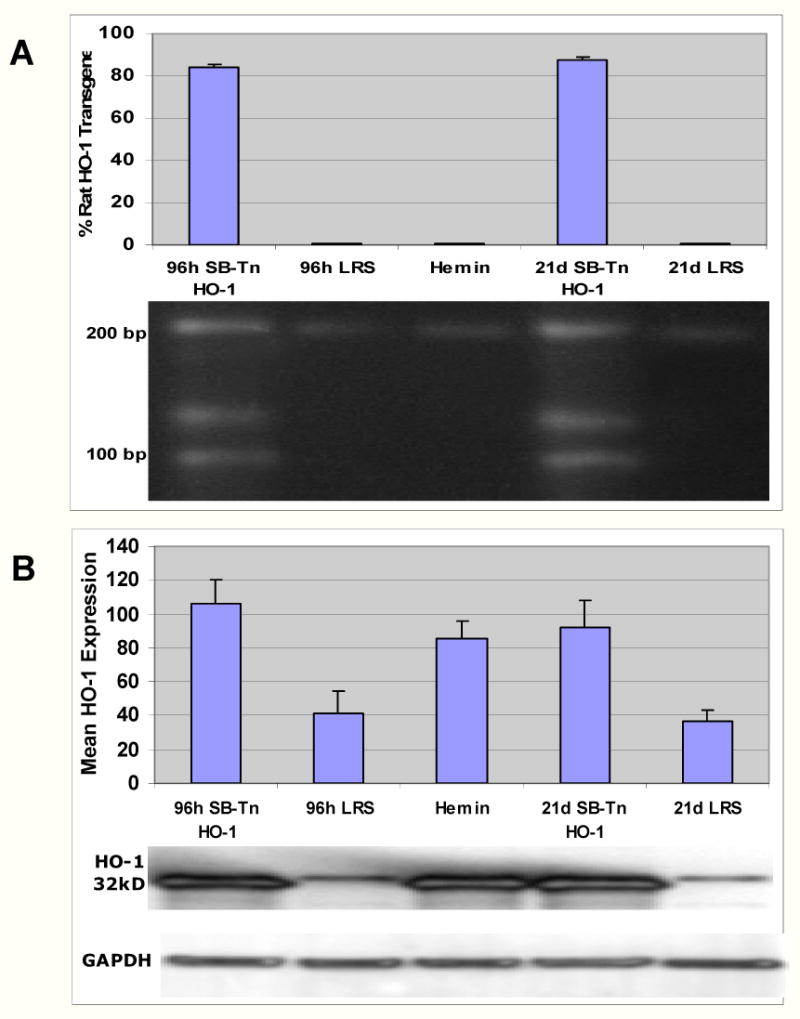
Evaluation of the transfer efficiency of a rat heme oxygenase-1 (HO-1) transgene into mice requires differentiation of rat and mouse HO-1. However, rat and mouse HO-1 have 94% homology; antibodies and enzyme activity cannot adequately distinguish HO-1. We designed a quantitative real-time polymerase chain reaction (qRT-PCR) method to monitor HO-1 transcription relative to a housekeeping gene, GAPDH. The ratio of rat and mouse HO-1 mRNA could be estimated through restriction fragment length polymorphism (RFLP) analysis of the PCR products. In vitro, murine AML12 hepatocytes were transfected with rat HO-1. After 40 h, the total HO-1 mRNA was enriched 2-fold relative to control cells, and rat HO-1 comprised 84% of HO-1 cDNA. In vivo, the rat HO-1 transgene was cloned into a Sleeping Beauty transposase (SB-Tn) construct and was injected hydrodynamically into a mouse model of sickle cell disease (SCD). After 21 days, there was a 32% enrichment of HO-1 mRNA relative to control mice and the rat transgene comprised 88% of HO-1 cDNA. After 21 days, HO-1 protein expression in liver was increased 2.5-fold. In summary, qRT-PCR RFLP is a useful and reliable method to differentiate the transgene from host gene transcription, especially when the host and transgene protein are identical or highly homologous. This method has translational applications to the design, delivery, and monitoring of gene-therapy vectors.
Figures
References
-
- Maines MD. Heme oxygenase: function, multiplicity, regulatory mechanisms, and clinical applications. Faseb J. 1988 Jul;2(10):2557–68. - PubMed
-
- Otterbein LE, Soares MP, Yamashita K, Bach FH. Heme oxygenase-1: unleashing the protective properties of heme. Trends Immunol. 2003 Aug;24(8):449–55. - PubMed
-
- Ryter SW, Alam J, Choi AM. Heme oxygenase-1/carbon monoxide: from basic science to therapeutic applications. Physiol Rev. 2006 Apr;86(2):583–650. - PubMed
-
- Aslan M, Freeman BA. Oxidant-mediated impairment of nitric oxide signaling in sickle cell disease--mechanisms and consequences. Cell Mol Biol (Noisy-le-grand) 2004 Feb;50(1):95–105. - PubMed
-
- Hebbel RP, Osarogiagbon R, Kaul D. The endothelial biology of sickle cell disease: inflammation and a chronic vasculopathy. Microcirculation. 2004 Mar;11(2):129–51. - PubMed
Publication types
MeSH terms
Substances
Grants and funding
LinkOut - more resources
Full Text Sources
Medical
Research Materials
