


Chronic cerebrospinal venous insufficiency in patients with multiple sclerosis
- PMID: 19060024
- PMCID: PMC2647682
- DOI: 10.1136/jnnp.2008.157164
Chronic cerebrospinal venous insufficiency in patients with multiple sclerosis
Abstract
Background: The extracranial venous outflow routes in clinically defined multiple sclerosis (CDMS) have not previously been investigated.
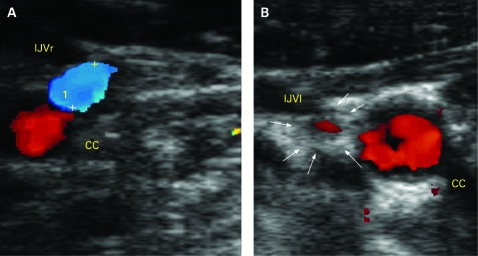
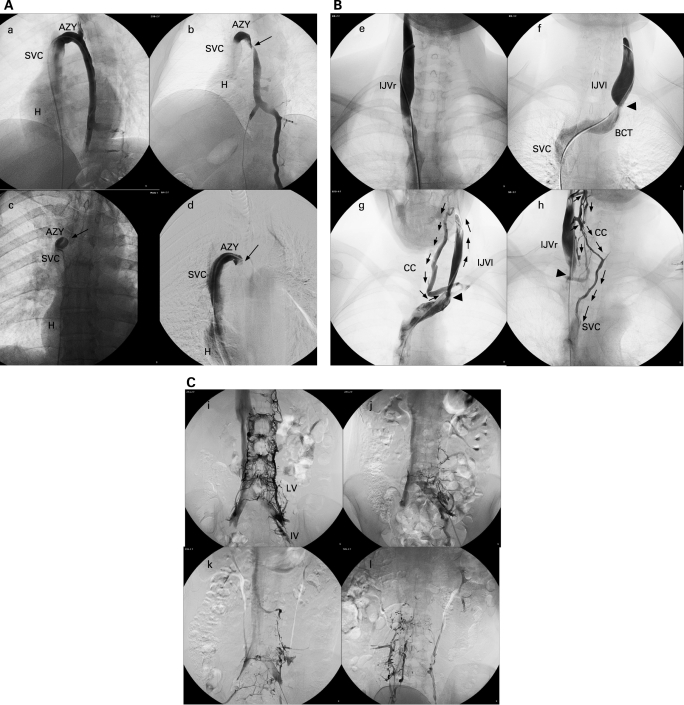
Methods: Sixty-five patients affected by CDMS, and 235 controls composed, respectively, of healthy subjects, healthy subjects older than CDMS patients, patients affected by other neurological diseases and older controls not affected by neurological diseases but scheduled for venography (HAV-C) blindly underwent a combined transcranial and extracranial colour-Doppler high-resolution examination (TCCS-ECD) aimed at detecting at least two of five parameters of anomalous venous outflow. According to the TCCS-ECD screening, patients and HAV-C further underwent selective venography of the azygous and jugular venous system with venous pressure measurement.
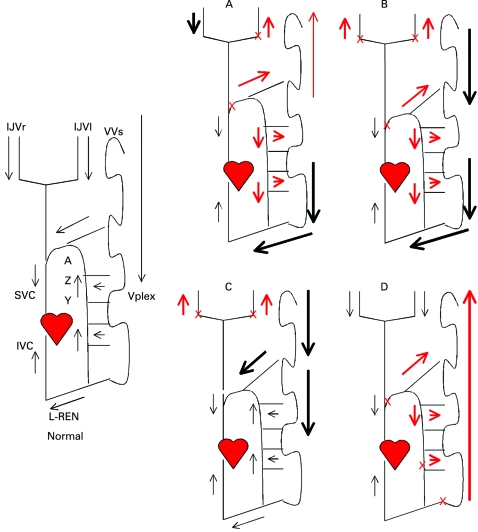
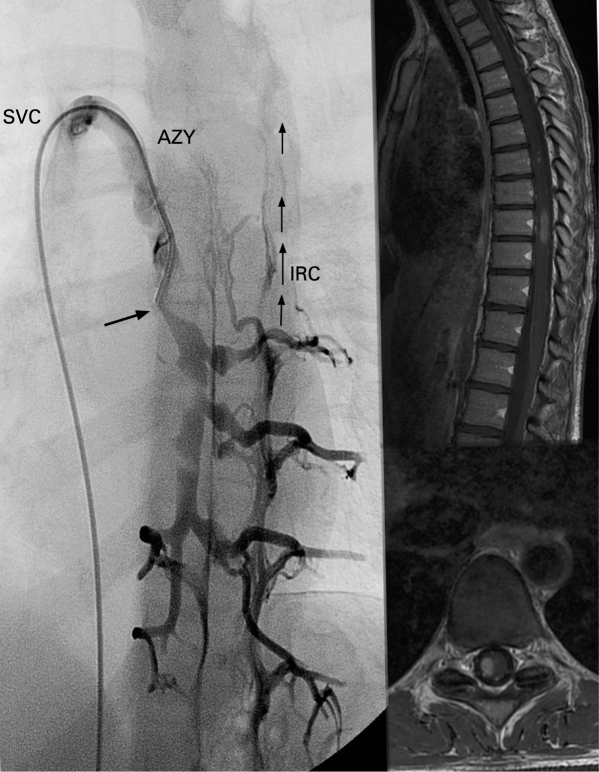
Results: CDMS and TCCS-ECD venous outflow anomalies were dramatically associated (OR 43, 95% CI 29 to 65, p<0.0001). Subsequently, venography demonstrated in CDMS, and not in controls, the presence of multiple severe extracranial stenosis, affecting the principal cerebrospinal venous segments; this provides a picture of chronic cerebrospinal venous insufficiency (CCSVI) with four different patterns of distribution of stenosis and substitute circle. Moreover, relapsing-remitting and secondary progressive courses were associated with CCSVI patterns significantly different from those of primary progressive (p<0.0001). Finally, the pressure gradient measured across the venous stenosies was slightly but significantly higher.
Conclusion: CDMS is strongly associated with CCSVI, a scenario that has not previously been described, characterised by abnormal venous haemodynamics determined by extracranial multiple venous strictures of unknown origin. The location of venous obstructions plays a key role in determining the clinical course of the disease.
Conflict of interest statement
Figures
Comment in
-
The unsolved puzzle of multiple sclerosis and venous function.J Neurol Neurosurg Psychiatry. 2009 Apr;80(4):358. doi: 10.1136/jnnp.2008.168179. J Neurol Neurosurg Psychiatry. 2009. PMID: 19289474 No abstract available.
-
Phlebographic study between patients with MS and control subjects: the ethical profile.AJNR Am J Neuroradiol. 2014 Jun;35(6):1180-1. doi: 10.3174/ajnr.A3805. Epub 2014 Feb 27. AJNR Am J Neuroradiol. 2014. PMID: 24578279 Free PMC article. No abstract available.
References
-
- Noseworthy JH, Lucchinetti C, Rodriguez M, et al. Multiple sclerosis. N Engl J Med 2000;343:938–52 - PubMed
-
- Frohman EM, Racke MK, Raine CS. Multiple sclerosis—the plaque and its pathogenesis. N Engl J Med 2006;354:942–55 - PubMed
-
- Kermode AG, Thompson AJ, Tofts P, et al. Breakdown of the blood–brain barrier precedes symptoms and other MRI signs of new lesions in multiple sclerosis. Pathogenetic and clinical implications. Brain 1990;113:1477–89 - PubMed
-
- Kidd D, Barkhof F, McConnell R, et al. Cortical lesions in multiple sclerosis. Brain 1999;122:17–26 - PubMed
Publication types
MeSH terms
LinkOut - more resources
Full Text Sources
Other Literature Sources
Medical
