


Prevalence of tracheal collapse in an emphysema cohort as measured with end-expiration CT
- PMID: 19064211
- PMCID: PMC2659588
- DOI: 10.1016/j.acra.2008.05.020
Prevalence of tracheal collapse in an emphysema cohort as measured with end-expiration CT
Abstract
Rationale and objectives: To retrospectively investigate the prevalence of tracheal collapse in an emphysema cohort. The occurrence of a large degree of tracheal collapse may have important implications for the clinical management of respiratory symptoms and air trapping in patients with emphysema.
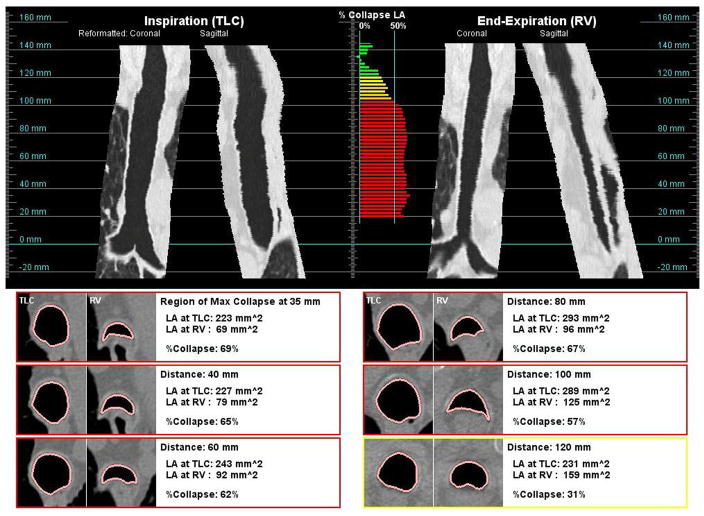
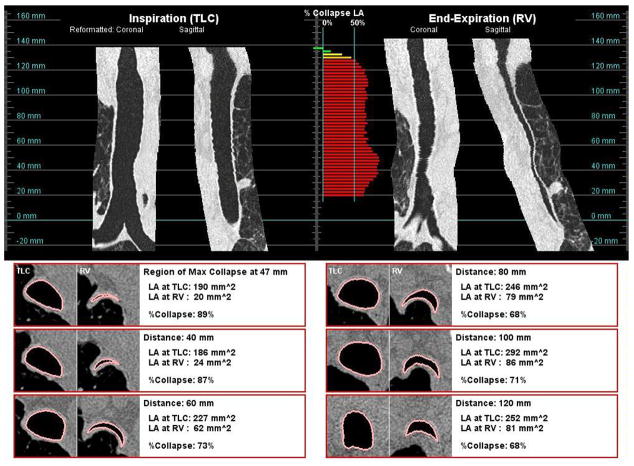
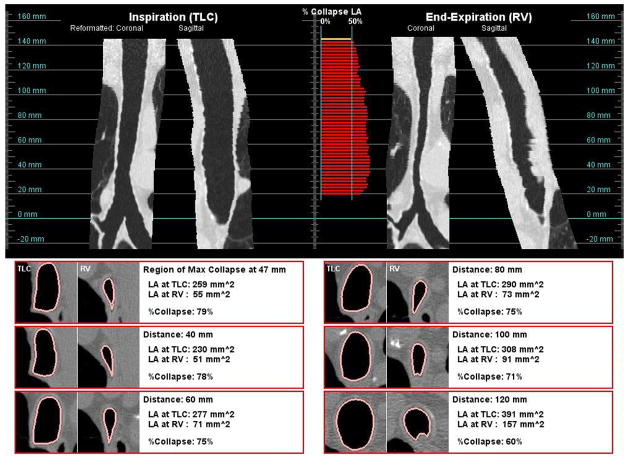
Materials and methods: Paired full-inspiratory and end-expiratory thin-section volumetric computed tomographic scans were available for 1071 long-term smokers with clinically and physiologically confirmed emphysema. The percentage reduction in the cross-sectional tracheal luminal area from full-inspiration to end-expiration was automatically computed at 2.5-mm intervals along the centerline of the trachea using customized software.
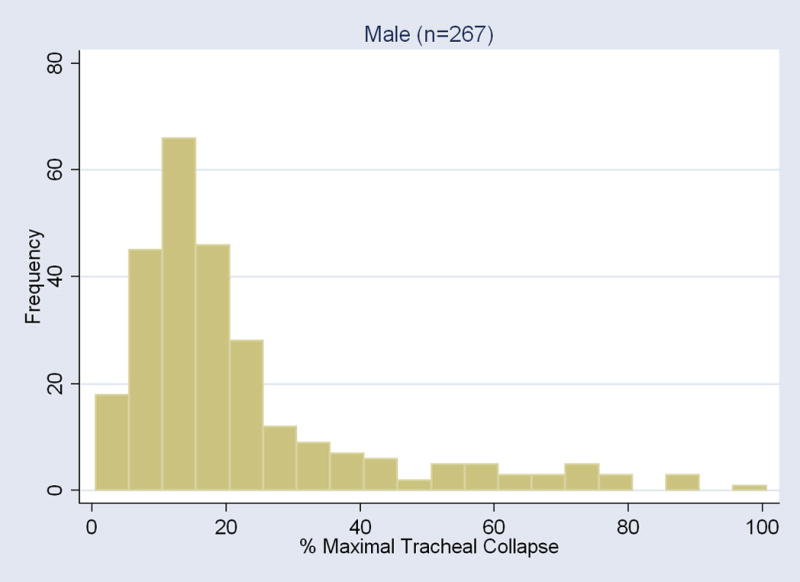
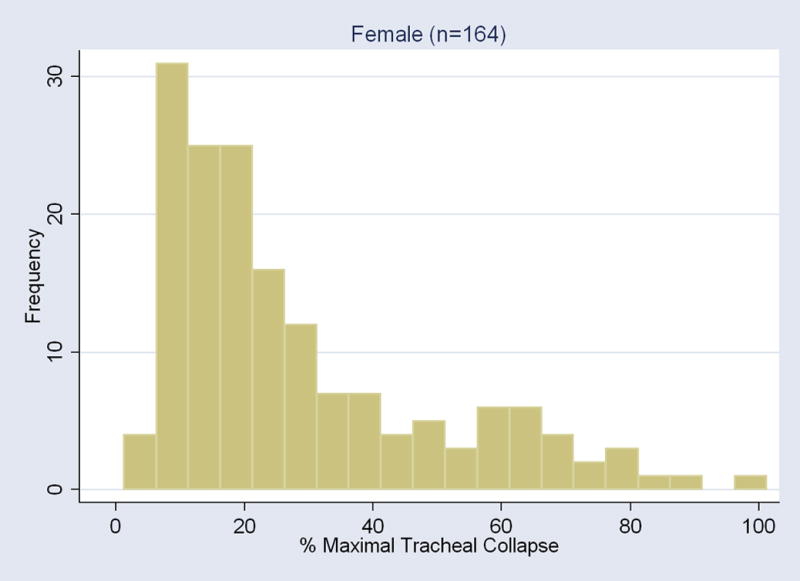
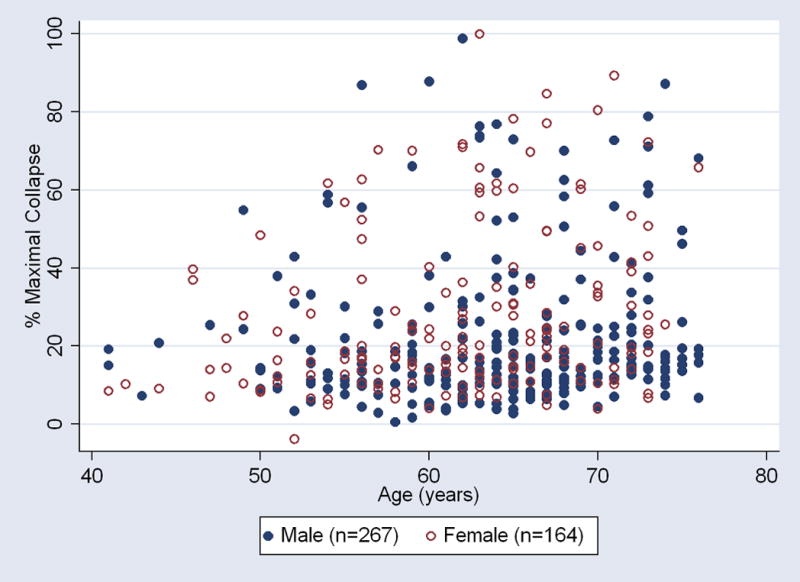
Results: Maximal tracheal collapse did not follow a normal distribution in the emphysema cohort (P < .0001, skewness/kurtosis tests for normality); the median collapse was 18% (intraquartile range, 11%-30%). Statistically significant differences were found in the distribution of maximal collapse by gender (P < .005, Wilcoxon rank sum test). Overall, 10.5% of men and 17.1% of women showed evidence of tracheomalacia on the basis of the criterion of a reduction of 50% or greater in cross-sectional tracheal luminal area at end-expiration.
Conclusion: This study offers insights into the prevalence of tracheal collapse in a cohort of patients with emphysema; future work is needed to determine the possible relationship between tracheal collapse and air trapping in subjects with emphysema.
Figures
References
-
- Carden KA, Boiselle PM, Waltz DA, Ernst A. Tracheomalacia and tracheobronchomalacia in children and adults: an in-depth review. Chest. 2005;127(3):984–1005. - PubMed
-
- Jokinen K, Palva T, Nuutinen J. Chronic bronchitis: a bronchologic evaluation. ORL J Otorhinolaryngol Relat Spec. 1976;38:178–186. - PubMed
-
- Jokinen K, Palva T, Sutinen S, Nuutinen J. Acquired tracheobronchomalacia. Ann Clin Res. 1977;9:52–57. - PubMed
-
- Herzog H. Expiratory stenosis of the trachea and great bronchi by loosening of the membraneous portion; plastic chip repair. Thoraxchirurgie. 1958;5:281–391. - PubMed
-
- Ikeda S, Hanawa T, Konishi T, et al. Diagnosis, incidence, clinicopathology and surgical treatment of acquired tracheobronchomalacia. Nihon Kyobu Shikkan Gakkai Zasshi. 1992;30:1028–1035. - PubMed
