


Strain-specific genetics, anatomy and function of enteric neural serotonergic pathways in inbred mice
- PMID: 19064621
- PMCID: PMC2670081
- DOI: 10.1113/jphysiol.2008.160416
Strain-specific genetics, anatomy and function of enteric neural serotonergic pathways in inbred mice
Abstract
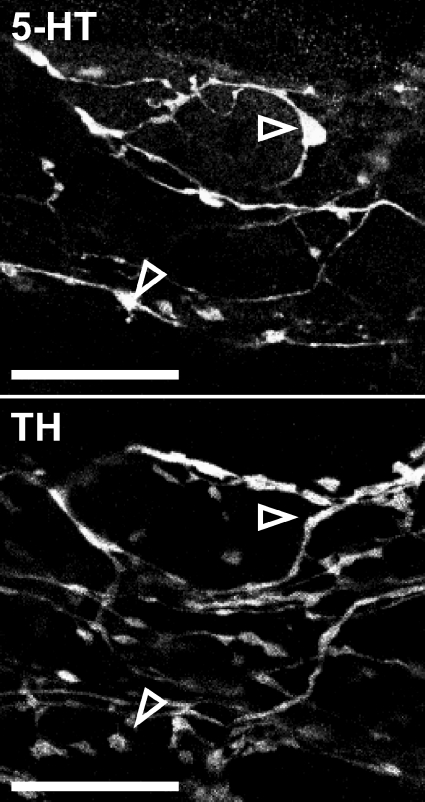
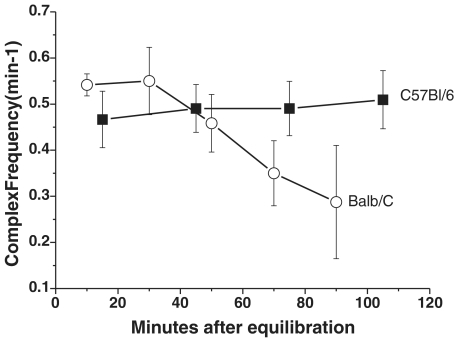
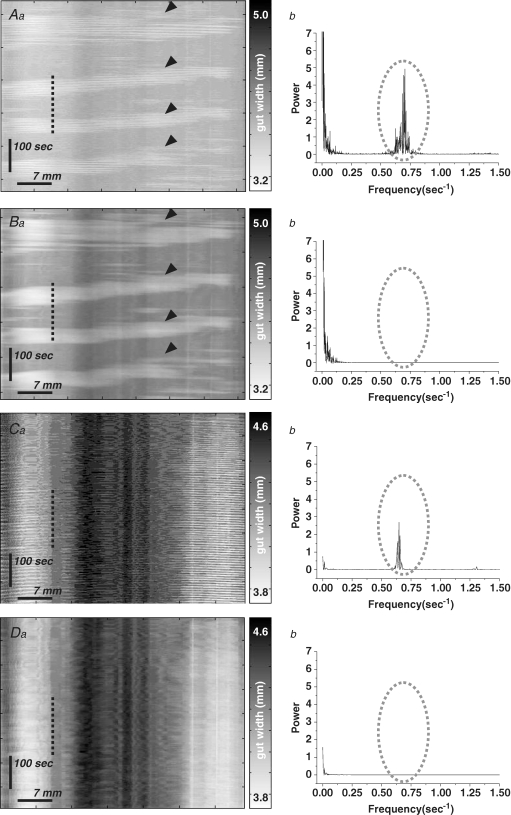
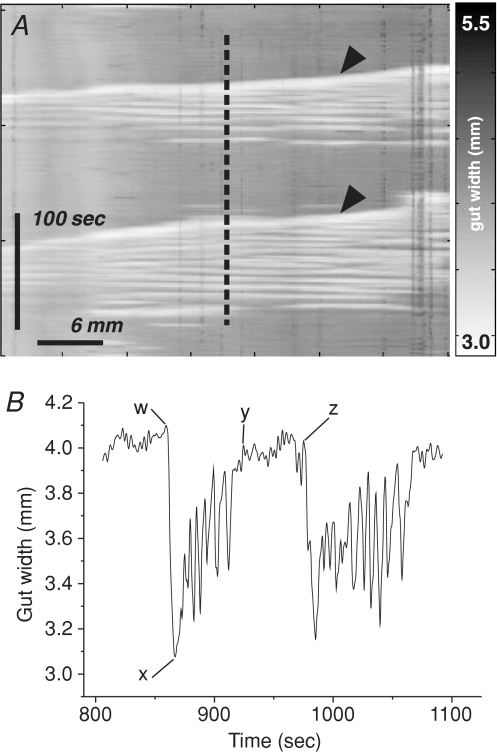
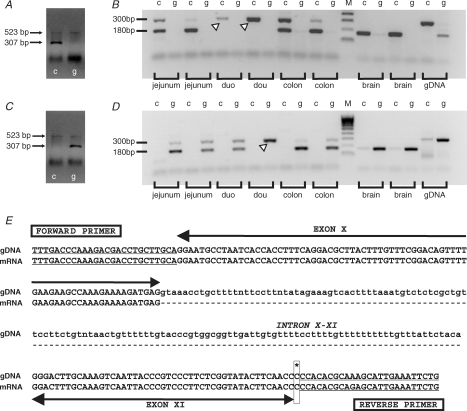
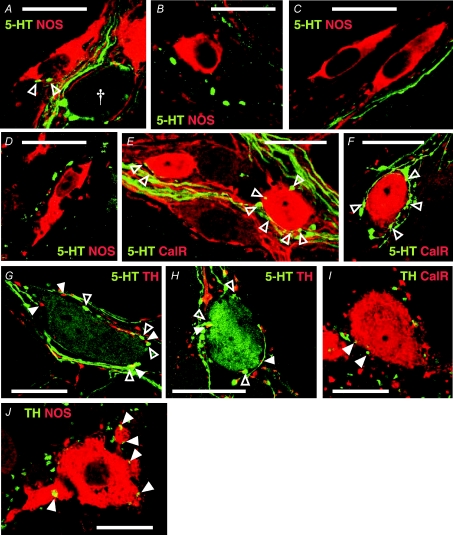
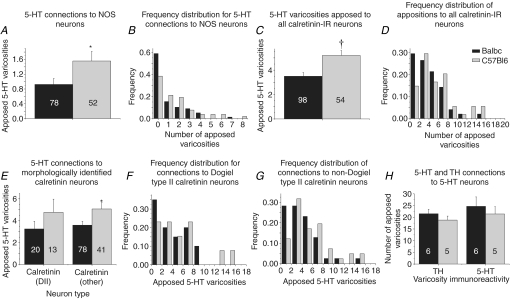
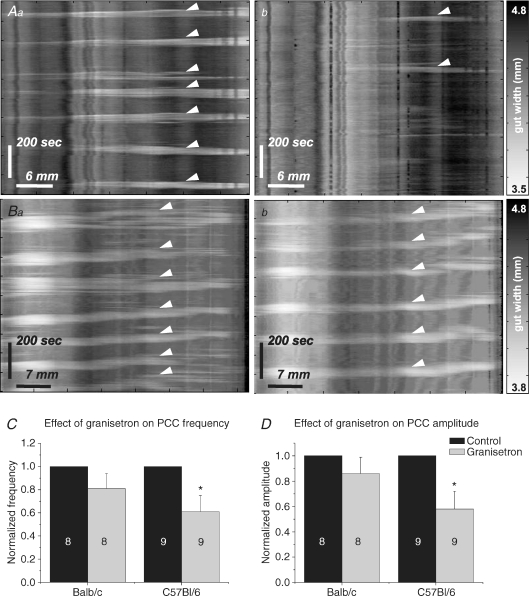
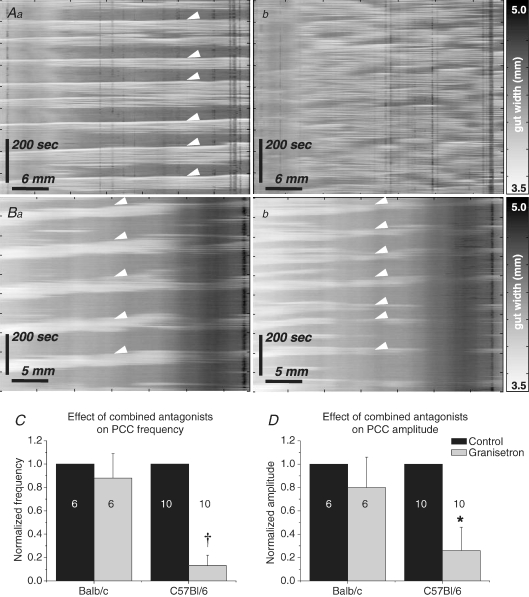
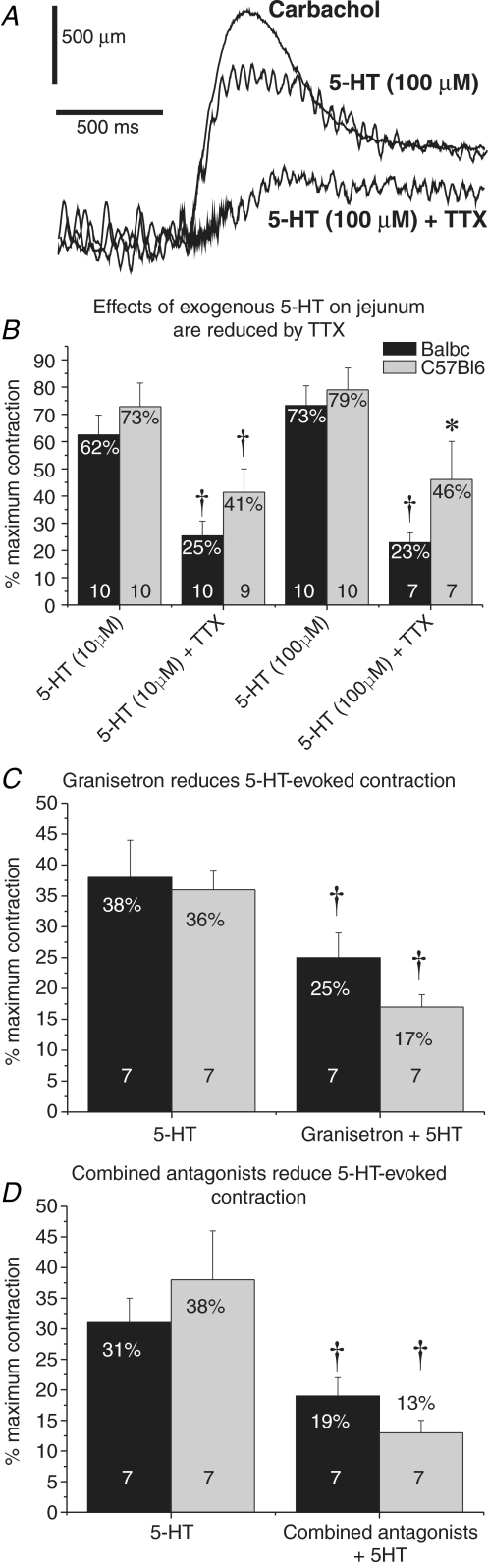
Serotonin (5-HT) powerfully affects small intestinal motility and 5-HT-immunoreactive (IR) neurones are highly conserved between species. 5-HT synthesis in central neurones and gastrointestinal mucosa depends on tissue-specific isoforms of the enzyme tryptophan hydroxylase (TPH). RT-PCR identified strain-specific expression of a polymorphism (1473C/G) of the tph2 gene in longitudinal muscle-myenteric plexus preparations of C57Bl/6 and Balb/c mice. The former expressed the high-activity C allele, the latter the low-activity G allele. Confocal microscopy was used to examine close contacts between 5-HT-IR varicosities and myenteric neurones immunoreactive for neuronal nitric oxide synthase (NOS) or calretinin in these two strains. Significantly more close contacts were identified to NOS- (P < 0.05) and calretinin-IR (P < 0.01) neurones in C57Bl/6 jejunum (NOS 1.6 +/- 0.3, n = 52; calretinin 5.2 +/- 0.4, n = 54), than Balb/c jejunum (NOS 0.9 +/- 0.2, n = 78; calretinin 3.5 +/- 0.3, n = 98). Propagating contractile complexes (PCCs) were identified in the isolated jejunum by constructing spatiotemporal maps from video recordings of cannulated segments in vitro. These clusters of contractions usually arose towards the anal end and propagated orally. Regular PCCs were initiated at intraluminal pressures of 6 cmH(2)O, and abolished by tetrodotoxin (1 microm). Jejunal PCCs from C57Bl/6 mice were suppressed by a combination of granisetron (1 microm, 5-HT(3) antagonist) and SB207266 (10 nm, 5-HT(4) antagonist), but PCCs from Balb/c mice were unaffected. There were, however, no strain-specific differences in sensitivity of longitudinal muscle contractions to exogenous 5-HT or blockade of 5-HT(3) and 5-HT(4) receptors. These data associate a genetic difference with significant structural and functional consequences for enteric neural serotonergic pathways in the jejunum.
Figures
Comment in
-
Enteric serotonergic neurones ... finally!J Physiol. 2009 Feb 1;587(3):507. doi: 10.1113/jphysiol.2008.167676. J Physiol. 2009. PMID: 19182271 Free PMC article. No abstract available.
References
-
- Abdu F, Hicks GA, Hennig G, Allen JP, Grundy D. Somatostatin Sst2 receptors inhibit peristalsis in the rat and mouse jejunum. Am J Physiol Gastrointest Liver Physiol. 2002;282:G624–G633. - PubMed
-
- Anlauf M, Schafer MKH, Eiden L, Weihe E. Chemical coding of the human gastrointestinal nervous system: cholinergic, VIPergic, and catecholaminergic phenotypes. J Comp Neurol. 2003;459:90–111. - PubMed
-
- Barbiers M, Timmermans JP, Adriaensen D, Degroodtlasseel MHA, Scheuermann DW. Projections of neurochemically specified neurons in the porcine colon. Histochem Cell Biol. 1995;103:115–126. - PubMed
-
- Blaugrund E, Pham TD, Tennyson VM, Lo L, Sommer L, Anderson DJ, Gershon MD. Distinct subpopulations of enteric neuronal progenitors defined by time of development, sympathoadrenal lineage markers and Mash-1-dependence. Development. 1996;122:309–320. - PubMed
Publication types
MeSH terms
Substances
LinkOut - more resources
Full Text Sources
Molecular Biology Databases
