Evolution of novel small-molecule therapeutics targeting sickle cell vasculopathy
- PMID: 19066384
- PMCID: PMC2756016
- DOI: 10.1001/jama.2008.598
Evolution of novel small-molecule therapeutics targeting sickle cell vasculopathy
Abstract
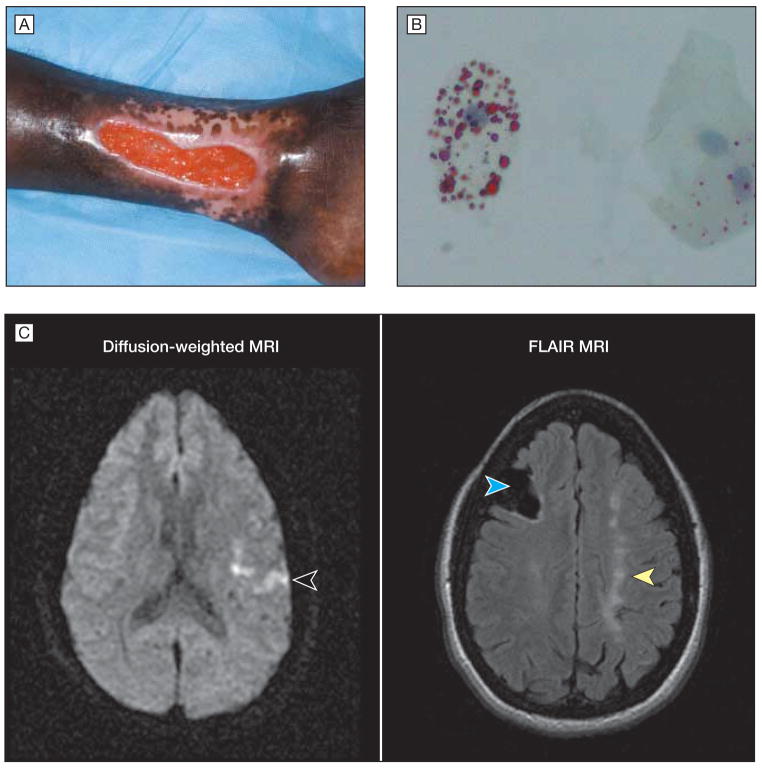
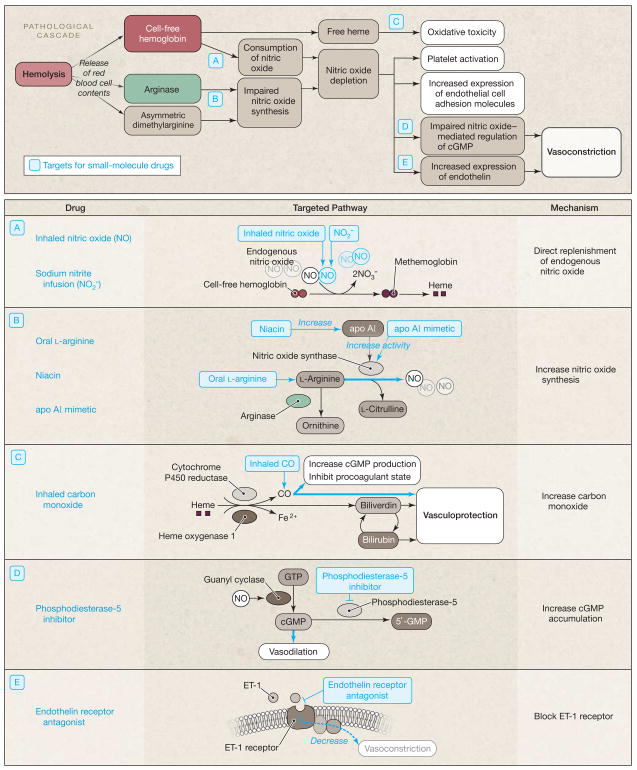
A 34-year-old African American woman with sickle cell disease and history of relatively severe hemolysis, chronic leg ulcers, and mild pulmonary hypertension presented with a new ischemic stroke. Recent research has suggested a syndrome of hemolysis-associated vasculopathy in patients with sickle cell disease, which features severe hemolytic anemia and leads to scavenging of nitric oxide and its biochemical precursor l-arginine. This diminished bioavailability of nitric oxide promotes a hemolysis-vascular dysfunction syndrome, which includes pulmonary hypertension, cutaneous leg ulceration, priapism, and ischemic stroke. Additional correlates of this vasculopathy include activation of endothelial cell adhesion molecules, platelets, and the vascular protectant hemeoxygenase-1. Some known risk factors for atherosclerosis are also associated with sickle cell vasculopathy, including low levels of apolipoprotein AI and high levels of asymmetric dimethylarginine, an endogenous inhibitor of nitric oxide synthase. Identification of dysregulated vascular biology pathways in sickle vasculopathy has provided a focus for new clinical trials for therapeutic intervention, including inhaled nitric oxide, sodium nitrite, L-arginine, phosphodiesterase-5 inhibitors, niacin, inhaled carbon monoxide, and endothelin receptor antagonists. This article reviews the pathophysiology of sickle vasculopathy and the results of preliminary clinical trials of novel small-molecule therapeutics directed at abnormal vascular biology in patients with sickle cell disease.
Figures
References
-
- Gladwin MT, Sachdev V, Jison ML, et al. Pulmonary hypertension as a risk factor for death in patients with sickle cell disease. N Engl J Med. 2004;350(9):886–895. - PubMed
-
- Machado RF, Anthi A, Steinberg MH, et al. N-terminal pro-brain natriuretic peptide levels and risk of death in sickle cell disease. JAMA. 2006;296 (3):310–318. - PubMed
-
- Ohene-Frempong K. Stroke in sickle cell disease: demographic, clinical, and therapeutic considerations. Semin Hematol. 1991;28(3):213–219. - PubMed