


Efficacy of the Chicago parent program with low-income African American and Latino parents of young children
- PMID: 19067166
- PMCID: PMC2770507
- DOI: 10.1007/s11121-008-0116-7
Efficacy of the Chicago parent program with low-income African American and Latino parents of young children
Abstract
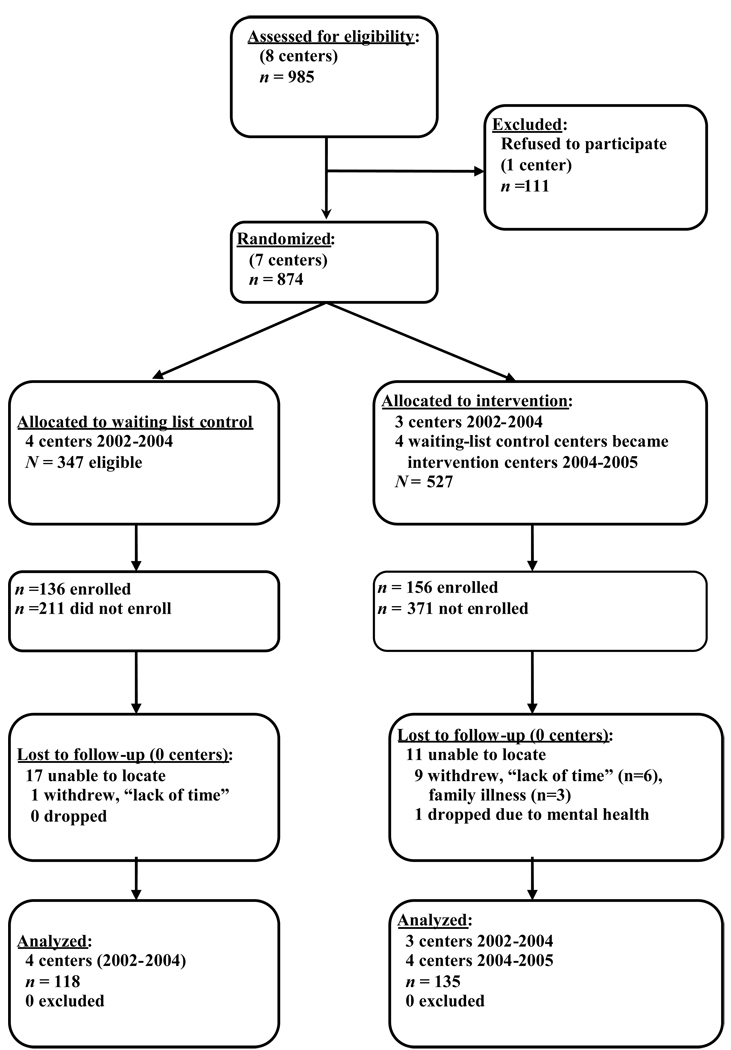
This study tested the efficacy of a 12-session parent training program, the Chicago Parent Program (CPP), which was developed in collaboration with African American and Latino parents. Using growth curve modeling, data were analyzed from 253 parents (58.9% African American, 32.8% Latino) of 2-4 year old children enrolled in seven day care centers serving low-income families. Day care centers were matched and randomly assigned to intervention and waiting-list control conditions. At 1-year follow-up, intervention group parents used less corporal punishment and issued fewer commands with their children. Intervention children exhibited fewer behavior problems during observed play and clean-up sessions than controls. Additional group differences were observed when dose was included in the analytic model. Parents who participated in at least 50% of CPP sessions also reported greater improvements in parenting self-efficacy, more consistent discipline, greater warmth, and a decline in child behavior problems when compared to reports from controls. The implications of these results for preventive parent training with low-income African American and Latino parents and the role of intervention dose on parent-child outcomes are discussed.
Figures
References
-
- Bandura A. Self-efficacy: The exercise of control. New York: W.H. Freeman & Company; 1997.
-
- Baumrind D. The discipline controversy revisited. Family Relations. 1996;445:405–414.
-
- Brestan E, Eyberg S. Effective psychosocial treatments of conduct-disordered children and adolescents: 29 years, 82 studies, and 5,272 kids. Journal of Clinical Child Psychology. 1998;27:180–189. - PubMed
-
- Brotman LM, Klein R, Kamboukos D, Brown EJ, Coard SI, Sosinsky LS. Preventive intervention for urban, low-income preschoolers at familial risk for conduct problems: A randomized pilot study. Journal of Clinical Child and Adolescent Psychology. 2003;32:246–257. - PubMed
-
- Coard SI, Wallace SA, Stevenson HC, Brotman LM. Towards culturally relevant preventive interventions: The consideration of racial socialization in parent training with African American families. Journal of Child and Family Studies. 2004;13:277–293.
Publication types
MeSH terms
Grants and funding
LinkOut - more resources
Full Text Sources
Medical
