


Epigenomics and breast cancer
- PMID: 19072646
- PMCID: PMC2633440
- DOI: 10.2217/14622416.9.12.1879
Epigenomics and breast cancer
Abstract
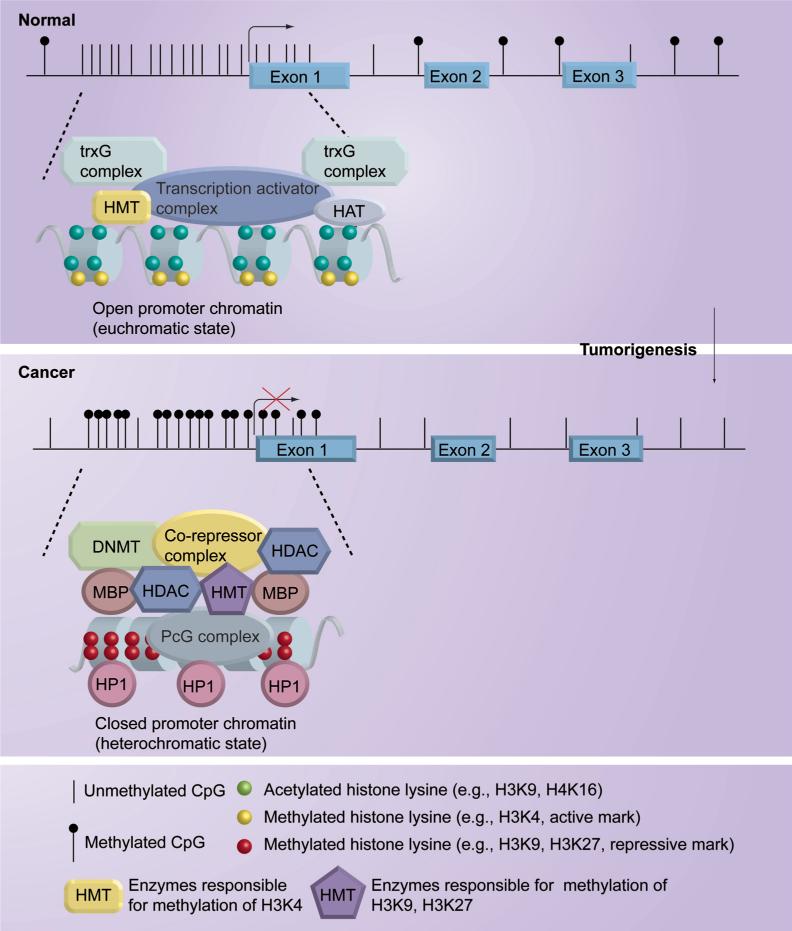
Breast carcinogenesis involves genetic and epigenetic alterations that cause aberrant gene function. Recent progress in the knowledge of epigenomics has had a profound impact on the understanding of mechanisms leading to breast cancer, and consequently the development of new strategies for diagnosis and treatment of breast cancer. Epigenetic regulation has been known to involve three mutually interacting events--DNA methylation, histone modifications and nucleosomal remodeling. These processes modulate chromatin structure to form euchromatin or heterochromatin, and in turn activate or silence gene expression. Alteration in expression of key genes through aberrant epigenetic regulation in breast cells can lead to initiation, promotion and maintenance of carcinogenesis, and is even implicated in the generation of drug resistance. We currently review known roles of the epigenetic machinery in the development and recurrence of breast cancer. Furthermore, we highlight the significance of epigenetic alterations as predictive biomarkers and as new targets of anticancer therapy.
Figures
References
-
- Hanahan D, Weinberg RA. The hallmarks of cancer. Cell. 2000;100:57–70. - PubMed
-
- Vogelstein B, Kinzler KW. Cancer genes and the pathways they control. Nat. Med. 2004;10:789–799. - PubMed
-
- Widschwendter M, Jones PA. DNA methylation and breast carcinogenesis. Oncogene. 2002;21:5462–5482. [of interestProvides an organized review of functional roles for identified methylated genes in breast tumorigenesis.] - PubMed
-
- Baylin SB, Ohm JE. Epigenetic gene silencing in cancer – a mechanism for early oncogenic pathway addiction? Nat. Rev. Cancer. 2006;6:107–116. [of considerable interestExcellent overview of how epigenetic changes might addict cancer cells to altered signal-transduction pathways during the early stages of tumor development.] - PubMed
Publication types
MeSH terms
Substances
Grants and funding
LinkOut - more resources
Full Text Sources
Medical
