


Review
doi: 10.1002/mc.20501.
Repair of DNA lesions associated with triplex-forming oligonucleotides
Affiliations
- PMID: 19072762
- PMCID: PMC2745299
- DOI: 10.1002/mc.20501
Item in Clipboard
Review
Repair of DNA lesions associated with triplex-forming oligonucleotides
Mol Carcinog.
2009 Apr.
Abstract
Triplex-forming oligonucleotides (TFOs) are gene targeting tools that can bind in the major groove of duplex DNA in a sequence-specific manner. When bound to DNA, TFOs can inhibit gene expression, can position DNA-reactive agents to specific locations in the genome, or can induce targeted mutagenesis and recombination. There is evidence that third strand binding, alone or with an associated cross-link, is recognized and metabolized by DNA repair factors, particularly the nucleotide excision repair pathway. This review examines the evidence for DNA repair of triplex-associated lesions.
(c) 2008 Wiley-Liss, Inc.
Figures
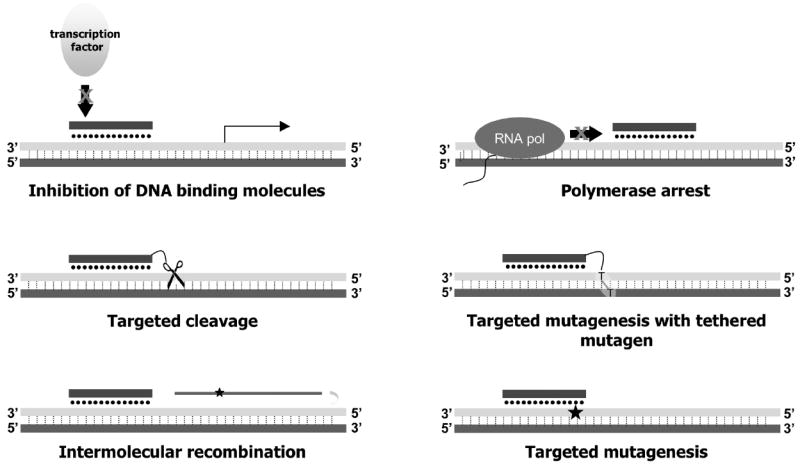
Triplex-forming oligonucleotides can mediate various biological activities upon binding to duplex DNA. Reprinted with permission from [58].
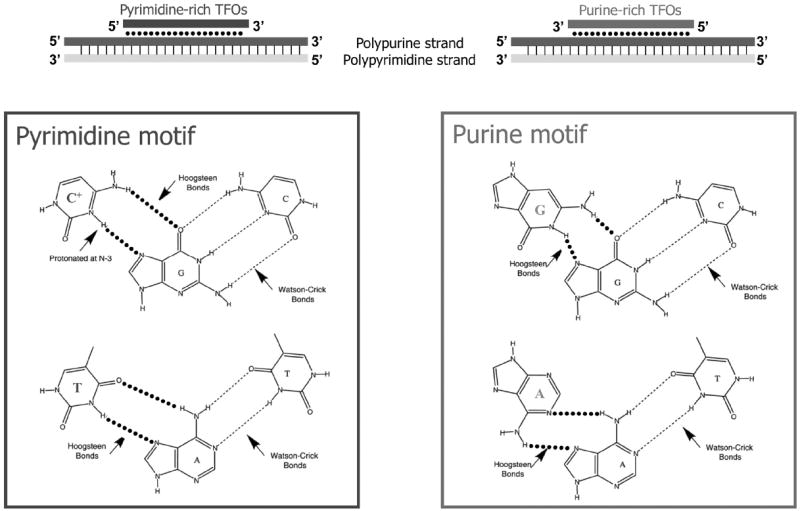
TFOs bind to polypurine sequences in DNA via Hoogsteen base-pairing. Pyrimidine and purine TFOs differ in third strand base composition and third strand orientation with respect to the polypurine strand of DNA. Reprinted with permission from [58].
References
-
- Felsenfeld G, Davies DR, Rich A. Formation of a three-stranded polynucleotide molecule. J Am Chem Soc. 1957;79:2023–2024.
-
- Moser HE, Dervan PB. Sequence-specific cleavage of double helical DNA by triple helix formation. Science. 1987;238(4827):645–650. - PubMed
-
- Letai AG, Palladino MA, Fromm E, Rizzo V, Fresco JR. Specificity in formation of triple-stranded nucleic acid helical complexes: studies with agarose-linked polyribonucleotide affinity columns. Biochemistry. 1988;27(26):9108–9112. - PubMed
-
- Cooney M, Czernuszewicz G, Postel EH, Flint SJ, Hogan ME. Site-specific oligonucleotide binding represses transcription of the human c-myc gene in vitro. Science. 1988;241(4864):456–459. - PubMed
Publication types
MeSH terms
Substances
Grants and funding
LinkOut - more resources
Full Text Sources
Other Literature Sources
