


Effect of methamphetamine neurotoxicity on learning-induced Arc mRNA expression in identified striatal efferent neurons
- PMID: 19073434
- PMCID: PMC2713000
- DOI: 10.1007/BF03033855
Effect of methamphetamine neurotoxicity on learning-induced Arc mRNA expression in identified striatal efferent neurons
Abstract
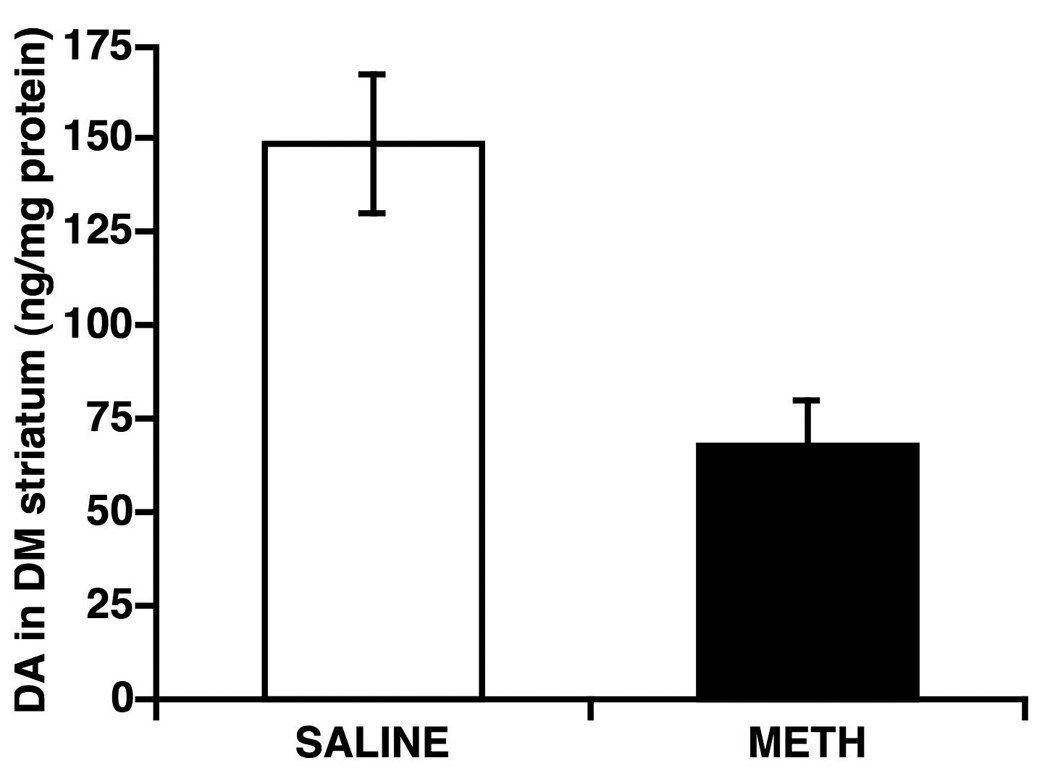
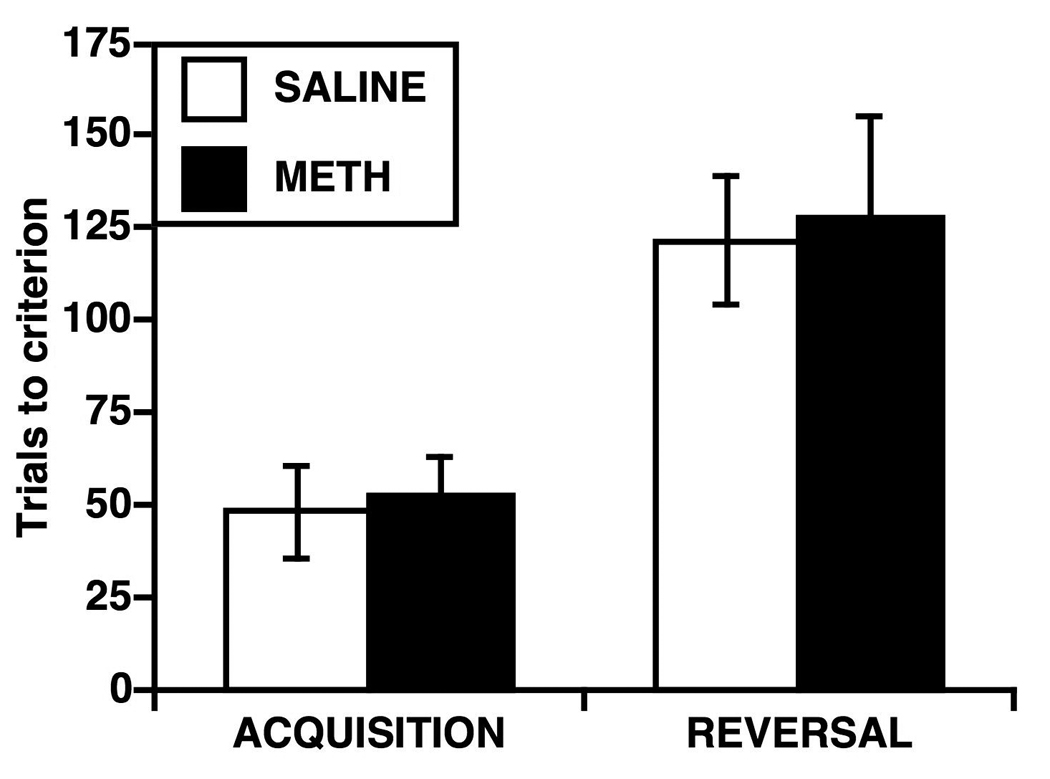
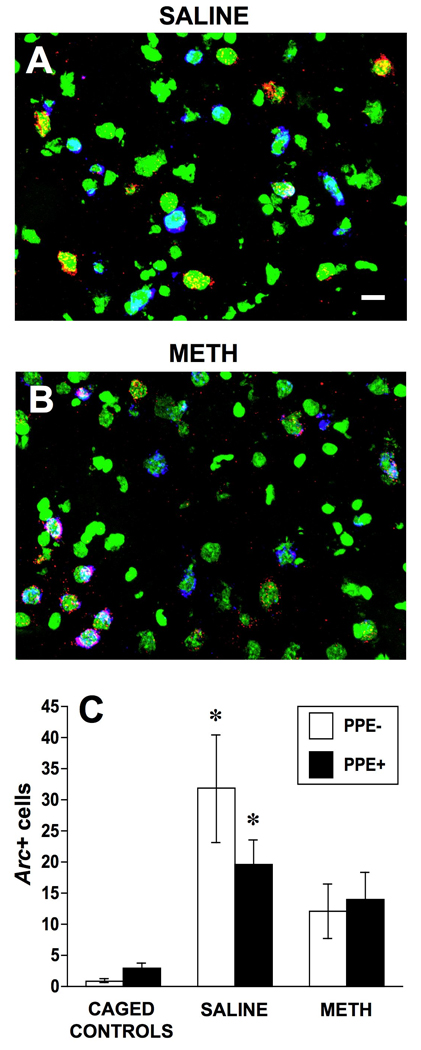
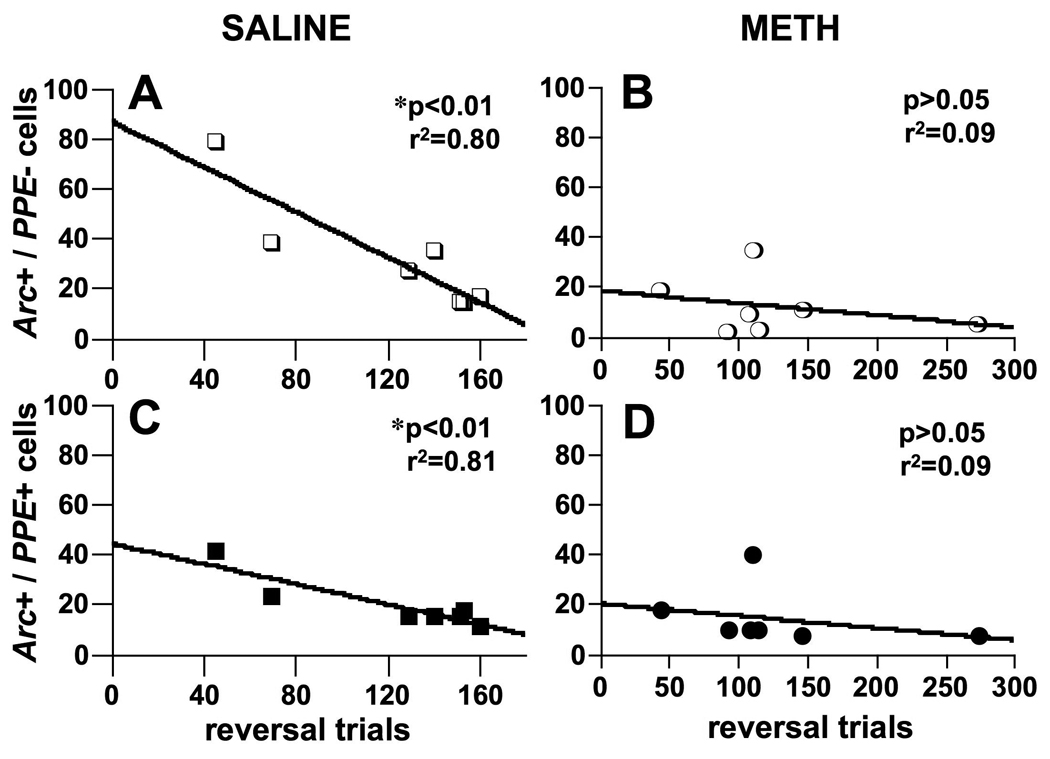
Methamphetamine abuse results in lasting, partial depletions of striatal dopamine and cognitive dysfunction. However, the effect of partial dopamine depletions on the expression of an effector immediate early gene, Arc (activity regulated, cytoskeletal-associated protein), known to be involved in synaptic modifications underlying learning and memory, has heretofore not been examined. Male Sprague-Dawley rats were pretreated with a neurotoxic regimen of methamphetamine or saline. Seven weeks later, rats were trained in a motor-response task on a T-maze for five days, and then underwent reversal training on day five. Rats were sacrificed 5 min after reaching criterion on the reversal task, and the brains were removed and processed using double-label fluorescent in situ hybridization for Arc and preproenkephalin (PPE) mRNA expression in the dorsomedial striatum. Rats pretreated with methamphetamine had an average (+/-SEM) 54.4+/-7.9% loss of dopamine in dorsomedial striatum. Interestingly, there was no difference in reversal trials to criterion in methamphetamine- vs. saline-pretreated rats. However, the expression of Arc mRNA in dorsomedial striatum was attenuated in methamphetamine-pretreated animals, particularly in PPE-negative neurons. Furthermore, the correlation between Arc mRNA expression in dorsomedial striatum and learning was abolished in methamphetamine-pretreated animals. These data suggest that methamphetamine-induced partial monoamine loss is associated with disrupted induction of the effector immediate early gene Arc during a behavioral task, particularly in PPE-negative (presumed striatonigral) neurons, as well as with disruption of the relation between Arc mRNA expression in dorsomedial striatum and reversal learning.
Figures
References
-
- Ariano MA, Grissell AE, Littlejohn FC, Buchanan TM, Elsworth JD, Collier TJ, Steece-Collier K. Partial dopamine loss enhances activated caspase-3 activity: differential outcomes in striatal projection systems. J Neurosci Res. 2005;82:387–396. - PubMed
-
- Aronin N, Difiglia M, Graveland GA, Schwartz WJ, Wu JY. Localization of immunoreactive enkephalins in GABA synthesizing neurons of the rat neostriatum. Brain Res. 1984;300:376–380. - PubMed
-
- Belcher AM, Feinstein EM, O'Dell SJ, Marshall JF. Methamphetamine influences on recognition memory: comparison of escalating and single-day dosing regimens. Neuropsychopharmacology. 2008;33:1453–1463. - PubMed
-
- Belcher AM, O'Dell SJ, Marshall JF. Impaired object recognition memory following methamphetamine, but not p-chloroamphetamine- or d-amphetamine-induced neurotoxicity. Neuropsychopharmacology. 2005;30:2026–2034. - PubMed
-
- Campbell BM, Gresch PJ, Walker PD. Neonatal dopamine depletion reveals a synergistic mechanism of mRNA regulation that is mediated by dopamine(D1) and serotonin(2) receptors and is targeted to tachykinin neurons of the dorsomedial striatum. Neuroscience. 2001;105:671–680. - PubMed
Publication types
MeSH terms
Substances
Grants and funding
LinkOut - more resources
Full Text Sources
Medical
