Combination of antiangiogenesis with chemotherapy for more effective cancer treatment
- PMID: 19074844
- PMCID: PMC2637411
- DOI: 10.1158/1535-7163.MCT-08-0715
Combination of antiangiogenesis with chemotherapy for more effective cancer treatment
Abstract
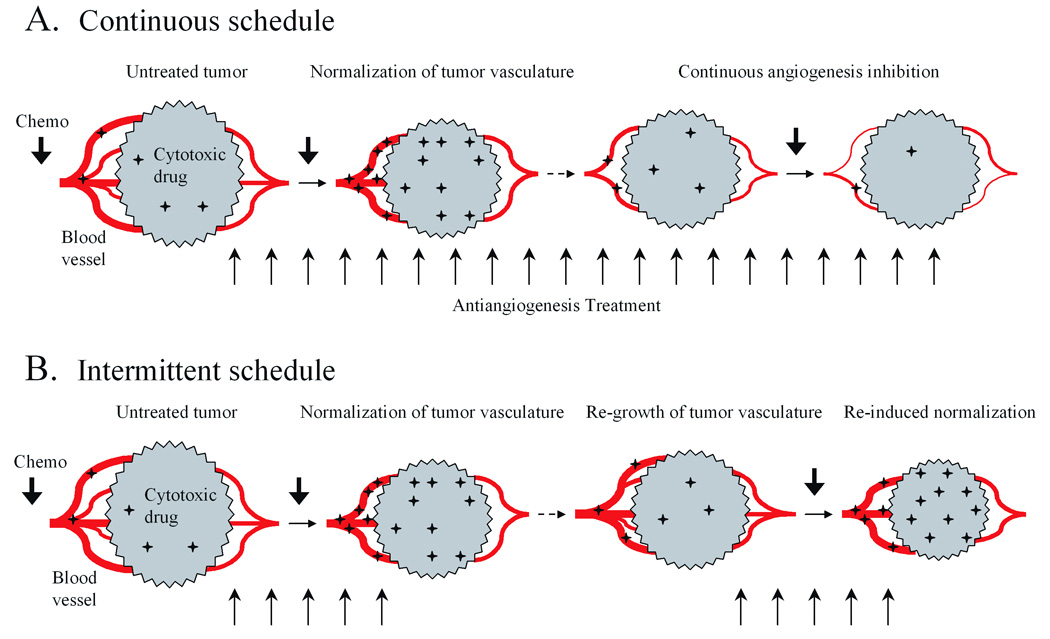
Angiogenesis is a hallmark of tumor development and metastasis and is now a validated target for cancer treatment. However, the survival benefits of antiangiogenic drugs have thus far been rather modest, stimulating interest in developing more effective ways to combine antiangiogenic drugs with established chemotherapies. This review discusses recent progress and emerging challenges in this field; interactions between antiangiogenic drugs and conventional chemotherapeutic agents are examined, and strategies for the optimization of combination therapies are discussed. Antiangiogenic drugs such as the anti-vascular endothelial growth factor antibody bevacizumab can induce a functional normalization of the tumor vasculature that is transient and can potentiate the activity of coadministered chemoradiotherapies. However, chronic angiogenesis inhibition typically reduces tumor uptake of coadministered chemotherapeutics, indicating a need to explore new approaches, including intermittent treatment schedules and provascular strategies to increase chemotherapeutic drug exposure. In cases where antiangiogenesis-induced tumor cell starvation augments the intrinsic cytotoxic effects of a conventional chemotherapeutic drug, combination therapy may increase antitumor activity despite a decrease in cytotoxic drug exposure. As new angiogenesis inhibitors enter the clinic, reliable surrogate markers are needed to monitor the progress of antiangiogenic therapies and to identify responsive patients. New targets for antiangiogenesis continue to be discovered, increasing the opportunities to interdict tumor angiogenesis and circumvent resistance mechanisms that may emerge with chronic use of these drugs.
Figures


References
-
- Folkman J. Angiogenesis: an organizing principle for drug discovery? Nat Rev Drug Discov. 2007;6:273–286. - PubMed
-
- Baluk P, Hashizume H, McDonald DM. Cellular abnormalities of blood vessels as targets in cancer. Curr Opin Genet Dev. 2005;15:102–111. - PubMed
-
- Hanahan D, Folkman J. Patterns and emerging mechanisms of the angiogenic switch during tumorigenesis. Cell. 1996;86:353–364. - PubMed
-
- Christofori G. New signals from the invasive front. Nature. 2006;441:444–450. - PubMed
-
- Folkman J. Tumor angiogenesis: therapeutic implications. N Engl J Med. 1971;285:1182–1186. - PubMed
Publication types
MeSH terms
Substances
Grants and funding
LinkOut - more resources
Full Text Sources
Other Literature Sources
Molecular Biology Databases
Research Materials