


PI3K signaling in glioma--animal models and therapeutic challenges
- PMID: 19076776
- PMCID: PMC2614703
- DOI: 10.1111/j.1750-3639.2008.00233.x
PI3K signaling in glioma--animal models and therapeutic challenges
Abstract
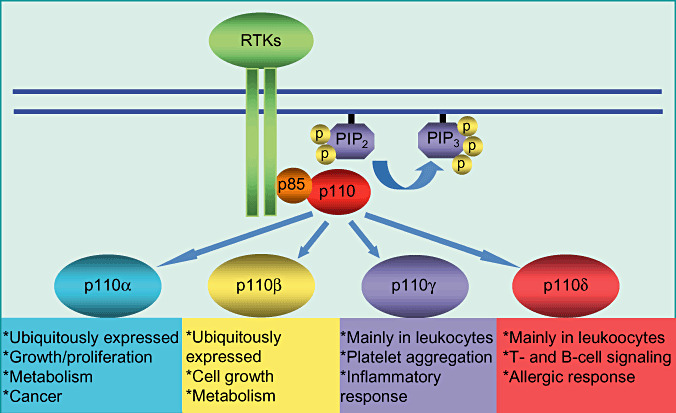
The PI3 kinase (PI3K) family plays a complex role in cell biology and metabolism. Signaling through the PI3Ks is frequently activated in many human cancers, including glioblastoma, because of gain-of-function mutations in PIK3CA or loss of PTEN. Experiments involving genetic mouse models and small molecule inhibitors have helped to elucidate the roles of the regulatory and catalytic subunits of PI3K in metabolism and cancer. Downstream of PI3K is Akt, a critical effector of growth, proliferation and survival. The suggested dependence of glioblastoma tumors on PI3K signaling implies that PI3K inhibitors should lead to effective killing of these cancer cells, but that has been shown not to be the case. The engagement of other survival pathways in response to PI3K inhibition prompts the need to develop combination therapies that promote cytotoxicity in cancer cells.
Figures


References
-
- Andrews S, Stephens LR, Hawkins PT (2007) PI3K class IB pathway. Sci STKE 2007:cm2. - PubMed
-
- Bi L, Okabe I, Bernard DJ, Wynshaw‐Boris A, Nussbaum RL (1999) Proliferative defect and embryonic lethality in mice homozygous for a deletion in the p110alpha subunit of phosphoinositide 3‐kinase. J Biol Chem 274:10963–10968. - PubMed
-
- Bi L, Okabe I, Bernard DJ, Nussbaum RL (2002) Early embryonic lethality in mice deficient in the p110beta catalytic subunit of PI 3‐kinase. Mamm Genome 13:169–172. - PubMed
Publication types
MeSH terms
Substances
Grants and funding
LinkOut - more resources
Full Text Sources
Other Literature Sources
Research Materials
Miscellaneous
