. 2009 Mar-Apr;87(3):209-17.
doi: 10.1038/icb.2008.101. Epub 2008 Dec 16.

TLR9 traffics through the Golgi complex to localize to endolysosomes and respond to CpG DNA

Affiliations

TLR9 traffics through the Golgi complex to localize to endolysosomes and respond to CpG DNA

Annapoorani Chockalingam et al. Immunol Cell Biol. 2009 Mar-Apr.

Abstract

Toll-like receptor 9 (TLR9) promiscuously binds self- and microbial DNA, but only microbial DNA elicits an inflammatory response. How TLR9 discriminates between self- and foreign DNA is unclear, but inappropriate localization of TLR9 permits response to self-DNA, suggesting that TLR9 localization and trafficking are critical components. The molecular mechanisms controlling the movement of TLR9 may provide new insight into the recognition of DNA in normal and in pathological conditions such as autoimmune systemic lupus erythematosus. We have shown earlier that TLR9 is retained in the endoplasmic reticulum (ER) and it moves to endolysosomes to recognize CpG DNA. Other studies have suggested that TLR9 bypasses the Golgi complex to access endolysosomes. Here, we show that TLR9 translocates from ER to endolysosomes through the Golgi complex and that Golgi export is required for optimal TLR9 signaling. In all, 6-13% of TLR9 constitutively exits the ER, moves through the Golgi complex and resides in lysosomal-associated membrane protein-1-positive vesicles. TLR9 bound to CpG DNA had glycan modifications indicative of Golgi processing confirming that TLR9 travels through the Golgi complex to access CpG DNA in endolysosomes. Together, these data support a model where TLR9 uses traditional secretory pathways and does not bypass the Golgi complex.


Figures
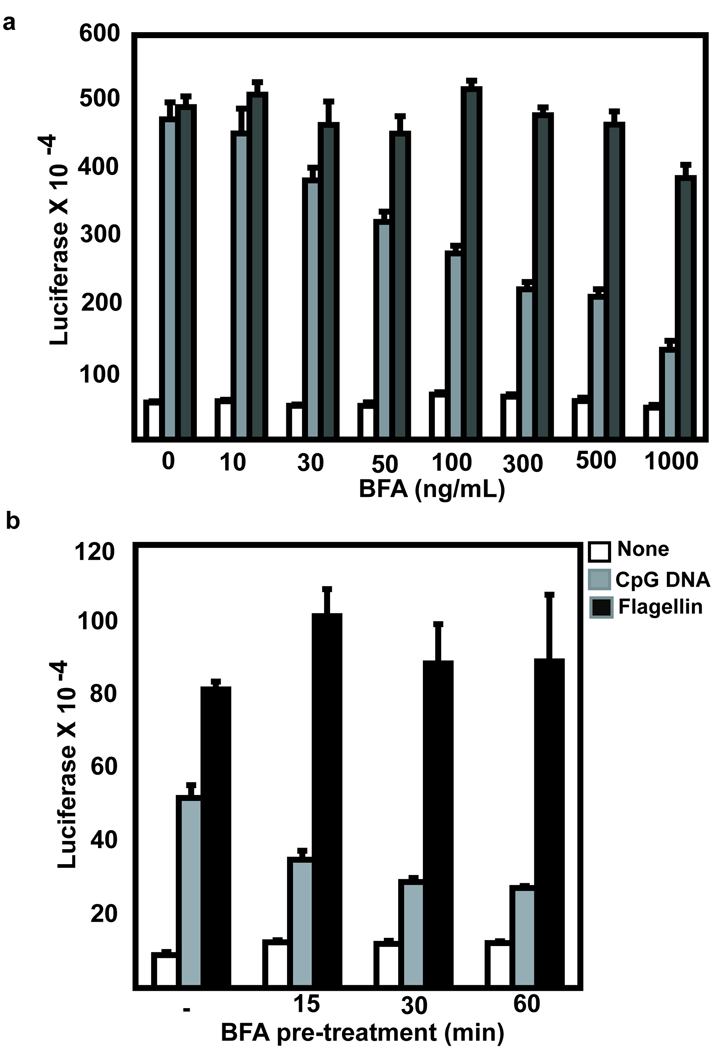
Figure 1
Figure 1. Brefeldin A inhibits TLR9 induced NF-κB activity
(a) HEK293 cells were transfected with TLR9 and pre-treated with the indicated concentration of BFA for 1 hour prior to overnight stimulation with 1 µg/ml CpG DNA or 100 ng/ml flagellin. (Error bars=mean+/−standard deviation of triplicate samples) Data are representative of three experiments. (b) Similar to (a) except that the cells were pre-treated for the indicated time period with 30 ng/mL BFA. (Error bars=mean+/−standard deviation of triplicate samples) Data are representative of three experiments.
Figure 2
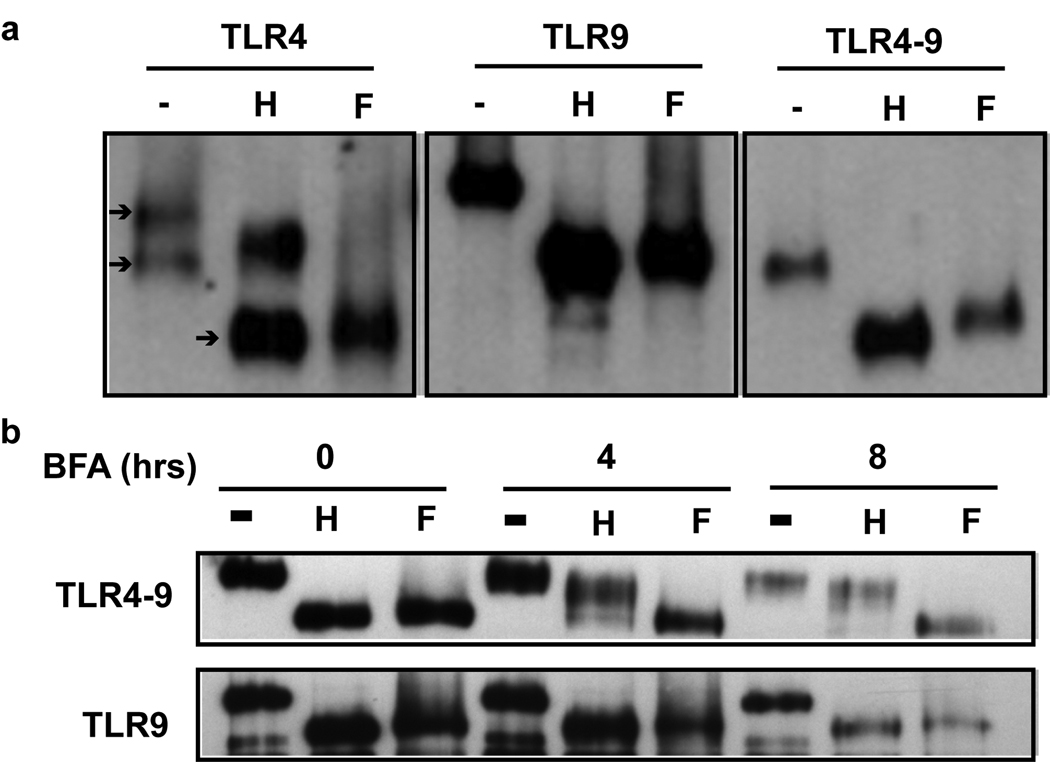
Figure 2. TLR4-9 but not TLR9 is resistant to digestion with EndoH upon treatment with BFA
(a) GFP immunoprecipitates from HeLa cells transfected with TLR4-GFP, TLR4-9-GFP or TLR9-GFP were either untreated (−) or treated with either EndoH (H), or PNGase F (F) prior to immunoblotting for GFP. Arrows indicate the mature (top), immature (middle) and unglycosylated (lower) glycoforms of TLR4. Data are representative of three experiments. (b) As in (a) except cells were pre-treated with 30 ng/ml Brefeldin A for the indicated time prior to cell lysis. Data are representative of three experiments.
Figure 3
Figure 3. Biotinylated DS lectin blotting indicates TLR9 glycans are modified in the Golgi complex
(a) GFP immunoprecipitates from HeLa cells transfected with TLR9-GFP, TLR4-YFP or pEGFP empty vector (V) were probed for GFP. The blot was stripped and probed with biotinylated GN or DS lectin. Arrowheads indicate full length TLR9 and small arrows indicate the upper and lower glycoforms of TLR4. Data are representative of four experiments. (b) Either BJAB cells (left lane), or as a positive control, HeLa cells transfected with TLR9-YFP (Right lane), were lysed and TLR9 immunoprecipitates were immunoblotted for TLR9. The blot was subsequently stripped and probed with biotinylated DS lectin. Data are representative of three experiments. (c) GFP immunoprecipitates from HEK293 cells stably transfected with TLR9YFP or TLR4GFP were left untreated (−) or treated with EndoH (H), or PNGase F (F) prior to immunoblotting with GFP (lower blots). The blots were stripped and probed with biotinylated GN or DS lectin (upper blots). Arrow(head)s are the same as in (a). Data are representative of four experiments.
Figure 4
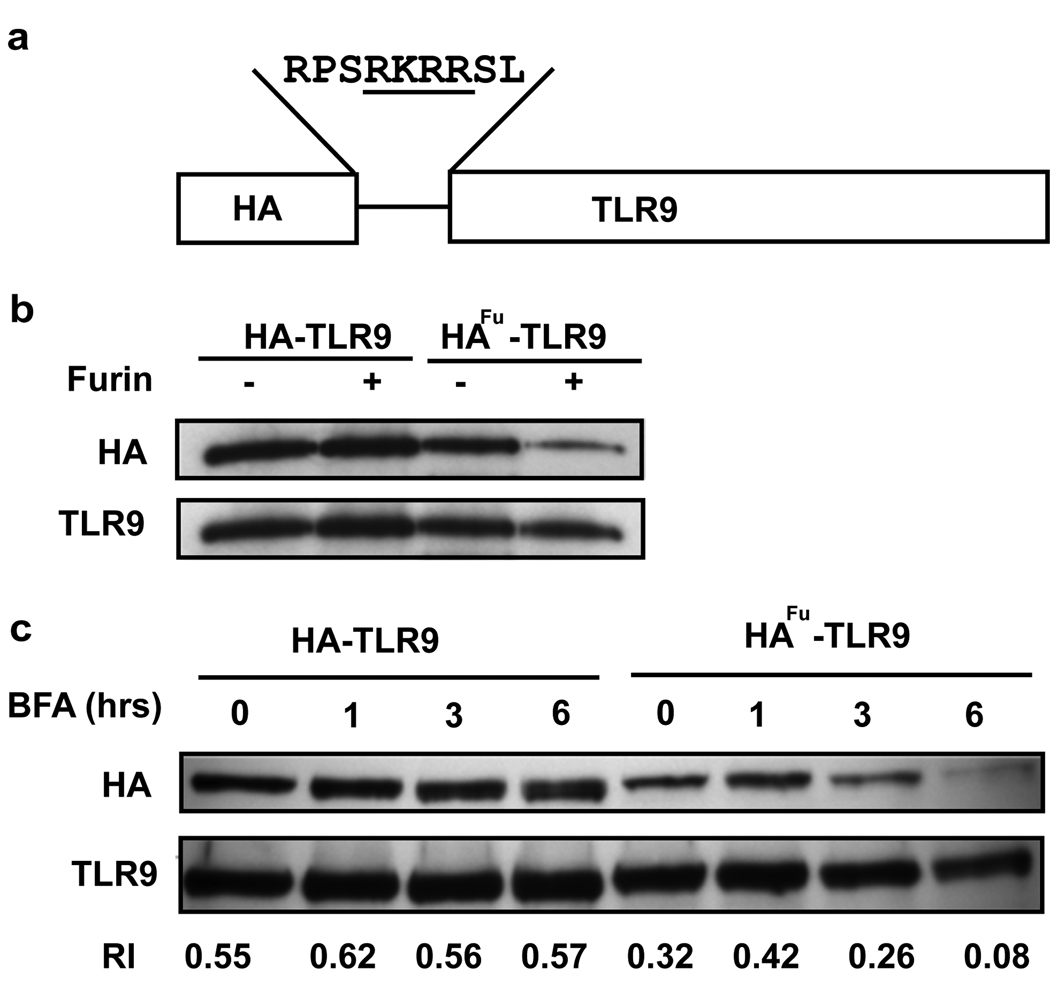
Figure 4. HA-TLR9 furin cleavage assay
(a) Schematic representation of the engineered furin cleavage site in HA-TLR9. (b) HA immunoprecipitates from HeLa cells transfected with HA-TLR9 or HAfu-TLR9 were treated with recombinant furin in-vitro for 2 hrs prior to immunoblotting for HA and TLR9. Data are representative of two experiments. (c) HeLa cells transfected with HA-TLR9 and HAfu-TLR9 were pretreated with BFA for the indicated times prior to immunoprecipitation with TLR9 and immunoblotting for HA and TLR9. Relative intensities (RI) were calculated as described in the methods. Data are representative of three experiments.
Figure 5
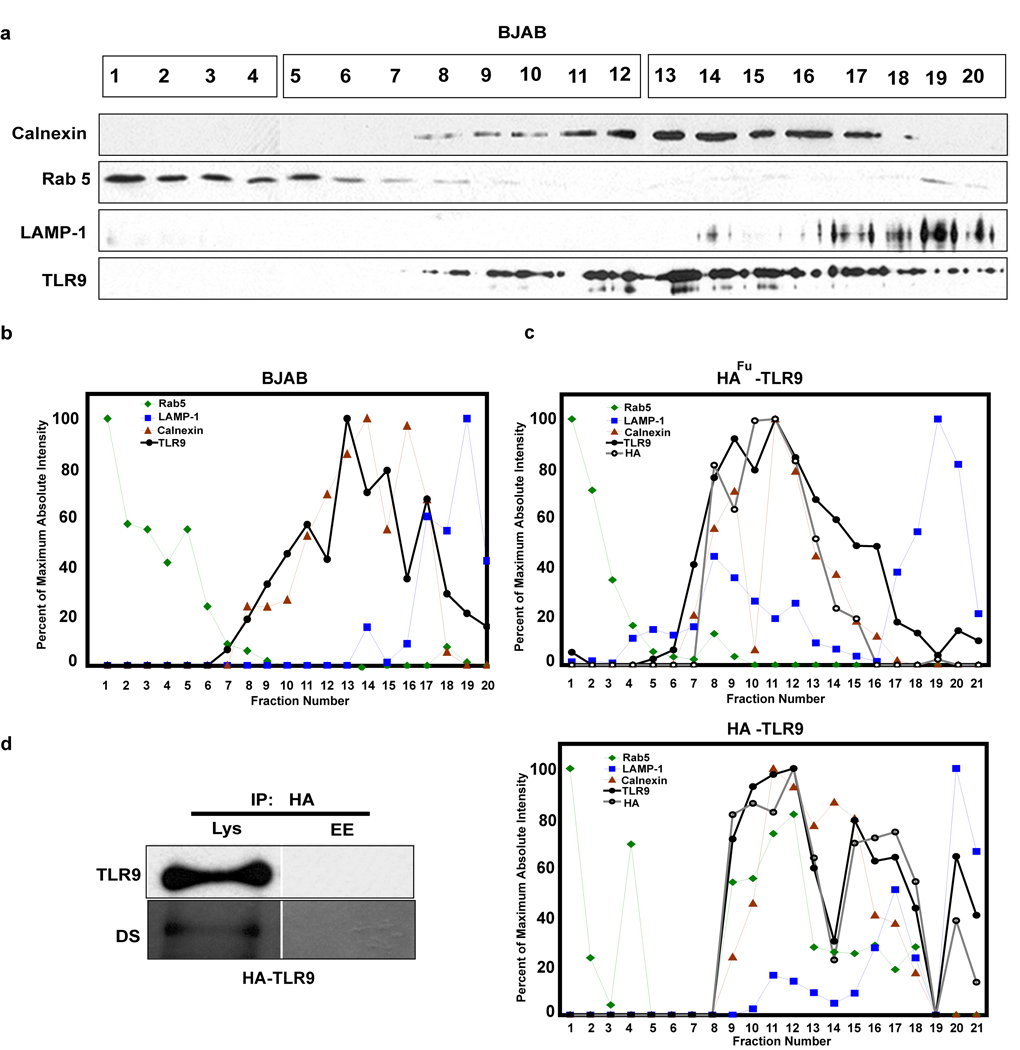
Figure 5. TLR9 trafficking to endolysosomes requires Golgi transport
(a) Fractions from BJAB cells separated on Percoll-sucrose gradients were immunoblotted for early endosomes (Rab 5), ER (Calnexin), lysosomes (LAMP-1) and TLR9. Fractions were run on three gels, which are indicated with boxes over the fraction numbers, but were immunoblotted and developed simultaneously. (b) Each immunoblot in (a) was quantified to determine absolute intensity. Percent of maximum values were calculated from the absolute intensities and graphed on the same graph to normalize the data. Data are representative of three experiments. (c) Similar to (b) except that the cells were HEK293 cells stably expressing HAfu-TLR9 (upper) or HA-TLR9 (lower) and were additionally immunoblotted for HA. Data are representative of three experiments. (d) HA immunoprecipitates from combined fractions that were LAMP-1 (Lys, fractions 17–20) or Rab 5 (EE, fractions 1–4) positive collected from HA-TLR9 cells were immunoblotted for TLR9, stripped and probed with biotinylated DS lectin. Data are representative of two experiments.
Figure 6
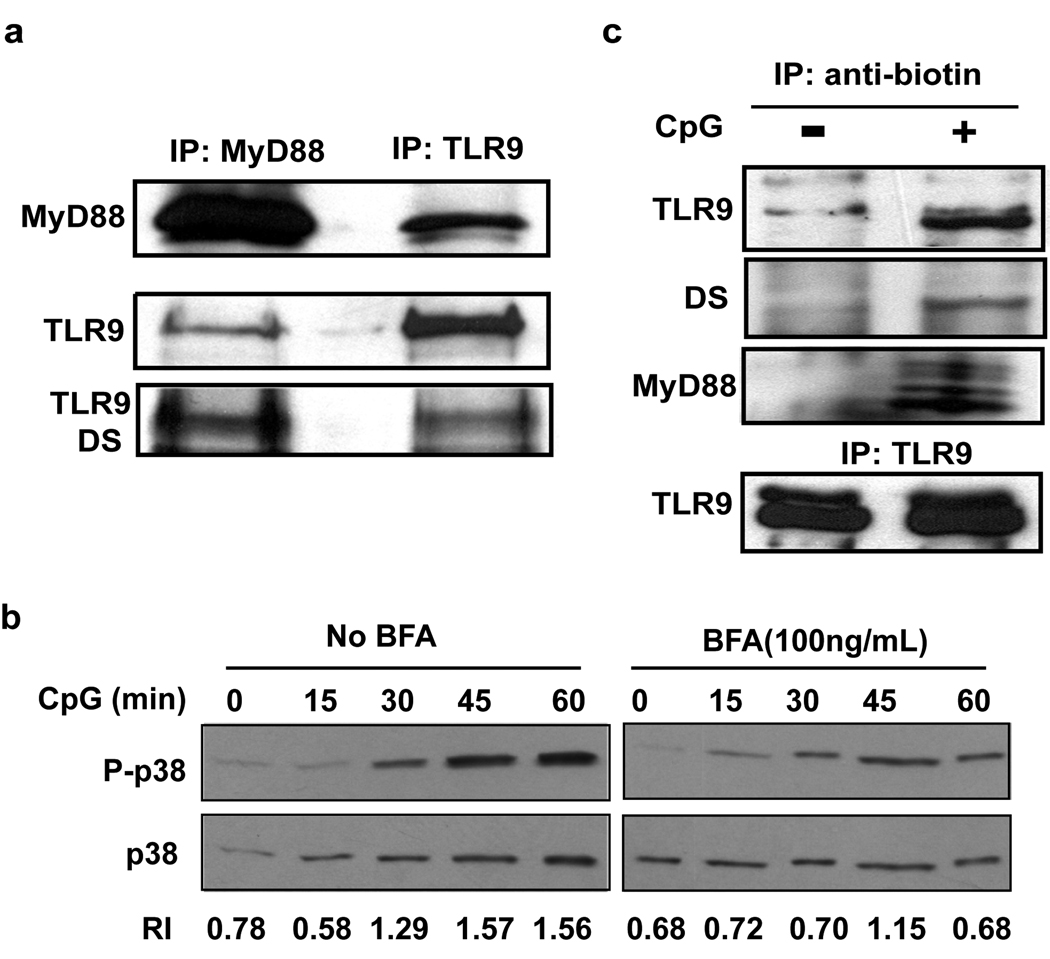
Figure 6. The TLR9 that initiates signaling has trafficked through the Golgi complex
(a) MyD88 or TLR9 immunoprecipitates from BJAB cells were immunoblotted for MyD88 and TLR9, stripped and the TLR9 portion of the blot was probed with biotinylated DS lectin. Data are representative of three experiments. (b) BJAB cells were pretreated with media or 100 ng/ml BFA for 2 hours prior to stimulation with 5 µg/ml CpG DNA 2006 for the indicated times. Whole cell lysates were immunoblotted for phospho-p38 (P-p38) and total p38 (p38). Relative intensities were calculated as described in the methods. Data are representative of two experiments. (c) BJAB cells were treated with media or 3’ biotinylated CpG 2006 for 15 minutes, lysed and immunoprecipitated for biotin or TLR9 prior to immunoblotting for MyD88 and TLR9. The TLR9 blot was stripped and subsequently probed with biotinylated DS lectin. Note that there is a non-specific band of slightly higher molecular weight than TLR9 that is detected in the TLR9 blot of the anti-biotin IP from cells incubated with or without biotinylated CpG DNA. Data are representative of three experiments.

References

    1. Takeda K, Takeuchi O, Akira S. Recognition of lipopeptides by Toll-like receptors. J. Endotoxin Res. 2002;8:459–463. - PubMed
    1. Alexopoulou L, Holt AC, Medzhitov R, Flavell RA. Recognition of double-stranded RNA and activation of NF-κB by Toll-like receptor 3. Nature. 2001;413:732–738. - PubMed
    1. Heil F, Hemmi H, Hochrein H, Ampenberger F, Kirschning C, Akira S, et al. Species-specific recognition of single-stranded RNA via Toll-like receptor 7 and 8. Science. 2004;303:1526–1529. - PubMed
    1. Hemmi H, Takeuchi O, Kawai T, Kaisho T, Sato S, Sanjo H, et al. A Toll-like receptor recognizes bacterial DNA. Nature. 2000;408:740–745. - PubMed
    1. Takeshita F, Leifer CA, Gursel I, Ishii KJ, Takeshita S, Gursel M, et al. Cutting edge: Role of Toll-like receptor 9 in CpG DNA-induced activation of human cells. J. Immunol. 2001;167:3555–3558. - PubMed

Publication types