. 2008;3(12):e3905.
doi: 10.1371/journal.pone.0003905. Epub 2008 Dec 11.

STOX1 overexpression in choriocarcinoma cells mimics transcriptional alterations observed in preeclamptic placentas

Affiliations

STOX1 overexpression in choriocarcinoma cells mimics transcriptional alterations observed in preeclamptic placentas

Virginie Rigourd et al. PLoS One. 2008.

Abstract

Background: Mutations in STOX1 were proposed to be causal for predisposing to preeclampsia, a hypertensive disorder originating from placental defects, affecting up to 10% of human pregnancies. However, after the first study published in 2005 three other groups have dismissed the polymorphism described in the first paper as a causal mutation.

Methodology and principal findings: In the present study, we have produced a choriocarcinoma cell line overexpressing STOX1. This overexpression results in transcriptional modification of 12.5% of the genes, some of them being direct targets as shown by chromatin immunoprecipitation. STOX1 overexpression correlates strongly and specifically with transcriptomic alterations in preeclamptic placentas (r = 0.30, p = 9.10(-7)). Numerous known key modulators of preeclampsia (such as Endoglin, Syncytin, human chorionic gonadotrophin -hCG-, and Glial Cell Missing Homolog -GCM1-) were modified in these transformed choriocarcinoma cells.

Conclusions: Our results contribute to reconcile contradictory data concerning the involvement of STOX1 in preeclampsia. In addition, they strongly suggest that anomalies in STOX1 expression are associated with the onset of preeclampsia, thus indicating that this gene should be the target of future studies. Our cellular model could constitute an invaluable resource for studying specific aspects of this human disease.


Conflict of interest statement

Competing Interests: The authors have declared that no competing interests exist.

Figures

Figure 1
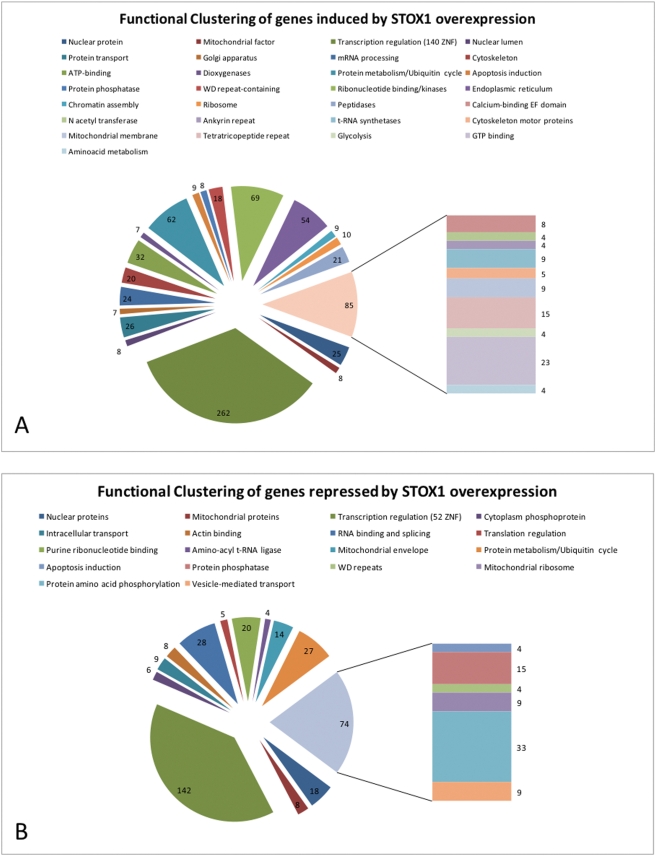
Figure 1. Fonctional clustering of genes modified by STOX1 overexpression (a total of 1840 induced genes and 1018 repressed genes) were distributed in clusters using the DAVID website .
Interestingly, the major cluster was in both cases composed of transcription factors, among which a majority of Zinc Finger Proteins was found. Only the significant clusters (according to the threshold defined in Material and Methods are represented), and are classified by decreasing significance (clockwise).
Figure 2
Figure 2
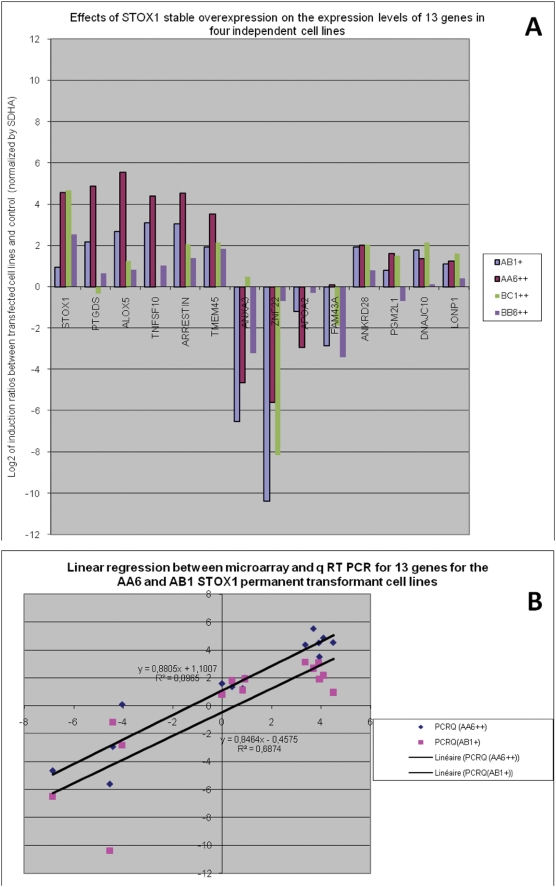
(A) Comparison of four cell lines overexpressing STOX1 for a series of 13 genes known to be modified by the microarray experiment, by quantitative RT-PCR. Five genes were overexpressed (PTGDS, ALOX5, TNFSF10, βARRESTIN, TMEM45a), four down-regulated (ANXA3, ZNF22, APOA2, FAM43A) and four mildly induced or unmodified (ANKRD28, PGM2L1, DNAJC10, LONP1). The diagram shows a fairly good reproducibility of the gene alterations whatever the cell line overexpressing STOX1. The expression level of STOX1 is represented in the first series of histograms. (B) Comparison of the expression levels of the microarray and of the qRT-PCR results for the same series of 13 genes. For AA6, the cell line from which the cDNA hybridized on the microarrays was obtained, the correlation is excellent (R = 0.944). For the second line AB1, overexpressing STOX1 at a milder level, the correlation is also very good (R = 0.829). In this case, the overall expression is nevertheless lower as shown by the linear regression. This suggests that at least in some cases, the deregulations induced by STOX1 overexpression are somehow proportional to this overexpression.
Figure 3
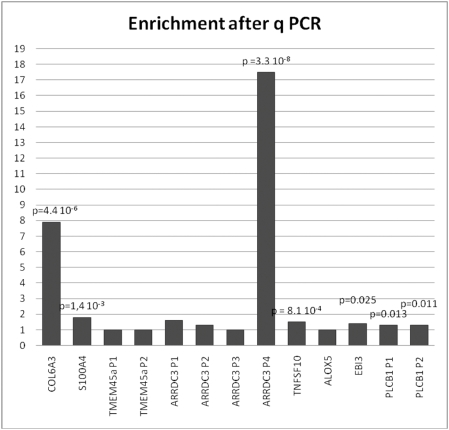
Figure 3. Thirteen promoters encompassing putative binding sites for Forkhead containing transcription factors were quantified by qPCR after Chromatin Immunoprecipitation, using a novel anti-STOX1 polyclonal antibody.
For several genes alternative putative promoters were identified by Genomatix, and only some of the promoters appeared enriched. This is clearly the case for ARRDC3, for which promoter P4 was considerably and exclusively enriched (17.5 fold compared to control). Some other targets were only mildly enriched such as the TNFSF10 promoter. The results are the mean of four independent ChIP experiments on which three qPCR assays have been performed.
Figure 4
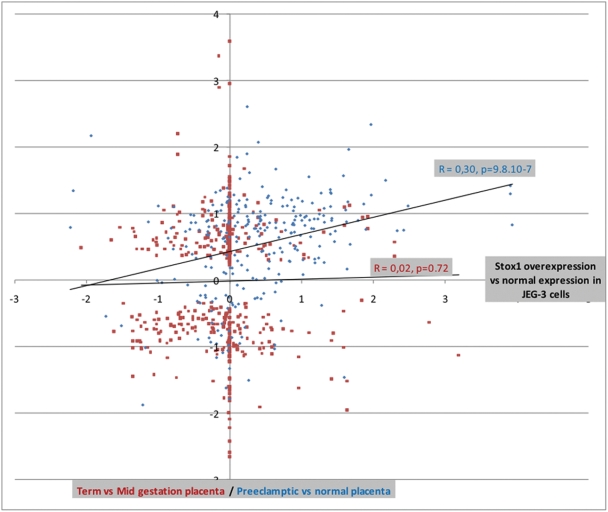
Figure 4. Linear regression analysis comparing the induction/repression ratio of the genes from the present study (comparing JEG-3 cells overexpressing STOX1 with mock-transfected JEG-3 cells) with induction ratio of two other transcriptomic studies on the placenta.
The first external study, performed by Nishizawa and coworkers compared 4 normal and 10 preeclamptic placentae. The 500 most modified genes from this article were obtained, and 265 were detectable among the genes identified here. The induction/repression ratio of the 265 genes are plotted (horizontal axis, blue diamonds) against the same genes of the present work (vertical axis). In this case, the correlation was highly significant between the two sets of induction ratio (r = 0.30, p<0.000001). As a control, another study on placental transcriptomics was used, which compares mid gestation and term placentas . Again, the 500 most modified genes were selected and 311 were detectable among the genes identified in the present study. Their induction/repression ratio are represented along the horizontal axis as red squares. In this case, the correlation was very close to 0 (r = 0.02, p = 0.72). These results demonstrate that STOX1 overexpression in choriocarcinoma reproduces with fidelity several aspects of the preeclamptic disease despite the much higher complexity of the placenta.

References

    1. van Dijk M, Mulders J, Poutsma A, Konst AA, Lachmeijer AM, et al. Maternal segregation of the Dutch preeclampsia locus at 10q22 with a new member of the winged helix gene family. Nat Genet. 2005;37(5):514–519. - PubMed
    1. Sibai BM. Thrombophilia and severe preeclampsia: time to screen and treat in future pregnancies? Hypertension. 2005;46(6):1252–1253. - PubMed
    1. Berends AL, Bertoli-Avella AM, de Groot CJ, van Duijn CM, Oostra BA, et al. STOX1 gene in pre-eclampsia and intrauterine growth restriction. Bjog. 2007;114(9):1163–1167. - PubMed
    1. Iglesias-Platas I, Monk D, Jebbink J, Buimer M, Boer K, et al. STOX1 is not imprinted and is not likely to be involved in preeclampsia. Nat Genet. 2007;39(3):279–280. - PubMed
    1. Kivinen K, Peterson H, Hiltunen L, Laivuori H, Heino S, et al. Evaluation of STOX1 as a preeclampsia candidate gene in a population-wide sample. Eur J Hum Genet. 2007;15(4):494–497. - PubMed

Publication types

MeSH terms