


doi: 10.1046/j.1469-8137.2003.00942.x.
Chromosomal evolution and speciation: a recombination-based approach
Affiliations
- PMID: 19079643
- PMCID: PMC2601666
- DOI: 10.1046/j.1469-8137.2003.00942.x
Item in Clipboard
Chromosomal evolution and speciation: a recombination-based approach
New Phytol.
2004 Jan.
Abstract
Although karyotypic differences between species have long been recognized, the question of whether these mutations play a causal role in speciation remains unanswered. This is because most models of chromosomal speciation focus on underdominance, which presents a theoretical paradox in that the strength of an underdominant barrier is inversely proportional to its fixation probability. To counter this problem, a new model has been proposed that focuses on the modification of effective recombination rates, whereby rearrangements facilitate the build up of linkage disequilibrium in the presence of gene flow. This model is discussed, along with new supporting data from the Solanaceae.
Figures
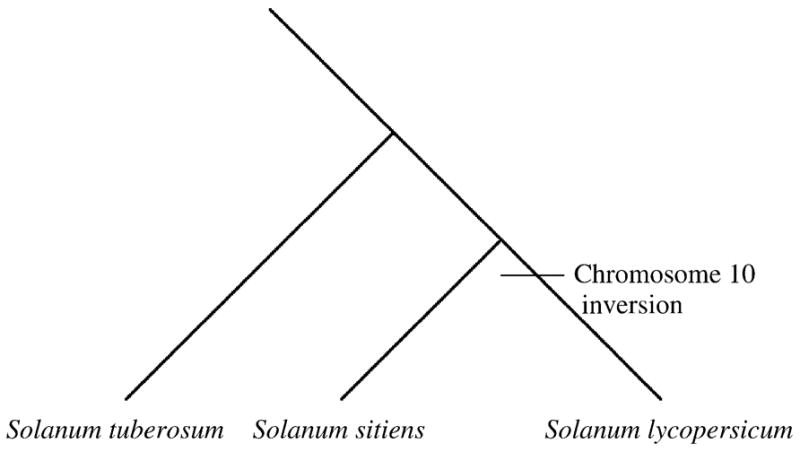
Fixation of chromosome 10 inversion in tomato, Solanum lycopersicum.
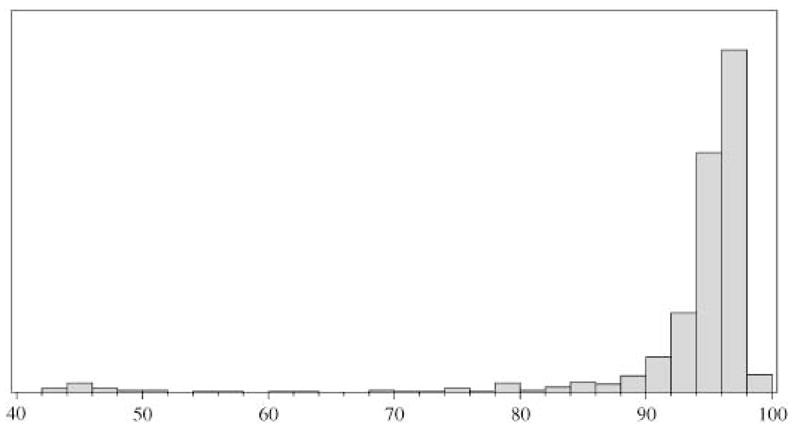
Distribution of sequence identities between orthologous tomato and potato unigene sequences (N = 570)
References
-
- Altschul SF, Gish W, Miller W, Myers EW, Lipman DJ. Basic local alignment search tool. Journal of Molecular Biology. 1990;215:403–410. - PubMed
-
- Barton NH, Rouhani S. The probability of fixation of a new karyotype in a continuous population. Evolution. 1991;45:499–517. - PubMed
-
- Carr GD. Chromosome evolution and aneuploid reduction in Calycadenia pauciflora (Asteraceae) Evolution. 1975;29:681–699. - PubMed
-
- Carr GD. A cytological conspectus of the genus Calycadenia (Asteraceae): an example of contrasting modes of evolution. American Journal of Botany. 1977;64:694–703.
Grants and funding
LinkOut - more resources
Full Text Sources
