


Sepsis-induced inflammation is exacerbated in an animal model of type 2 diabetes
- PMID: 19079684
- PMCID: PMC2596333
Sepsis-induced inflammation is exacerbated in an animal model of type 2 diabetes
Abstract
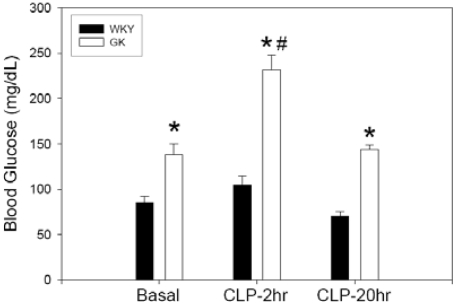
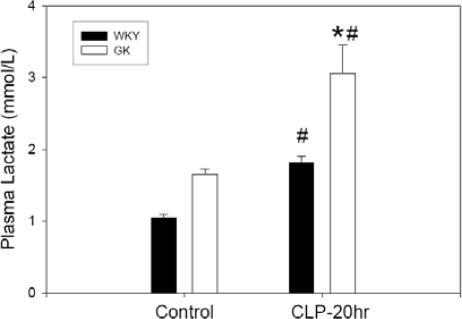
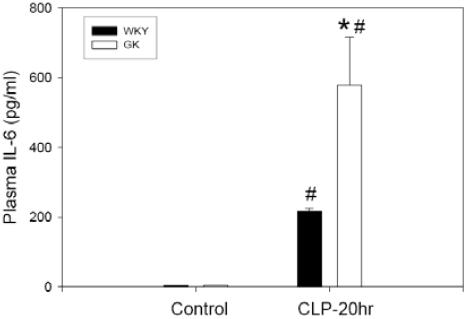
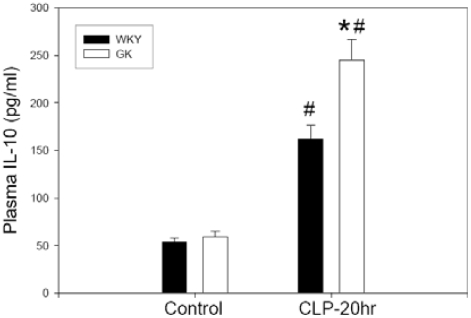
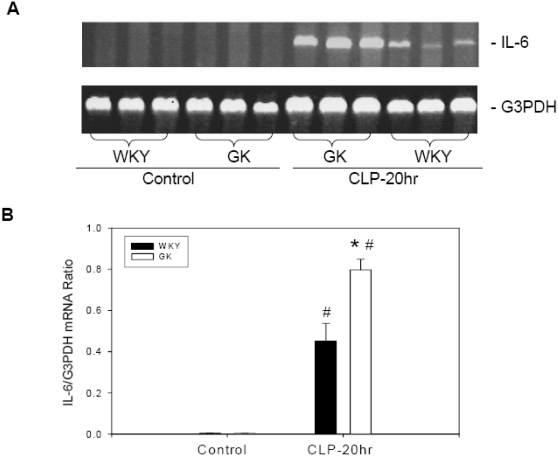
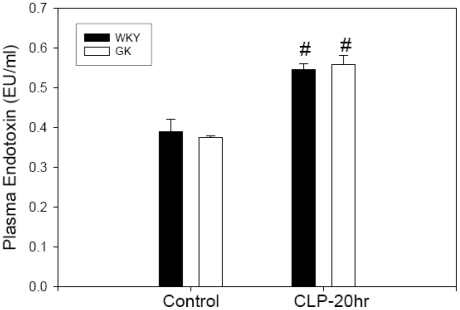
Hyperglycemia is common in critically ill patients and pronounced hyperglycemia may lead to complications which include severe infections, polyneuropathy, multiple organ failure and death in such patients. Sustained hyperglycemia is generally observed in patients with Type 2 diabetes. To explore sepsis-induced inflammation in Type 2 diabetes, polymicrobial sepsis was induced by cecal ligation and puncture (CLP) in the Goto-Kakizaki (GK) rat, a spontaneous animal model of Type 2 diabetes. The Wistar-Kyoto (WKY) rats, non-diabetic inbred rats, were used as controls for the experiment. Blood glucose levels were measured at basal, 2 hr and 20 hr after CLP. At 20 hr after CLP, blood and tissue samples were collected. Plasma levels of lactate, IL-6, IL-10 and endotoxins were measured. Total RNA from liver tissues were extracted and subjected to reverse transcription-polymerase chain reaction using rat specific IL-6 primers. GK rats exhibited significantly elevated basal glucose levels compared to WKY rats. Glucose levels in septic GK rats were significantly elevated compared to WKY rats at all time points studied. While both WKY and GK rats showed significant increases in IL-6 at 20 hr after CLP, the GK rats exhibited an average 2.68-fold increase than that of WKY rats. At 20 hr after CLP, hepatic IL-6 gene expression in GK rats was 1.77-fold greater than that of WKY rats. Although, both WKY and GK rats showed significant increases in plasma lactate levels at 20 hr after CLP, the GK rats exhibited an average increase of 1.69-fold, from the already elevated basal levels, than that of WKY rats. Since the lactate levels in GK sham groups were slightly higher than that of WKY sham, the relative changes in the fold induction by CLP between strains were similar. Both WKY and GK rats showed significantly elevated endotoxin levels at 20 hr after CLP, but no statistical differences were observed between the two groups. These studies suggest that sepsis-induced inflammation is exacerbated in an animal model of Type 2 diabetes.
Keywords: GK rats; IL-10; IL-6; Type 2 diabetes; cecal ligation and puncture; rodent model of type 2 diabetes; sepsis.
Figures
References
-
- Annane D, Aegerter P, Jars-Guincestre MC, Guidet B. Current epidemiology of septic shock: the CUB-Rea Network. Am J Respir Crit Care Med. 2003;168:165–72. - PubMed
-
- Jacober SJ, Sowers JR. An update on perioperative management of diabetes. Arch Intern Med. 1999;159:2405–11. - PubMed
-
- Browne JA, Cook C, Pietrobon R, Bethel MA, Richardson WJ. Diabetes and early postoperative outcomes following lumbar fusion. Spine. 2007;32:2214–9. - PubMed
-
- Golden SH, Peart-Vigilance C, Kao WH, Brancati FL. Perioperative glycemic control and the risk of infectious complications in a cohort of adults with diabetes. Diabetes Care. 1999;22:1408–14. - PubMed
-
- Pomposelli JJ, Baxter JK, 3rd, Babineau TJ, Pomfret EA, Driscoll DF, Forse RA, Bistrian BR. Early postoperative glucose control predicts nosocomial infection rate in diabetic patients. JPEN J Parenter Enteral Nutr. 1998;22:77–81. - PubMed
Grants and funding
LinkOut - more resources
Full Text Sources
Miscellaneous