


Caging a Beast in the Inflammation Arena: Use of Chinese Medicinal Herbs to Inhibit a Late Mediator of Lethal Sepsis, HMGB1
- PMID: 19079688
- PMCID: PMC2596337
Caging a Beast in the Inflammation Arena: Use of Chinese Medicinal Herbs to Inhibit a Late Mediator of Lethal Sepsis, HMGB1
Abstract
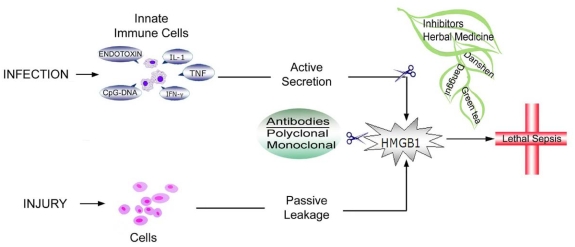
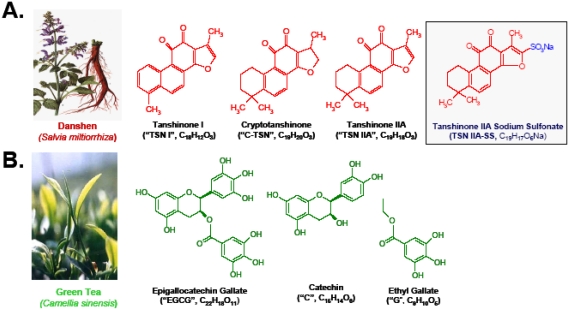
Sepsis refers to a systemic inflammatory response syndrome resulting from a microbial infection, which kills > 225,000 people annually in the U.S. alone. The high mortality of sepsis is partly mediated by bacterial endotoxin, which stimulates macrophages/monocytes to sequentially release early (e.g., TNF) and late (e.g., HMGB1) pro-inflammatory cytokines. Although early proinflammatory cytokines may be protective against infection, excessive accumulation of late-acting proinflammatory mediators (such as HMGB1) may sustain a potentially injurious inflammatory response. Agents capable of inhibiting HMGB1 activities (e.g., neutralizing antibodies) or release [e.g., Chinese herbs, Danggui (Angelica sinensis), Danshen (Salvia miltiorrhiza) and Green tea (Camellia sinensis)] rescue mice from lethal sepsis even when given 24 hours after onset of the disease. Here we review emerging evidence that support a critical role for extracellular HMGB1 as a late mediator of lethal sepsis, and several commonly used Chinese herbs (Danggui, Danshen and Green tea) as potential HMGB1- targeting therapeutic agents in experimental sepsis.
Keywords: Chinese herbs; Inate immune cells; catechin; cytokines; sepsis; tanshinone.
Figures
References
-
- Ayala A, Song GY, Chung CS, Redmond KM, Chaudry IH. Immune depression in polymicrobial sepsis: the role of necrotic (injured) tissue and endotoxin. Crit Care Med. 2000;28:2949–2955. - PubMed
-
- Tracey KJ, Fong Y, Hesse DG, Manogue KR, Lee AT, Kuo GC, Lowry SF, Cerami A. Anti-cachectin/TNF monoclonal antibodies prevent septic shock during lethal bacteraemia. Nature. 1987;330:662–664. - PubMed
-
- Dinarello CA, Thompson RC. Blocking IL-1: interleukin 1 receptor antagonist in vivo and in vitro. Immunol Today. 1991;12:404–410. - PubMed
Grants and funding
LinkOut - more resources
Full Text Sources