


Comparative analysis of state fish consumption advisories targeting sensitive populations
- PMID: 19079708
- PMCID: PMC2599751
- DOI: 10.1289/ehp.11372
Comparative analysis of state fish consumption advisories targeting sensitive populations
Abstract
Objective: Fish consumption advisories are issued to warn the public of possible toxicological threats from consuming certain fish species. Although developing fetuses and children are particularly susceptible to toxicants in fish, fish also contain valuable nutrients. Hence, formulating advice for sensitive populations poses challenges. We conducted a comparative analysis of advisory Web sites issued by states to assess health messages that sensitive populations might access.
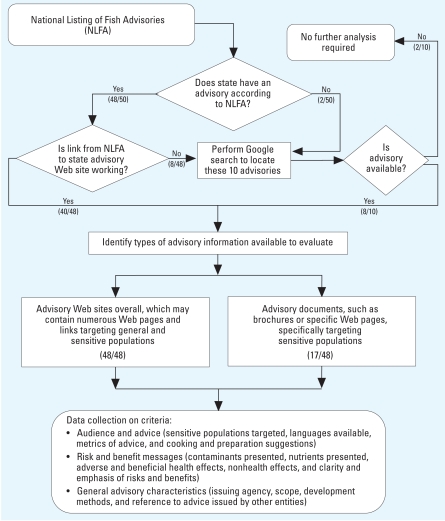
Data sources: We evaluated state advisories accessed via the National Listing of Fish Advisories issued by the U.S. Environmental Protection Agency.
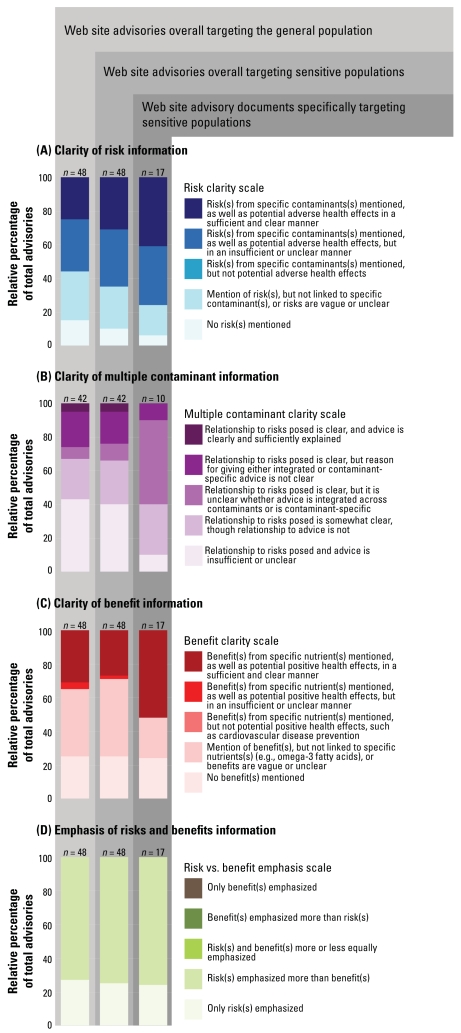
Data extraction: We created criteria to evaluate advisory attributes such as risk and benefit message clarity.
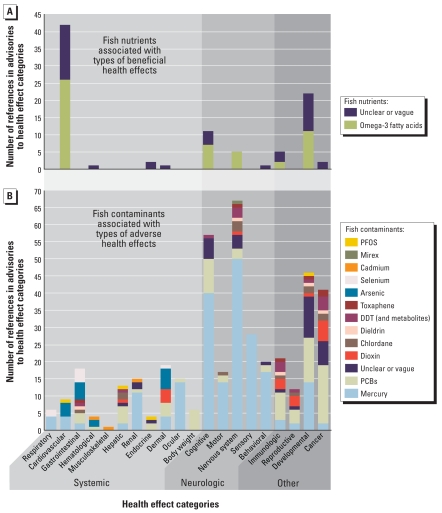
Data synthesis: All 48 state advisories issued at the time of this analysis targeted children, 90% (43) targeted pregnant women, and 58% (28) targeted women of childbearing age. Only six advisories addressed single contaminants, while the remainder based advice on 2-12 contaminants. Results revealed that advisories associated a dozen contaminants with specific adverse health effects. Beneficial health effects of any kind were specifically associated only with omega-3 fatty acids found in fish.
Conclusions: These findings highlight the complexity of assessing and communicating information about multiple contaminant exposure from fish consumption. Communication regarding potential health benefits conferred by specific fish nutrients was minimal and focused primarily on omega-3 fatty acids. This overview suggests some lessons learned and highlights a lack of both clarity and consistency in providing the breadth of information that sensitive populations such as pregnant women need to make public health decisions about fish consumption during pregnancy.
Keywords: advisory/advisories; benefits; consumption; contaminants; fish; nutrition/nutritional; pregnant women; risks; sensitive populations; women of childbearing age.
Figures
References
-
- Alabama Department of Public Health. Alabama Waterways: Fish Advisories. 2006. [accessed 23 June 2007]. Available: http://www.adph.org/risk/default.asp?templatenbr-0&deptid=145&templateid....
-
- Alaska Department of Health and Social Services, Division of Public Health. Fish Consumption Advice for Alaskans: A Risk Management Strategy to Optimize the Public’s Health—Executive Summary. 2007. [accessed 24 January 2008]. Available: http://www.epi.alaska.gov/bulletins/docs/b2007_29.pdf.
-
- Arizona Game and Fish Department. Fish Consumption Advisories. 2006. [accessed 23 June 2007]. Available: http://www.gf.state.az.us/h_f/fish_consumption.shtml.
-
- Arkansas Department of Health, Game and Fish Commission, Department of Environmental Quality. Fish Consumption Notice—Mercury in Fish. 1999. [accessed 23 June 2007]. Available: http://www.healthyarkansas.com/pdf/fishnotice_mercury.pdf.
-
- ATSDR (Agency for Toxic Substances and Disease Registry) Toxicological Profile Information Sheet. 2007. [accessed 12 November 2007]. Available: http://www.atsdr.cdc.gov/toxpro2.html.
Publication types
MeSH terms
Grants and funding
LinkOut - more resources
Full Text Sources