Reversal of ABC drug transporter-mediated multidrug resistance in cancer cells: evaluation of current strategies
- PMID: 19079736
- PMCID: PMC2600768
- DOI: 10.2174/1874467210801020093
Reversal of ABC drug transporter-mediated multidrug resistance in cancer cells: evaluation of current strategies
Abstract
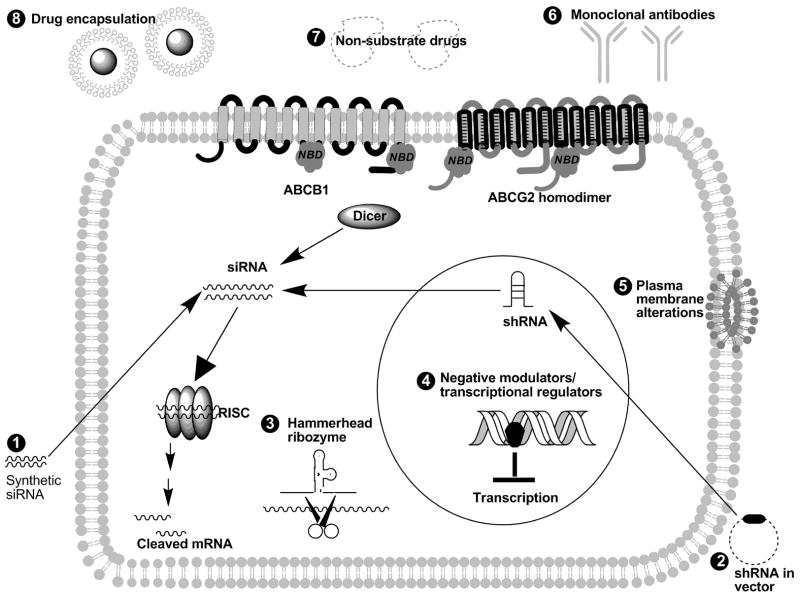
Overexpression of ATP-binding cassette (ABC) drug transporters that actively efflux a variety of amphipathic compounds can cause multidrug resistance (MDR) in cancer cells, which is a major obstacle in the success of cancer chemotherapy. The development of synthetic small molecule compounds or the identification of natural products that block ABC transporter-mediated efflux has been the conventional approach used to combat MDR. The strategy of using chemosensitizers, however, has not been successful in clinical cancer chemotherapy. Therefore, alternative approaches to identify or to synthesize compounds that can induce selective toxicity in cancer cells overexpressing one or more ABC transporters have been undertaken. This review summarizes the recent advances in identifying strategies to restore sensitivity to chemotherapeutics in multidrug resistant cancer cells.
Keywords: ATP-binding cassette transporters; Chemosensitizers; Collateral sensitivity; Modulators; Multidrug resistance.
Figures
References
-
- Gottesman MM, Ambudkar SV. Overview: ABC transporters and human disease. J Bioenerg Biomembr. 2001;33:453–458. - PubMed
-
- Sarkadi B, Homolya L, Szakacs G, Varadi A. Human multidrug resistance ABCB and ABCG transporters: participation in a chemoimmunity defense system. Physiol Rev. 2006;86:1179–1236. - PubMed
-
- Szakacs G, Paterson JK, Ludwig JA, Booth-Genthe C, Gottesman MM. Targeting multidrug resistance in cancer. Nat Rev Drug Discov. 2006;5:219–234. - PubMed
-
- Higgins CF. ABC transporters: from microorganisms to man. Annu Rev Cell Biol. 1992;8:67–113. - PubMed
-
- Gottesman MM. Mechanisms of cancer drug resistance. Annu Rev Med. 2002;53:615–627. - PubMed
Publication types
MeSH terms
Substances
Grants and funding
LinkOut - more resources
Full Text Sources
Other Literature Sources