


Replication and partitioning of papillomavirus genomes
- PMID: 19081491
- PMCID: PMC3151303
- DOI: 10.1016/S0065-3527(08)00404-1
Replication and partitioning of papillomavirus genomes
Abstract
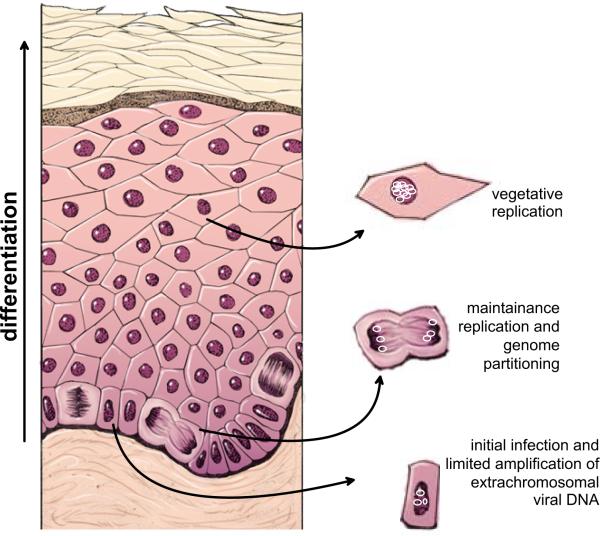
Papillomaviruses establish persistent infection in the dividing, basal epithelial cells of the host. The viral genome is maintained as a circular, double-stranded DNA, extrachromosomal element within these cells. Viral genome amplification occurs only when the epithelial cells differentiate and viral particles are shed in squames that are sloughed from the surface of the epithelium. There are three modes of replication in the papillomavirus life cycle. Upon entry, in the establishment phase, the viral genome is amplified to a low copy number. In the second maintenance phase, the genome replicates in dividing cells at a constant copy number, in synchrony with the cellular DNA. And finally, in the vegetative or productive phase, the viral DNA is amplified to a high copy number in differentiated cells and is destined to be packaged in viral capsids. This review discusses the cis elements and protein factors required for each stage of papillomavirus replication.
Figures
References
-
- Abbate EA, Voitenleitner C, Botchan MR. Structure of the papillomavirus DNA-tethering complex E2:Brd4 and a peptide that ablates HPV chromosomal association. Mol.Cell. 2006;24:877–889. - PubMed
Publication types
MeSH terms
Substances
Grants and funding
LinkOut - more resources
Full Text Sources
