


The evolution of drug-resistant malaria
- PMID: 19084883
- PMCID: PMC2723787
- DOI: 10.1016/j.trstmh.2008.11.002
The evolution of drug-resistant malaria
Abstract
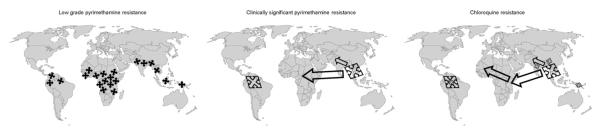
Molecular epidemiological investigations have uncovered the patterns of emergence and global spread of Plasmodium falciparum resistance to chloroquine and sulfadoxine-pyrimethamine. Malaria parasites highly resistant to chloroquine and pyrimethamine spread from Asian origins to Africa, at great cost to human health and life. If artemisinin-resistant falciparum malaria follows the same pattern, renewed efforts to eliminate and eradicate malaria will be gravely threatened. This paper, adapted from a talk given in honour of Professor Malcolm Molyneux in Liverpool in September 2008, reviews the rise and fall of clinically important forms of drug-resistant falciparum malaria and considers how lessons learned from studying the evolution of drug-resistant malaria can be applied to efforts to prevent and deter resistance.
Figures
References
-
- Clyde DF, Shute GT. Resistance of Plasmodium falciparum in Tanganyika to pyrimethamine administered at weekly intervals. Trans R Soc Trop Med Hyg. 1957;51:505–13. - PubMed
-
- Plowe CV, Kublin JG, Doumbo OK. P. falciparum dihydrofolate reductase and dihydropteroate synthase mutations: epidemiology and role in clinical resistance to antifolates. Drug Resist. 1998;1:389–96. - PubMed
-
- Kublin JG, Dzinjalamala FK, Kamwendo DD, Malkin EM, Cortese JF, Martino LM, et al. Molecular markers for failure of sulfadoxine-pyrimethamine and chlorproguanil-dapsone treatment of Plasmodium falciparum malaria. J Infect Dis. 2002;185:380–8. - PubMed
-
- Clyde DF. Genesis of chloroquine-resistant Plasmodium falciparum in the American region. Med Trop Cooperaz Sviluppo. 1987;3:41–4.
Publication types
MeSH terms
Substances
Grants and funding
LinkOut - more resources
Full Text Sources
