


Large mucinous cystic neoplasm of the pancreas associated with pregnancy
- PMID: 19084943
- PMCID: PMC2776886
- DOI: 10.3748/wjg.14.7252
Large mucinous cystic neoplasm of the pancreas associated with pregnancy
Abstract
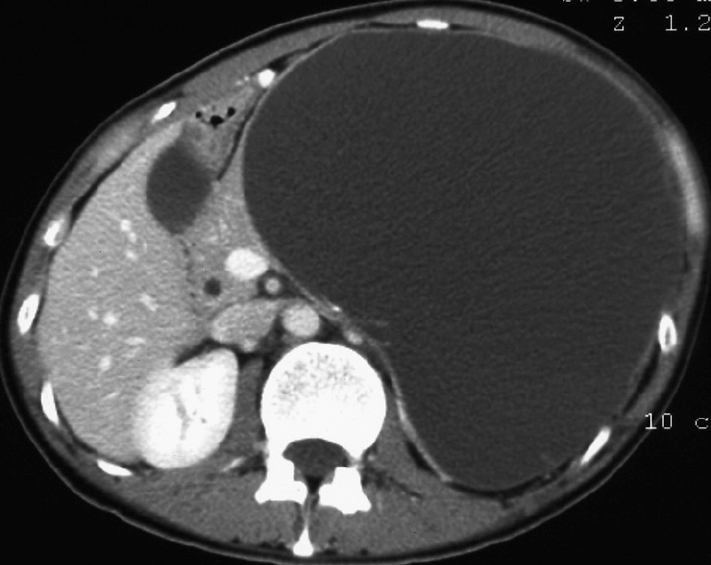
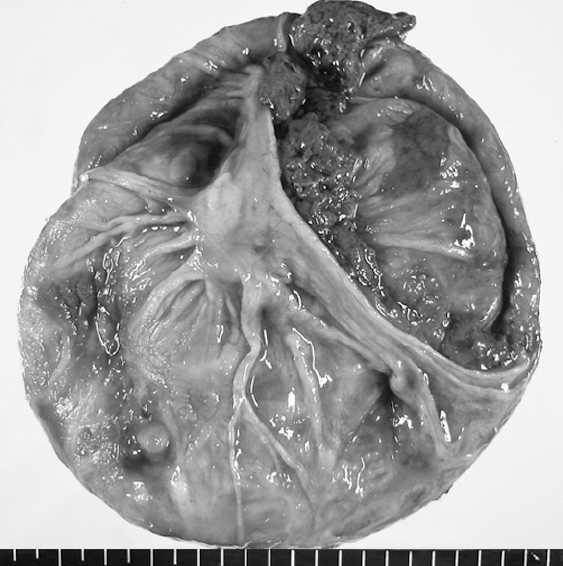
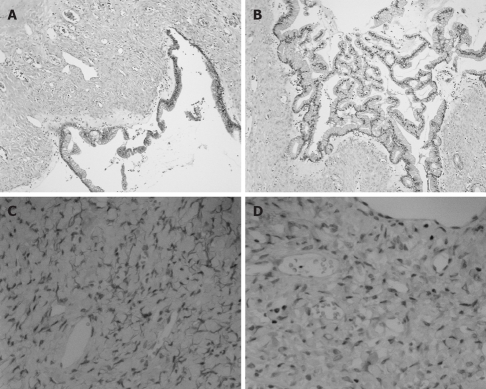
Mucinous cystic neoplasms (MCNs) of the pancreas occur mostly in females and are potentially sex hormone-sensitive. However, a MCN occurring during pregnancy is quite rare. A 30-year-old woman in the tenth week of pregnancy was referred to us because of a rapid increase in left hypochondrial distending pain. On ultrasound, the patient had a large intra-abdominal cystic lesion. She was thereafter diagnosed with missed abortion and a computed tomography scan showed that the lesion was a cystic tumor 18 cm in diameter originating from the pancreatic tail. The patient subsequently underwent tumor resection with distal pancreatectomy, sparing the spleen. Histopathological analysis of the specimen revealed a pancreatic MCN with moderate dysplasia. Immunohistochemically, the tumor was positive for both estrogen and progesterone receptors. To our knowledge, this is the first reported case of pancreatic MCN with moderate dysplasia in association with pregnancy. Our case strongly indicates that pancreatic MCN is female-hormone dependent.
Figures
References
-
- Zamboni G, Scarpa A, Bogina G, Iacono C, Bassi C, Talamini G, Sessa F, Capella C, Solcia E, Rickaert F, et al. Mucinous cystic tumors of the pancreas: clinicopathological features, prognosis, and relationship to other mucinous cystic tumors. Am J Surg Pathol. 1999;23:410–422. - PubMed
-
- Thompson LD, Becker RC, Przygodzki RM, Adair CF, Heffess CS. Mucinous cystic neoplasm (mucinous cystadenocarcinoma of low-grade malignant potential) of the pancreas: a clinicopathologic study of 130 cases. Am J Surg Pathol. 1999;23:1–16. - PubMed
-
- Ganepola GA, Gritsman AY, Asimakopulos N, Yiengpruksawan A. Are pancreatic tumors hormone dependent?: A case report of unusual, rapidly growing pancreatic tumor during pregnancy, its possible relationship to female sex hormones, and review of the literature. Am Surg. 1999;65:105–111. - PubMed
-
- Kato M, Kubota K, Kita J, Shimoda M, Rokkaku K, Inaba N, Fukasawa I, Honma K. Huge mucinous cystadenoma of the pancreas developing during pregnancy: a case report. Pancreas. 2005;30:186–188. - PubMed
-
- Lopez-Tomassetti Fernandez EM, Martin Malagon A, Arteaga Gonzalez I, Muniz Montes JR, Diaz Luis H, Gonzalez Hermoso F, Carrillo Pallares A. Mucinous cystic neoplasm of the pancreas during pregnancy: the importance of proper management. J Hepatobiliary Pancreat Surg. 2005;12:494–497. - PubMed
Publication types
MeSH terms
Substances
LinkOut - more resources
Full Text Sources
Medical
