Review
. 2009 Sep;24(9):1621-32.
doi: 10.1007/s00467-008-1072-y. Epub 2008 Dec 16.

Genetic and developmental basis for urinary tract obstruction

Affiliations
Review

Genetic and developmental basis for urinary tract obstruction

Feng Chen. Pediatr Nephrol. 2009 Sep.

Abstract

Urinary tract obstruction results in obstructive nephropathy and uropathy. It is the most frequent cause of renal failure in infants and children. In the past two decades studies of transgenic models and humans have greatly enhanced our understanding of the genetic factors and developmental processes important in urinary tract obstruction. The emerging picture is that development of the urinary tract requires precise integration of a variety of progenitor cell populations of different embryonic origins. Such integration is controlled by an intricate signaling network that undergoes dynamic changes as the embryo develops. Most congenital forms of urinary tract obstruction result from the disruption of diverse factors and genetic pathways involved in these processes, especially in the morphogenesis of the urinary conduit or the functional aspects of the pyeloureteral peristaltic machinery.


Figures
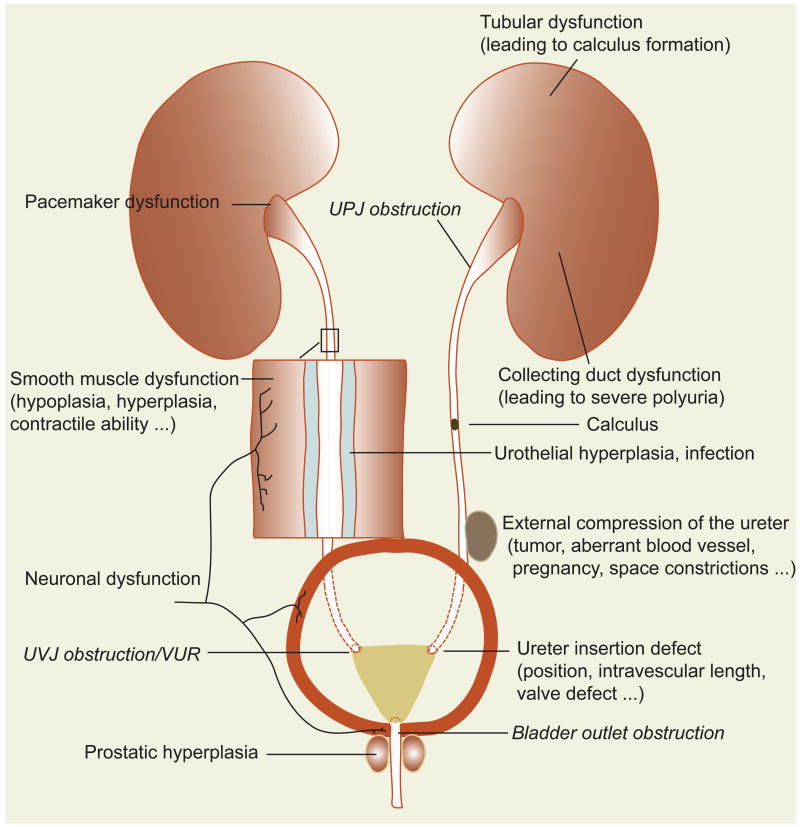
Figure 1
Figure 1. Causative factors for UTO
UPJ, UVJ, and bladder outlet obstructions are in Italics as these terms describe the location but not the causes for the obstruction.
Figure 2
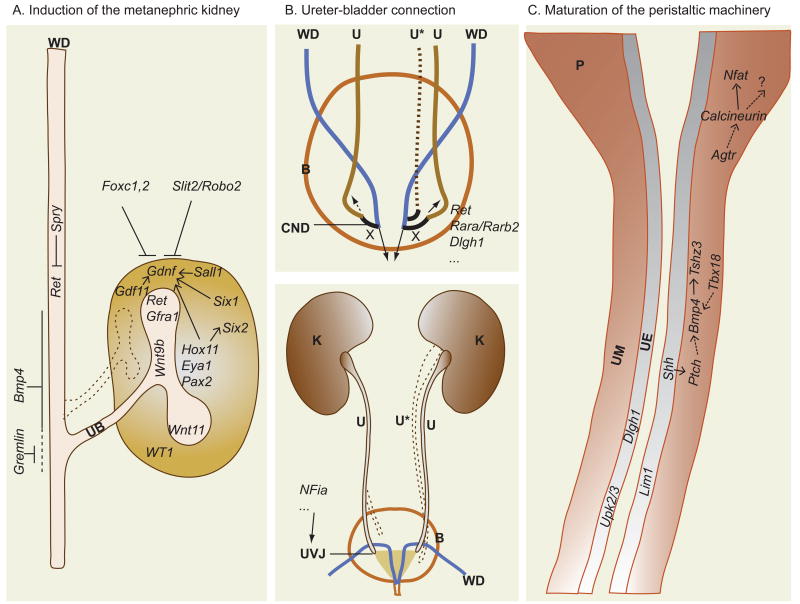
Figure 2. Key developmental steps in which errors frequently lead to UTO
A, Metanephric kidney Induction. WD: Wolffian duct. UB: Ureteric bud. B, Ureter-bladder connection. K: Kidney. U: Ureter; U*: Eectopic/supernumerary ureter (dotted lines); CND: Common nephric duct. B: Bladder. X: indicates that the CND undergoes apoptosis so that the ureter separates completely from the WD. The dotted arrow in the top panel indicates abnormal migration/positioning of the ureter that can result in abnormal insertion of the ureter into the bladder. In the bottom panel, the dotted lines connected to the right ureter depict the abnormal positioning of the ureter when the ureter insertion process is affected. The dotted lines on the left side depict the ectopic supernumerary ureter. Both diagrams in B represent the ventral views of the urinary system. C, Maturation of the pyeloureteral peristaltic machinery. P: Pelvis, UM: Ureteric mesenchyme; UE: Ureteric epithelium. Dotted arrows indicate potential regulation.

References

    1. Chevalier RL, Peters CA. Congenital urinary tract obstruction. Proceedings of the State-Of-The-Art Strategic Planning Workshop-National Institutes of Health; Bethesda, Maryland, USA. 11-12 March 2002.2003. - PubMed
    2. Pediatr Nephrol. 18:576–606. - PubMed
    1. Chevalier RL. Molecular and cellular pathophysiology of obstructive nephropathy. Pediatr Nephrol. 1999;13:612–619. - PubMed
    1. Chevalier RL. Pathophysiology of obstructive nephropathy in the newborn. Semin Nephrol. 1998;18:585–593. - PubMed
    1. Chang CP, McDill BW, Neilson JR, Joist HE, Epstein JA, Crabtree GR, Chen F. Calcineurin is required in urinary tract mesenchyme for the development of the pyeloureteral peristaltic machinery. J Clin Invest. 2004;113:1051–1058. - PMC - PubMed
    1. Mendelsohn C. Functional obstruction: the renal pelvis rules. J Clin Invest. 2004;113:957–959. - PMC - PubMed

Publication types

MeSH terms