


The effects of obesity and weight gain in young women on obstetric outcomes
- PMID: 19085680
- PMCID: PMC3065964
- DOI: 10.1055/s-0028-1110088
The effects of obesity and weight gain in young women on obstetric outcomes
Abstract
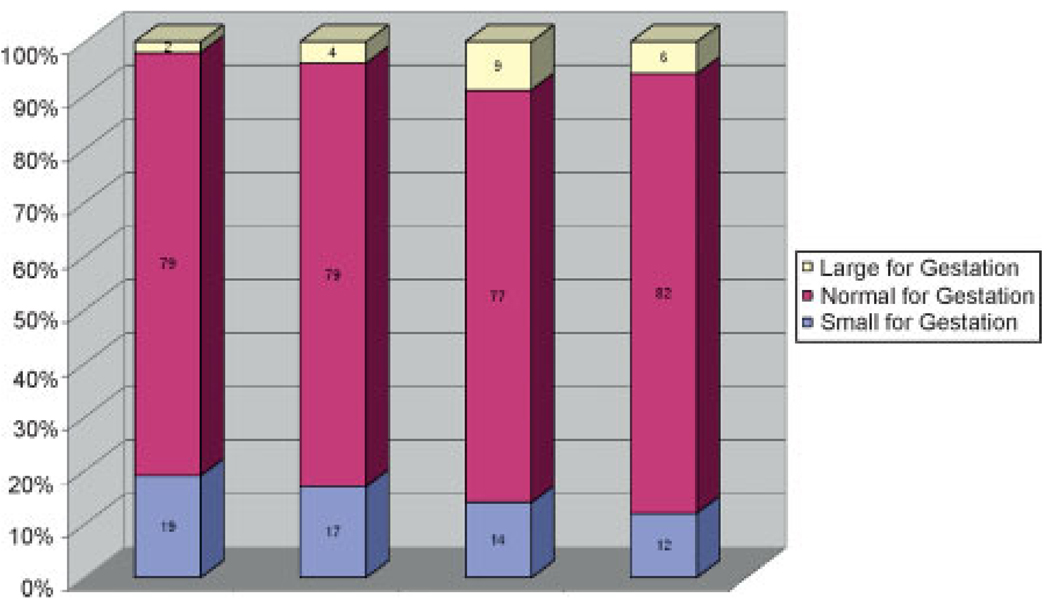
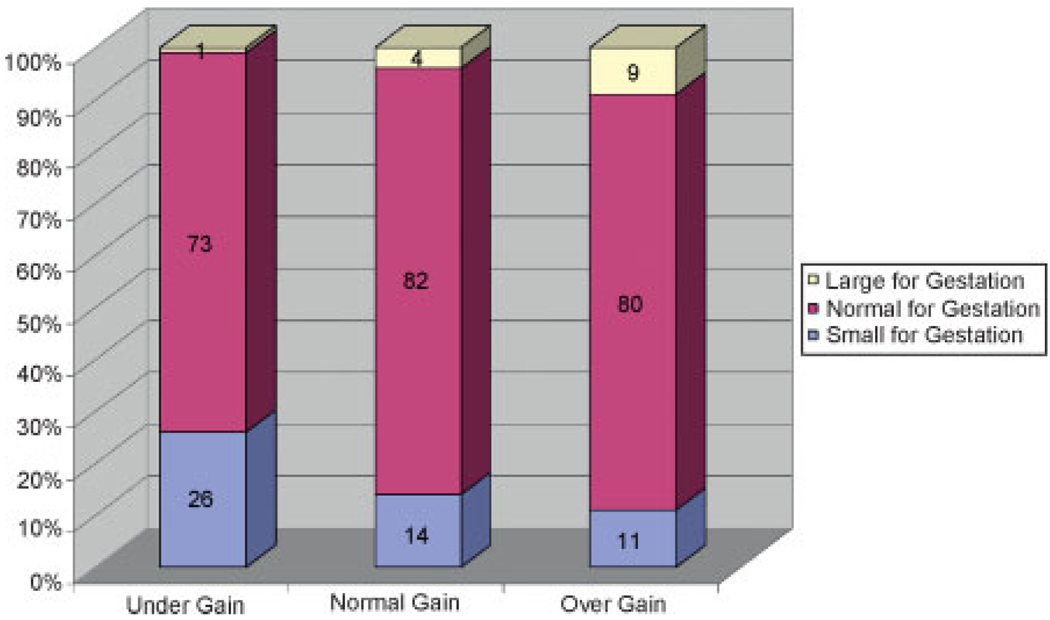
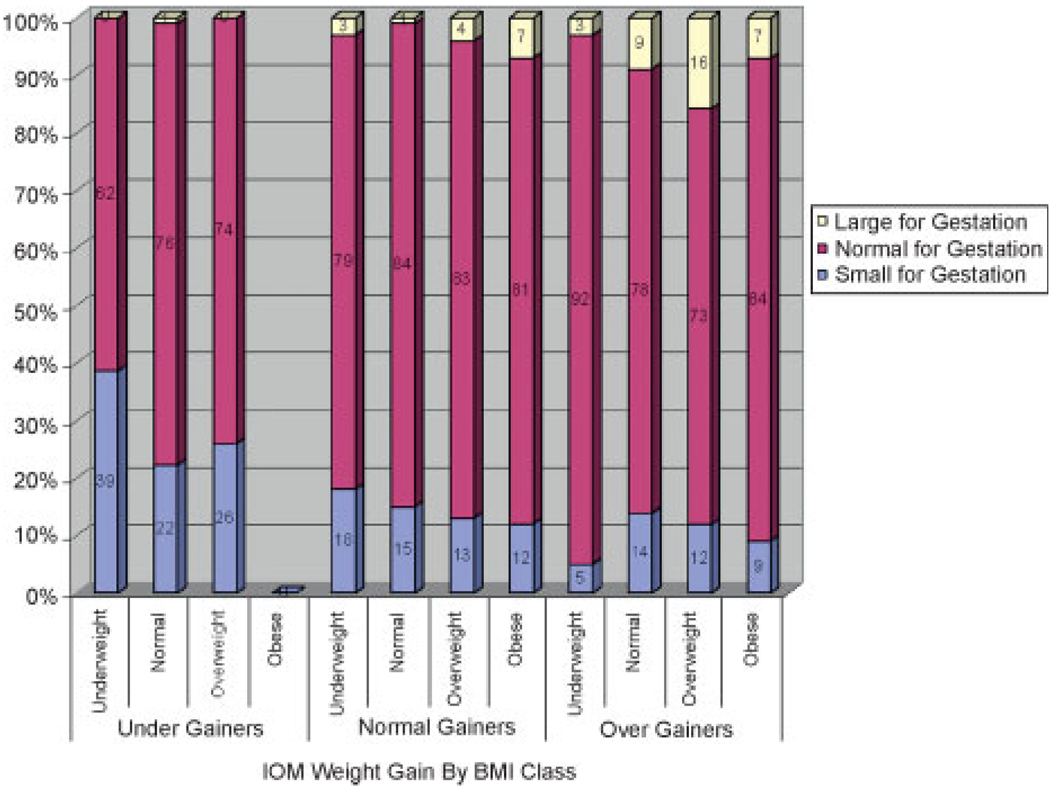
We investigated body mass index (BMI) and weight gain among pregnant women (ages 14 to 25) and assessed the relationship of BMI and weight gain on birth outcomes. We performed a secondary analysis of 841 women enrolled in a randomized controlled trial receiving prenatal care in two university-affiliated clinics. Almost half the patients were overweight or obese. An average of 32.3 +/- 23.6 pounds was gained in pregnancy with only 25.3% gaining the recommended weight and over half overgaining. Weight gain had a significant relationship to birth weight. Multivariate analysis showed that prepregnancy BMI but not weight gain was a significant predictor of cesarean delivery (odds ratio [OR] 1.91, confidence interval [CI] 1.24 to 2.69, P < 0.0001). When large-for-gestational-age infants were removed from the analysis, there was still a significant effect of BMI on cesarean delivery (OR 1.76, CI 1.17 to 2.66, P = 0.007) but not of weight gain (OR 1.45, CI 0.94 to 2.17, P = 0.093). Prepregnancy BMI is a more significant predictor of cesarean delivery than pregnancy weight gain in young women.
Figures
References
-
- Ogden CL, Flegal KM, Carroll MD, Johnson CL. Prevalence and trends in overweight among U.S. children and adolescents, 1999–2000. JAMA. 2002;288:1728–1732. - PubMed
-
- Hedley AA, Ogden CL, Johnson CL, Carroll MD, Curtin LR, Flegal KM. Prevalence of overweight and obesity among US children, adolescents, and adults, 1999–2002. JAMA. 2004;291:2847–2850. - PubMed
-
- Hall LF, Neubert AG. Obesity and pregnancy. Obstet Gynecol Surv. 2005;60:253–260. - PubMed
-
- ACOG Committee Opinion on Obstetric Practice. Obesity in pregnancy. Obstet Gynecol. 2005;106:671–675. - PubMed
-
- Weiss JL, Malone FD, Emig D, et al. Obesity, obstetric complication and cesarean delivery rate: a population-based screening study. Am J Obstet Gynecol. 2004;190:1091–1097. - PubMed
