. 2009 Mar 15;124(6):1470-7.
doi: 10.1002/ijc.24005.

Inhibitors of melanogenesis increase toxicity of cyclophosphamide and lymphocytes against melanoma cells

Affiliations

Inhibitors of melanogenesis increase toxicity of cyclophosphamide and lymphocytes against melanoma cells

Andrzej Slominski et al. Int J Cancer. .

Abstract

High mortality rate for metastatic melanoma is related to its resistant to the current methods of therapy. Melanogenesis is a metabolic pathway characteristic for normal and malignant melanocytes that can affect the behavior of melanoma cells or its surrounding environment. Human melanoma cells in which production of melanin pigment is dependent on tyrosine levels in medium were used for experiments. Peripheral blood mononuclear cells were derived from the buffy coats purchased from Lifeblood Biological Services. Cell pigmentation was evaluated macroscopically, and tyrosinase activity was measured spectrophotometrically. Cell proliferation and viability were measured using lactate dehydrogenase release MTT, [(3)H]-thymidine incorporation and DNA content analyses, and gene expression was measured by real time RT-PCR. Pigmented melanoma cells were significantly less sensitive to cyclophosphamide and to killing action of IL-2-activated peripheral blood lymphocytes. The inhibition of melanogenesis by either blocking tyrosinase catalytic site or chelating copper ions sensitized melanoma cells towards cytotoxic action of cyclophosphamide, and amplified immunotoxic activities of IL-2 activated lymphocytes. Exogenous L-DOPA inhibited lymphocyte proliferation producing the cell cycle arrest in G1/0 and dramatically inhibited the production of IL-1beta, TNF-alpha, IL-6 and IL-10. Thus, the active melanogenesis could not only impair the cytotoxic action of cyclophosphamid but also has potent immunosuppressive properties. This resistance to a chemotherapeutic agent or immunotoxic activity of lymphocytes could be reverted by the action of tyrosinase inhibitors. Thus, the inhibition of melanogenesis might represent a valid therapeutic target for the management of advanced melanotic melanomas.


Figures
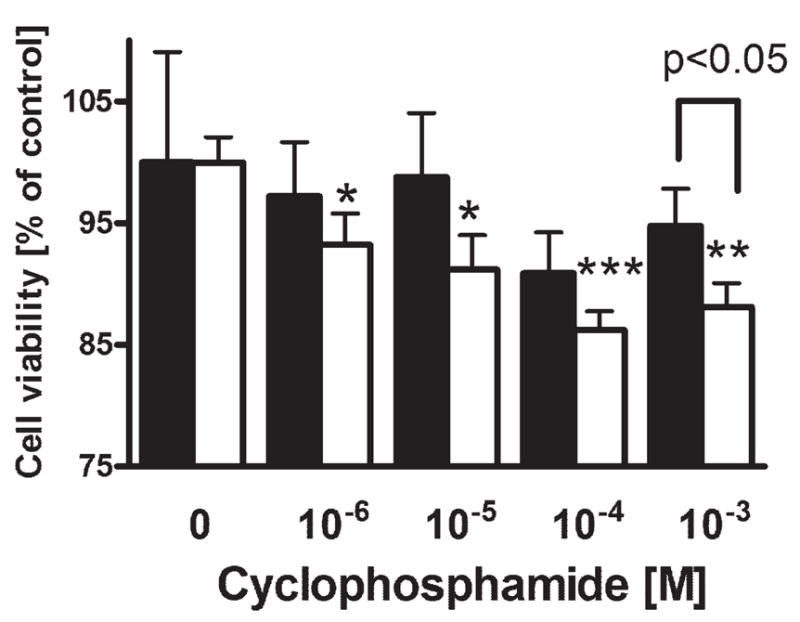
Figure 1
Figure 1
The absence of melanin pigment sensitizes SKMEL-188 melanoma cells against cyclophosphamide. SKMEL-188 were grown in the medium containing low tyrosine levels (10 μM, F10, nonpigmented) or high tyrosine (200 μM, DMEM:F10, pigmented). Pigmented (black bars) and nonpigmented (white bars) cells were then seeded into 96-well plates and incubated with serial dilutions of cyclophosphamide. After 24 hr, the viability of cells was assayed with MTT test. Data is presented as means ± SEM for 6 independent measurements, *p < 0.05, **p < 0.005, ***p < 0.0005 versus control. The experiment was repeated with similar results.
Figure 2
Figure 2
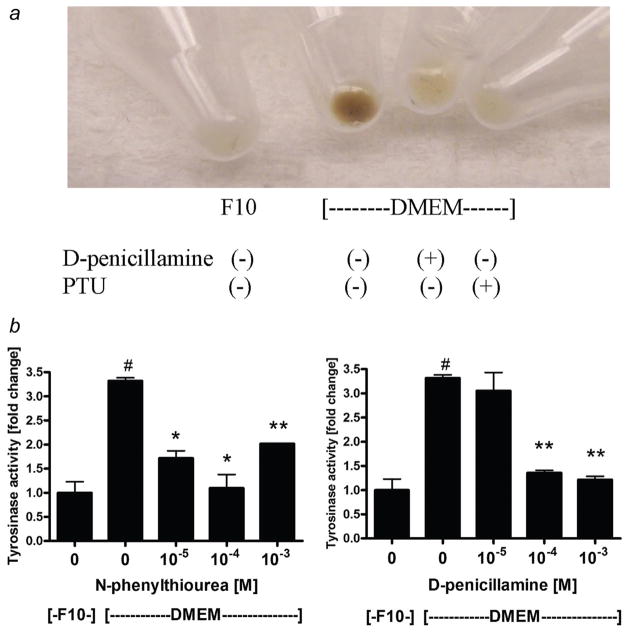
D-penicillamine and N-phenylthiourea inhibit melanogenesis and tyrosinase activity in SKMEL-188 melanoma cells. SKMEL-188 were incubated in either Ham’s F10 (containing 10 μM tyrosine) or DMEM:F10 (containing 200 μM tyrosine) medium with 5% FBS and antibiotics in the presence or absence of D-penicillamine or N-phenylthiourea for 5 days (media were changed and fresh compounds added every 2nd day). After harvesting and centrifugation the pellets were photographed (a) and tyrosinase activity measured as described (b). Data are presented as means ± SEM (n = 3). #p < 0.0005 versus F10,*p < 0.0005. **p < 0.00005 versus DMEM control. Tyrosinase activity for the cells cultured in F10 or DMEM was 10.8 ± 2.48 and 36.0 ± 0.7 nmols/mg/hr, respectively.
Figure 3
Figure 3
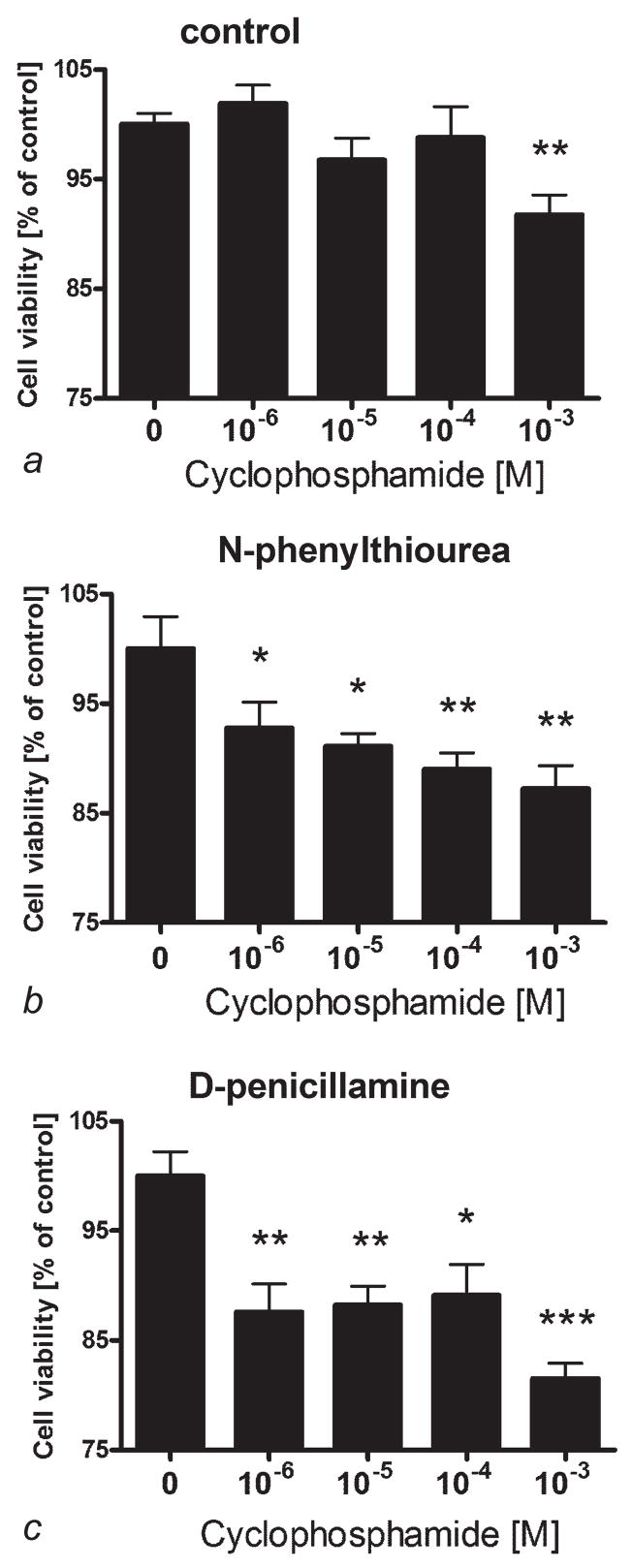
Inhibition of melanogenesis by N-phenylthiourea and D-penicillamine sensitizes KMEL-188 melanoma cells against cyclophosphamide. Pigmented melanoma cells (a) or cells depigmented by b10−4 M N-phenylthiourea (b) or 10−3 M D-penicillamine (c) were transferred to 96-well plates and incubated in Ham’s F10 medium with 5% FBS and serial dilutions of cyclophosphamide. After 24 hr, the viability of cells was assayed with MTT test as described. Data are presented as means ± SEM (n = 6), *p < 0.05, **p < 0.005, ***p < 0.0005.
Figure 4
Figure 4
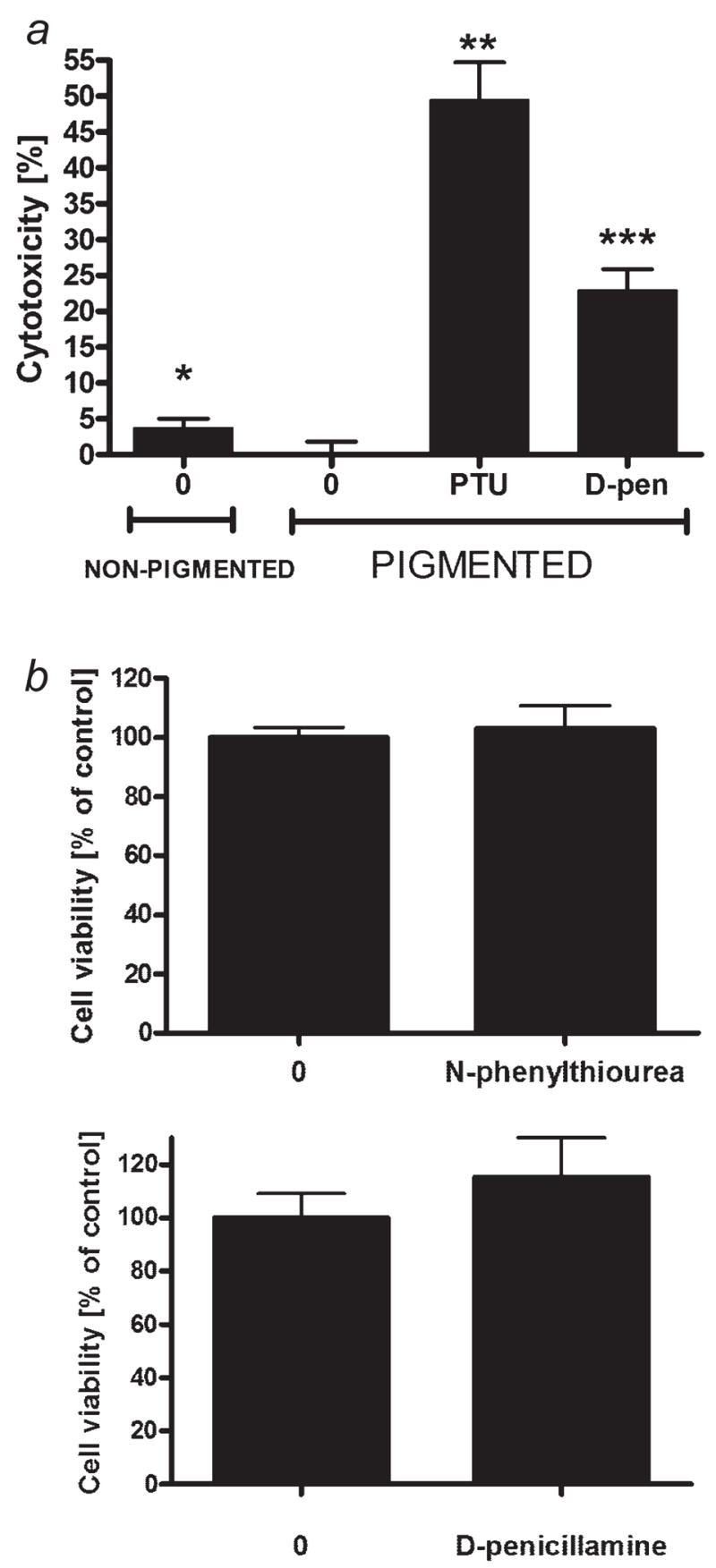
The absence of melanin or inhibition of melanogenesis by N-phenylthiourea or D-penicillamine sensitizes SKMEL-188 melanoma cells to killing action of IL-2-activated peripheral blood lymphocytes, whereas neither N-phenylthiourea nor D-penicillamine affect the viability of the melanoma cells. a: Nonpigmented SKMEL-188 cells were grown in Ham’s F10. Pigmented cells were grown in DMEM:F10 medium; the depigmentation was achieved by addition of either PTU or D-penicillamine (at 10−3 M) to the DMEM:F10 medium for 3 days. These cells were coincubated with IL-2-activated (preincubated with IL-2 200 U/ml for 24 hr) peripheral blood lymphocytes (at ratio 1:5) in Ham’s F10 medium with 5% FBS. After 4 hr, the PBL-mediated cytotoxicity was measured with Cytotox96® nonradioactive cytotoxicity assay (Promega, Madison, WI). Data are presented as means ± SEM (n = 12), *p < 0.05, **p < 0.000005, ***p < 0.000000005 versus pigmented control cells. b: Pigmented SKMEL-188 were grown in the medium containing high tyrosine (200 μM, DMEM:F10) and were seeded into 96-well plates and incubated with N-phenylthiourea or D-penicillamine at 10−3. After 24 hr, the viability of cells was assayed with MTT test. Data are presented as means ± SEM (n = 6).
Figure 5
Figure 5
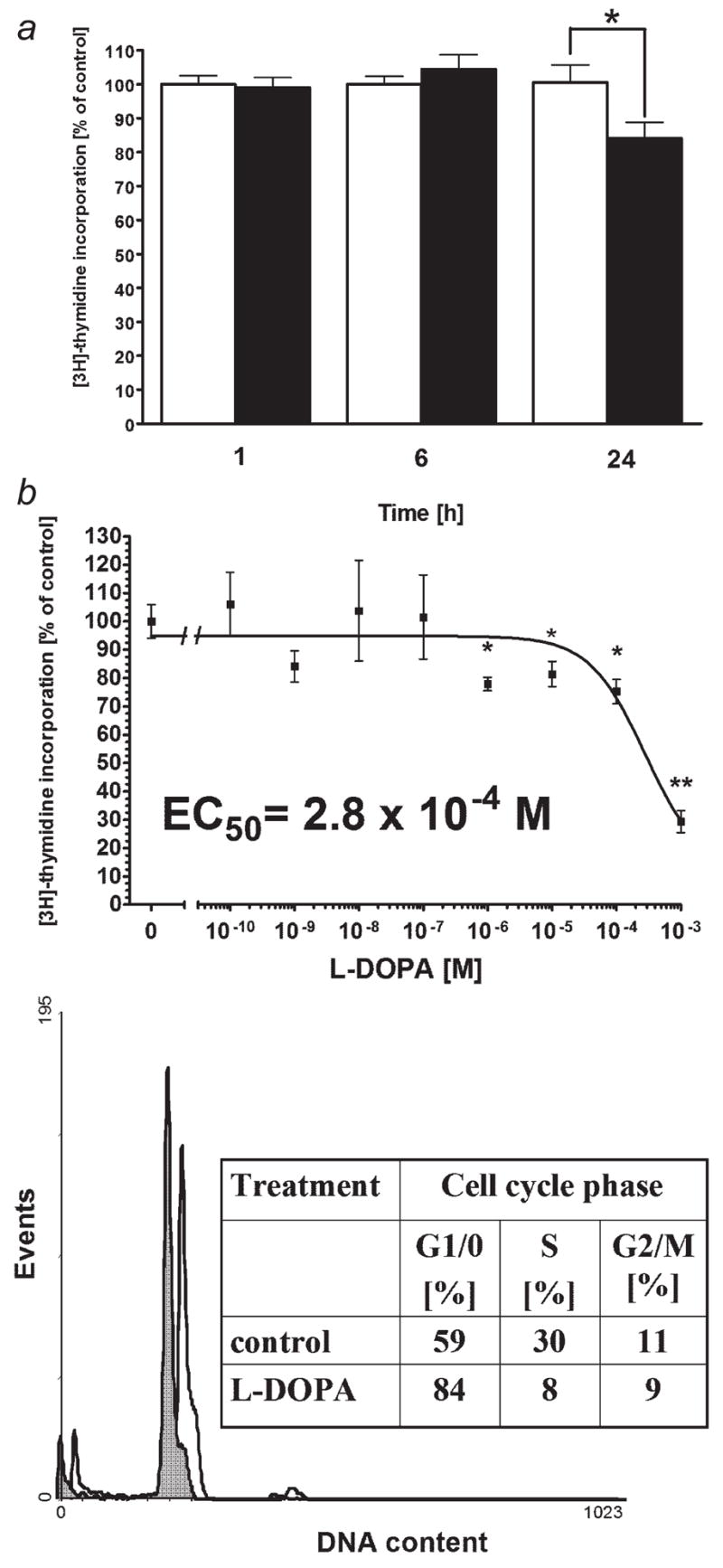
The supernatant from above pigmented melanoma cells and L-DOPA inhibits lymphocyte proliferation producing cell cycle arrest in G1/0. a: Pigmented and nonpigmented melanoma cells were incubated in serum free DMEM for 1, 6, 24 hr and then the media were collected. Conditioned media were added to the peripheral blood lymphocytes suspended in RPMI with FBS and [3H]thymidine. Lymphocytes were incubated for 6 hr and then incorporation of thymidine was measured. Data are presented as means ± SEM (n = 12). White columns: lymphocytes stimulated with supernantant from nonpigmented melanoma cells, black columns: lymphocytes stimulated with the supernatant from pigmented melanoma cells. Control: lymphocytes stimulated with the supernatant from nonpigmented melanoma cells in each time point. b: Peripheral blood lymphocytes were preincubated with LPS (1,000 ng/ml) for 24 hr and then incubated for 24 hr with serial dilutions of L-DOPA in medium RPMI 1640 containing 5% FBS and antibiotics. [3H]-thymidine was added for last 18 hr of incubation. Data are presented as means ± SEM (n = 6), *p < 0.05, **p < 0.0001. c: Peripheral blood lymphocytes were preincubated with IL-2 (200 U/ml) and then incubated for 24 hr with L-DOPA at 50 μM in medium RPMI 1640 containing 5% FBS and antibiotics. Cells were then fixed, stained and DNA content measured with flow cytometry. Data are representative of two separate experiments. White histogram: control cells, gray histogram: cells stimulated with L-DOPA.
Figure 6
Figure 6
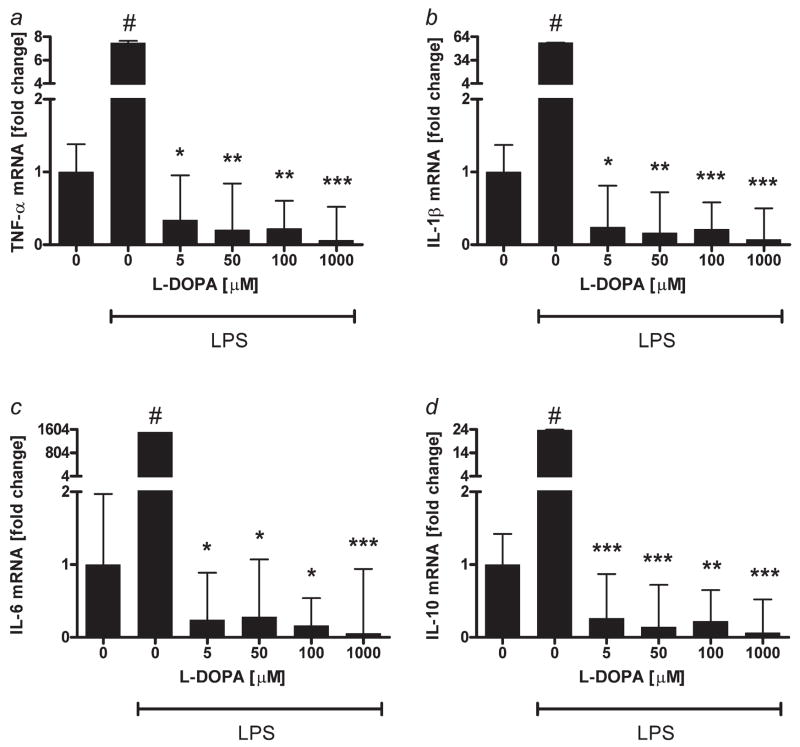
L-DOPA inhibits cytokine production by peripheral blood lymphocytes. LPS (1,000 ng/ml) activated peripheral blood lymphocytes (for 24 hr) were incubated with graded concentrations of L-DOPA for 1 hr in RPMI 1640 containing 5% FBS and antibiotics. Cells were then lysed, total RNA extracted, and levels of IL-1beta, TNF-alpha, IL-6 and IL-10 mRNAs were measured after reverse transcription with real-time PCR. Data are presented as means ± SEM (n = 3), #p < 0.0001 versus control without LPS, *p < 0.05, **p < 0.005, ***p < 0.0005 versus control with LPS.

References

    1. Miller AJ, Mihm MC., Jr Melanoma. N Engl J Med. 2006;355:51–65. - PubMed
    1. Becker D, Mihm MC, Hewitt SM, Sondak VK, Fountain JW, Thurin M. Markers and tissue resources for melanoma: meeting report. Cancer Res. 2006;66:10652–7. - PubMed
    1. Carlson JA, Ross JS, Slominski A, Linette G, Mysliborski J, Hill J, Mihm M., Jr Molecular diagnostics in melanoma. J Am Acad Dermatol. 2005;52:743–75. quiz 75–8. - PubMed
    1. Meyskens FL, Jr, Farmer PJ, Anton-Culver H. Etiologic pathogenesis of melanoma: a unifying hypothesis for the missing attributable risk. Clin Cancer Res. 2004;10:2581–3. - PubMed
    1. Markovic SN, Erickson LA, Rao RD, Weenig RH, Pockaj BA, Bardia A, Vachon CM, Schild SE, McWilliams RR, Hand JL, Laman SD, Kottschade LA, et al. Malignant melanoma in the 21st century, part 1: epidemiology, risk factors, screening, prevention, and diagnosis. Mayo Clin Proc. 2007;82:364–80. - PubMed

Publication types

MeSH terms