


A compatible exon-exon junction database for the identification of exon skipping events using tandem mass spectrum data
- PMID: 19087293
- PMCID: PMC2636810
- DOI: 10.1186/1471-2105-9-537
A compatible exon-exon junction database for the identification of exon skipping events using tandem mass spectrum data
Abstract
Background: Alternative splicing is an important gene regulation mechanism. It is estimated that about 74% of multi-exon human genes have alternative splicing. High throughput tandem (MS/MS) mass spectrometry provides valuable information for rapidly identifying potentially novel alternatively-spliced protein products from experimental datasets. However, the ability to identify alternative splicing events through tandem mass spectrometry depends on the database against which the spectra are searched.
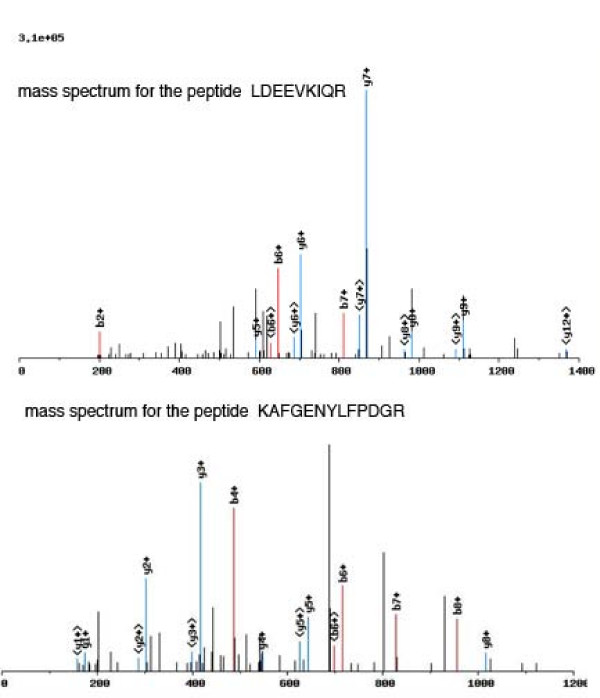
Results: We wrote scripts in perl, Bioperl, mysql and Ensembl API and built a theoretical exon-exon junction protein database to account for all possible combinations of exons for a gene while keeping the frame of translation (i.e., keeping only in-phase exon-exon combinations) from the Ensembl Core Database. Using our liver cancer MS/MS dataset, we identified a total of 488 non-redundant peptides that represent putative exon skipping events.
Conclusion: Our exon-exon junction database provides the scientific community with an efficient means to identify novel alternatively spliced (exon skipping) protein isoforms using mass spectrometry data. This database will be useful in annotating genome structures using rapidly accumulating proteomics data.
Figures


References
-
- Pan Q, Shai O, Lee LJ, Frey BJ, Blencowe BJ. Deep surveying of alternative splicing complexity in the human transcriptome by high-throughput sequencing. Nat Genet. 2008 - PubMed
Publication types
MeSH terms
Substances
Grants and funding
LinkOut - more resources
Full Text Sources
Molecular Biology Databases
