


SEM analysis of the acid-etched enamel patterns promoted by acidic monomers and phosphoric acids
- PMID: 19089243
- PMCID: PMC4327295
- DOI: 10.1590/s1678-77572006000600008
SEM analysis of the acid-etched enamel patterns promoted by acidic monomers and phosphoric acids
Abstract
Objective: Although self-etching bonding systems (SES) are indicated to prepare dental enamel for bonding, concerns have been expressed regarding their effectiveness. The aim of this study was to analyze the etching pattern (EP) of nine SES in comparison with 35% and 34% phosphoric acid etchants (FA) on intact (IN) and ground (GR) enamel surface.
Materials and methods: Twenty-two human third molars were sectioned in mesial-distal and buccal-lingual directions, and four dental fragments were obtained from each tooth. Half of the fragments were ground using 600-grit SiC paper and the other half remained intact. The fragments were randomly assigned into 22 groups, according to the texture of enamel surface (IN and GR) and the technique to etch the enamel (34% FA, 35% FA, AdheSE primer; Brush & Bond; Clearfil Protect Bond primer; iBond; One-up Bond F; OptiBond Solo Plus primer; Tyrian SPE primer; Unifil Bond primer and Xeno III). Conditioners were applied to IN and GR enamel surfaces, according to the manufacturer's instructions. Specimens etched with phosphoric acids were washed with water, while the surfaces treated with SES were submitted to alternate rinsing with alcohol and acetone. The specimens were dried, sputter-coated and examined under a scanning electron microscope.
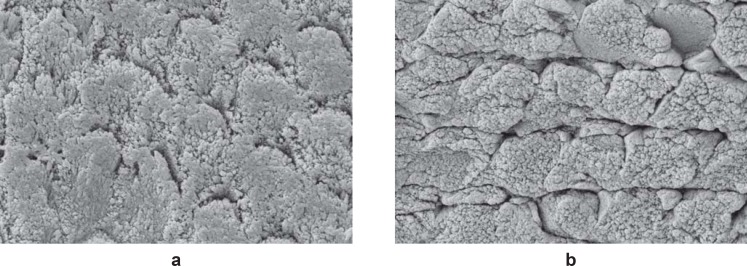
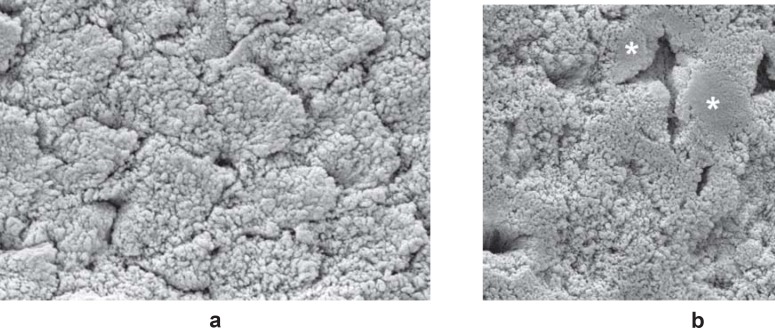
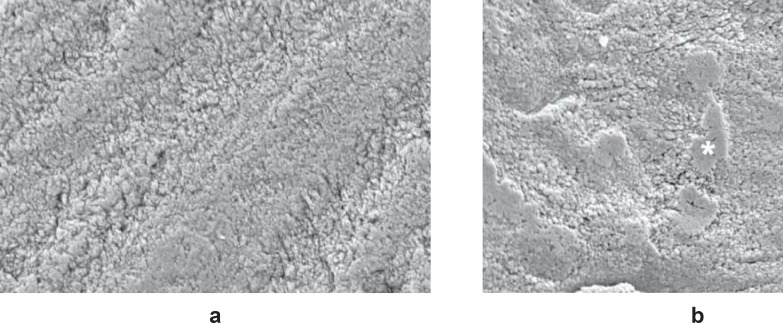
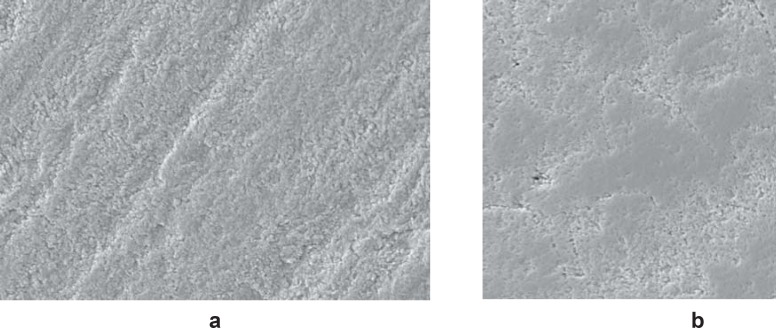
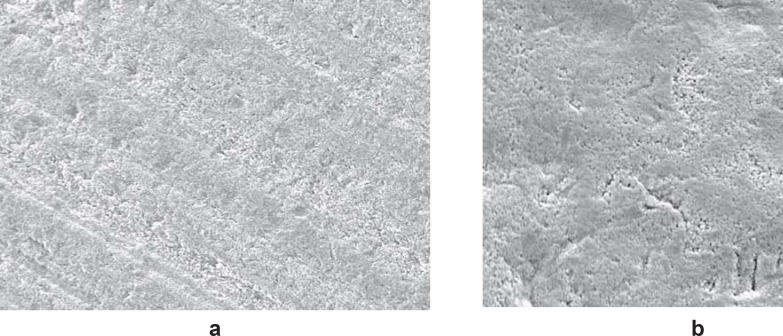
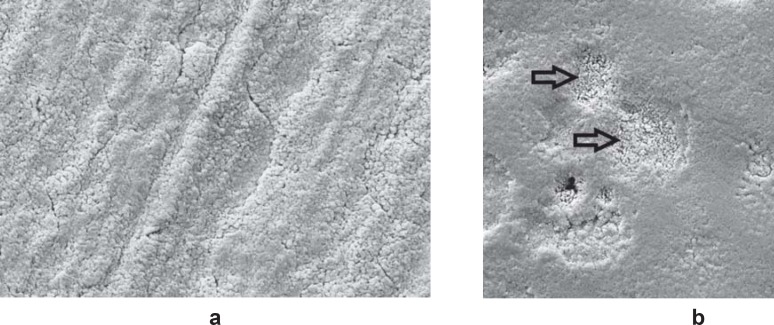
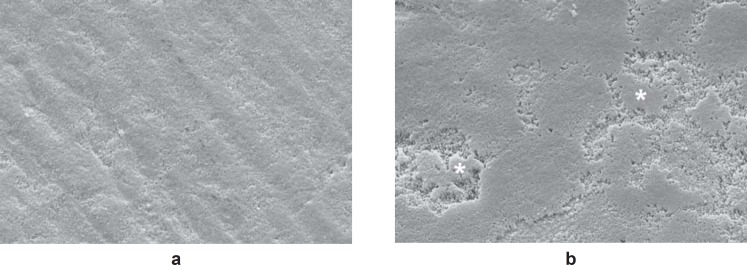
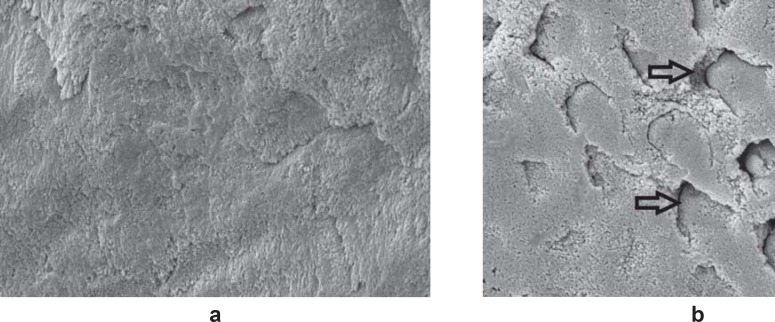
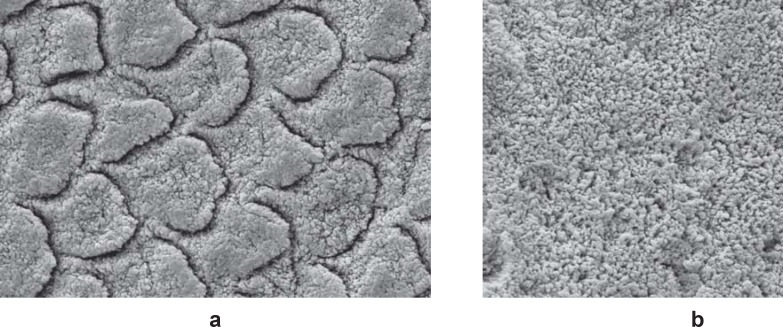
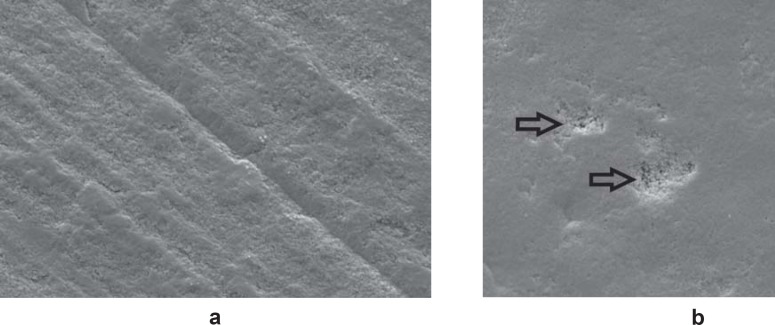
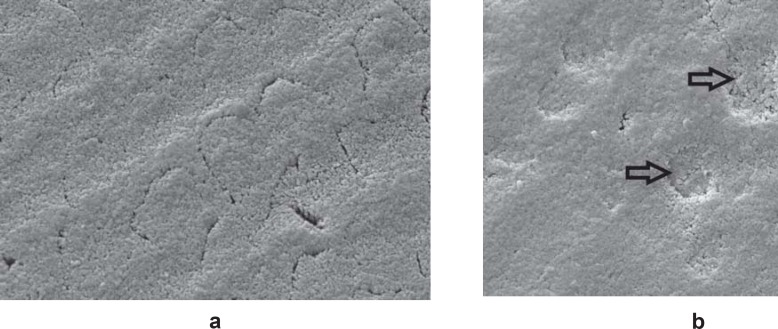
Results: For both IN and GR enamel surfaces, the EP of 34 and 35% FA was deeper and more homogeneous in comparison to EP of SES, except for Tyrian SPE. The acidic monomer action of self-etching systems was more effective on GR enamel.
Conclusion: Most of the SES are less aggressive than phosphoric acid etchants and their etching effects were reduced on intact enamel surfaces.
Objetivo:: Apesar dos sistemas adesivos autocondicionantes (SAA) serem indicados para aplicação no esmalte dental, preocupação tem sido relatada com relação a sua efetividade. O objetivo deste estudo foi avaliar o padrão de condicionamento ácido (PCA) promovido por nove SAA e comparar ao PCA produzido pelo ácido fosfórico (35% e 34% - AF) no esmalte intacto (EI) ou abrasionado (EA).
Materiais e Métodos:: Vinte e dois terceiros molares humanos foram seccionados nos sentidos mésio-distal e vestíbulo-lingual, e quatro fragmentos dentais foram obtidos a partir de cada dente. Metade dos fragmentos tiveram o esmalte abrasionado com lixas de SiC (600) e a outra metade permaneceu intacta. Os fragmentos foram divididos em 22 grupos, de acordo com a textura da superfície do esmalte (EI e EA) e a técnica de condicionar o esmalte (AF 34 %, AF 35%, AdheSE primer; Brush & Bond; Clearfil Protect Bond primer; iBond; One-up Bond F; OptiBond Solo Plus primer; Tyrian SPE primer; Unifil Bond primer e Xeno III). Os agentes condicionadores foram aplicados nos EI e EA, de acordo com as instruções dos fabricantes. Espécimes tratados com AF foram lavados com água, enquanto os dentes tratados com SAA foram tratados com banhos alternados de álcool e acetona. Os espécimes foram secos, metalizados e observados em microscopia eletrônica de varredura.
Resultados:: Em ambas as superfícies (EI e EA), o PCA dos AF (34 e 35%) foi mais profundo e homogêneo, quando comparados ao PCA produzido pelos SAA, exceto para o adesivo Tyrian SPE. A ação dos monômeros ácidos dos SAA foi mais efetiva no EA.
Conclusão:: A maioria dos SAA é menos agressiva que o ácido fosfórico e seus efeitos condicionadores são reduzidos em superfícies de EI.
Figures
References
-
- Asmussen E, Peutzfeldt A. Short- and long-term bonding efficacy of a self-etching, one-step adhesive. J Adhes Dent. 2003;5:41–45. - PubMed
-
- Buonocore MG. A simple method of increasing the adhesion of acrylic filling materials to enamel surfaces. J Dent Res. 1955;34:849–853. - PubMed
-
- Chaves P, Giannini M, Ambrosano GMB. Influence of smear pretreatments on bond strength. J Adhes Dent. 2002;4:191–196. - PubMed
-
- Clotte S, Blunck U, Roulet JF. The influence of a simplified application technique for ceramic inlays on the margin quality. J Adhes Dent. 1999;1:159–166. - PubMed
-
- Daronch M, De Goes MF, Grande RHM, Chan DCN. Antibacterial and conventional self-etching primer system: morphological evaluation of intact primary enamel. J Clin Pediatr Dent. 2003;27:251–256. - PubMed
LinkOut - more resources
Full Text Sources
Miscellaneous
